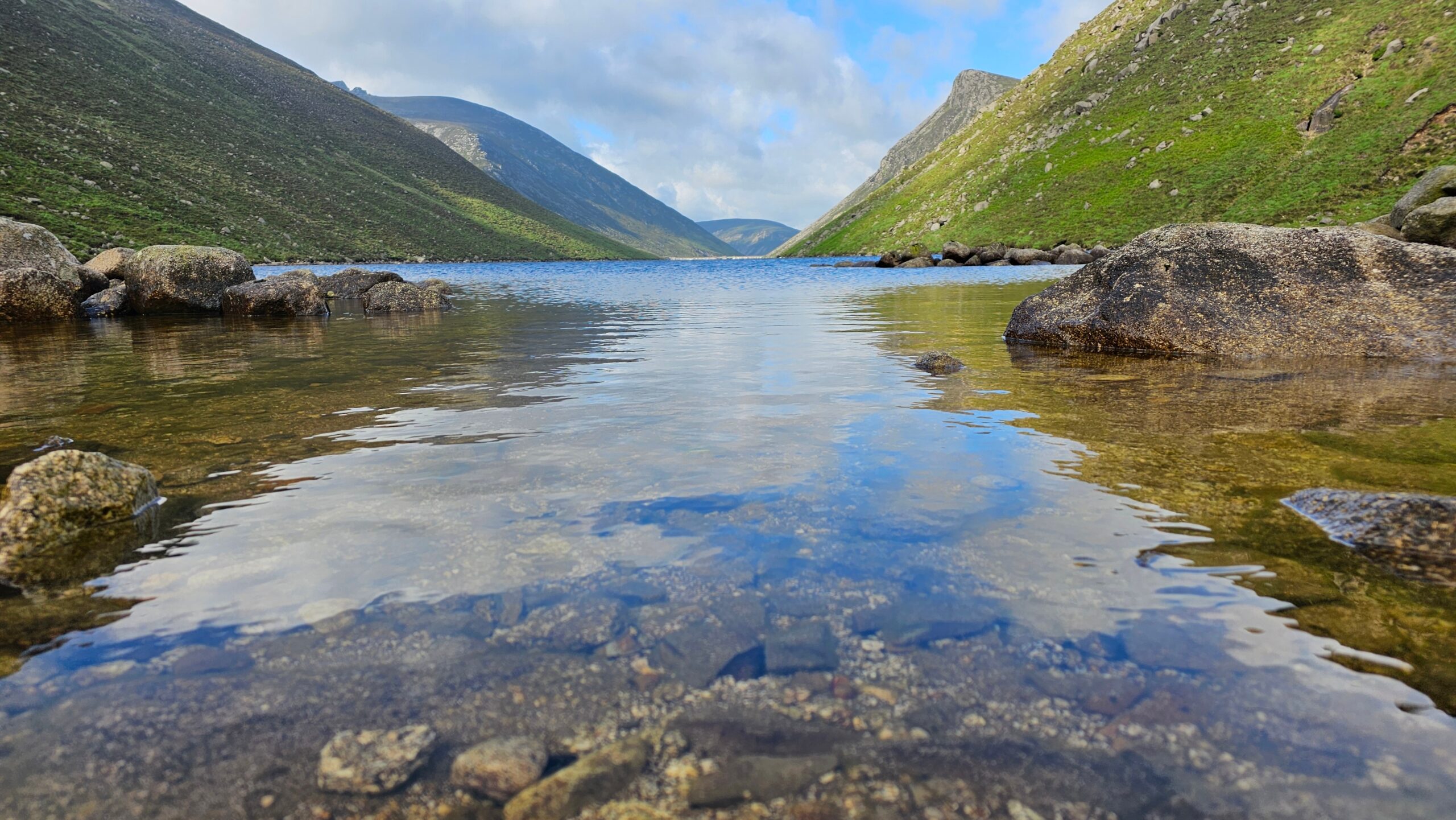
The dense forests, twisting rivers and granite peaks of Northern Ireland’s Mourne Mountains have lived many lives and assumed many names.
They’re Westeros in “Game of Thrones.” They’re “Krypton” in the Superman prequel.
They’re also Transylvania in “Dracula Untold”, Sherwood in the upcoming “Death of Robin Hood” and the Forgotten Realms in “Dungeons and Dragons: Honor Among Thieves.”
As part of the Mourne Gullion Strangford global geopark, this mountain region in Ireland’s northeast achieved UNESCO recognition in 2023, but relatively small numbers of international visitors come to explore.
However, the lyrically named Kingdom of Mourne — it was never a sovereign state — has been inspiring imaginations globally for more than 75 years.
This sea-lapped landscape of 220 square miles was the real-life inspiration for “The Chronicles of Narnia,” the enduring 1950s novels by Belfast-born writer C.S. Lewis that are soon to be revived once again. They’ll get their fourth film adaptation in “Barbie” director Greta Gerwig’s “Narnia: The Magician’s Nephew” later this year.
Small and compact
While Gerwig’s “Narnia” is being filmed in England, Northern Ireland has a booming local film industry. Production of Season 1 and 2 of the new “Game of Thrones” prequel, “A Knight of the Seven Kingdoms,” is estimated to have returned more than $80 million to the economy alone.
“We are a small and very compact country. In fact, we are effectively the size of Greater Los Angeles, but with about 10% of the population,” says Andrew Reid, chief content officer for Northern Ireland Screen.
Only 1.9 million people live in Northern Ireland, but at any one time there will be 1,200 people hard at work on live-action scripted projects.
Thanks to good road infrastructure, crews can head in any direction from a production base in Belfast and quickly access a diverse range of landscapes — as can the fans and tourists who come to the region in their wake.
“You can be on a beach in the morning,” and back in Belfast in the afternoon, says Reid, or “up a mountain one day,” and then on a river, lake or in a forest the next.
Soft hills and rolling farmland
The coastline north of Belfast, with its windswept vistas reminiscent of the Scottish Highlands, has some of Ireland’s most dramatic scenery, including the world-famous Giant’s Causeway.
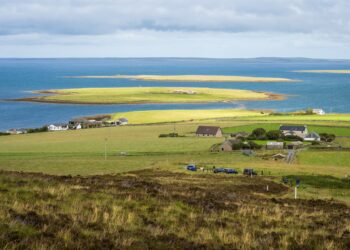
An hour south of Belfast, the Mourne Gullion Strangford global geopark is a softer landscape, with rolling hills and shadowy dells in which it’s easy for the mind to conjure up magical beasties.
“I have seen landscapes, notably in the Mourne Mountains and southwards, which under a particular light made me feel that at any moment a giant might raise his head over the next ridge,” wrote C. S. Lewis in his essay “On Stories.”
He was more specific in a letter to his brother Warren, writing, “that part of Rostrevor which overlooks Carlingford Lough is my idea of Narnia.”
The Lewis boys spent childhood vacations in Rostrevor, a neat and gaily painted village, now dotted with literary murals, close to the Northern Irish border.
To its north rise the mountains, richly forested in towering sitka spruce, one of the world’s tallest trees, and at their feet lie the still waters of Lewis’s beloved lough, a glacial ford which opens into the Irish Sea.
Thrown by a giant
Lewis wasn’t the first to dream of giants here. From the village, you can saunter past the Fairy Glen (reputed haunt of the “wee folk”) and climb the mountainside to discover spectacular views and a peculiar 50-ton boulder perched unexpectedly almost 1,000 feet above sea level.
The scientific explanation is that Cloughmore (from the Irish for “big stone”) is a glacial erratic, thought to have originated in Scotland and been deposited here by retreating ice at the end of the last Ice Age.
The mythical version is that it was thrown here from across the loch by Finn McCool, the legendary titan who is also credited with building the Giant’s Causeway some 100 miles north.
The Mournes were formed by volcanic activity more than 50 million years ago, in tectonic shifts related to those which formed the Causeway’s basalt columns before it.
It was then sculpted by successive Ice Ages, meaning that the mountains – fittingly for a “Game of Thrones” filming location – are a true “land of fire and ice.”