Flying between African cities forces many travelers to transit outside the continent, through London, Paris or Dubai. But a $12.5 billion airport under construction in Ethiopia could help change that.
Nearly 30 miles southeast of the capital Addis Ababa, works began in January on what Ethiopian Prime Minister Abiy Ahmed Ali described as “the largest aviation infrastructure project in Africa’s history.”
Bishoftu International Airport is scheduled to open in 2030 with two runways and capacity for 60 million passengers a year, with plans to grow to 110 million passengers — more than the world’s busiest airport, Atlanta’s Hartsfield-Jackson, which saw 106 million passengers in 2025.
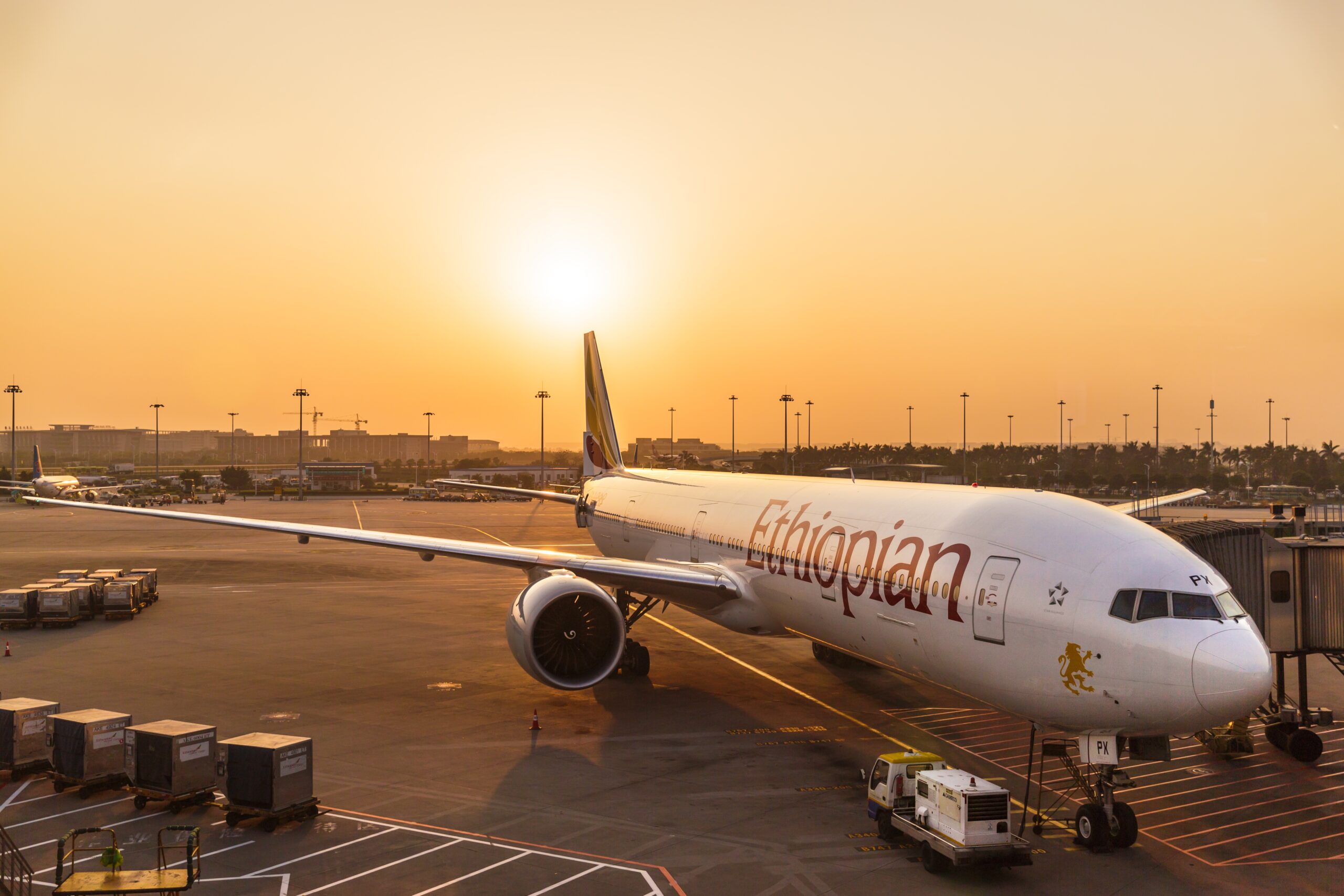
The project is led by state-owned Ethiopian Airlines, Africa’s largest carrier by fleet size, total passengers and revenue. CEO Mesfin Tasew told CNN the airline “will invest 30% of its equity” to cover the $12.5 billion cost directly. The other $8 billion is yet to be secured, with the US, China and most recently Italy involved in negotiations.
Connecting African skies
Addis Ababa is already one of Africa’s top aviation hubs, but the airline’s base, Bole International Airport, is quickly reaching capacity and has no room to expand.
With a new airport catering mostly to connecting passengers, Ethiopian Airlines would lead the race to connect African skies, one of the world’s fastest growing aviation markets.
The airport could also tap into Africa’s underused cargo capacity, backing the African Continental Free Trade Area — the continent’s landmark free trade agreement — with infrastructure to handle 3.73 million tons of cargo annually.
Landry Signé, executive director at Arizona State University’s Thunderbird School of Global Management and senior fellow at the Brookings Institution, said that “African airlines are currently recording the strongest freight demand growth worldwide, up 15–16% year-on-year versus a global average of 5.5%.” But he cautions the potential payoff for Bishoftu International depends on the logistics surrounding the runway: roads, rail, reliable power and customs.
On financing, Signé told CNN: “The signals are positive so far — yet closing $8 billion in a single year is an ambitious timeline.” If fundraising takes longer than expected, he warns the 2030 target for building phase one “becomes very difficult to hold.”
“A feeling of what Ethiopia’s like”
Zaha Hadid Architects (ZHA) — the international firm behind Beijing Daxing Airport’s futuristic “starfish” terminal and Mumbai’s lotus-shaped airport — is leading the terminal’s design.
Inspired by Ethiopia’s Great Rift Valley, a single spine runs the length of the terminal, branching into four piers with unique interiors and gardens reflecting Ethiopia’s diverse landscapes and cultures.
“When you have people transiting, you give them a feeling of what Ethiopia’s like; you feel and touch Africa,” said ZHA’s director of aviation, Cristiano Ceccato.
Semi-enclosed spaces and courtyards are designed to take advantage of Bishoftu’s temperate climate. “You’re literally outdoors, which is quite unique for an airport,” added Ceccato.
The designers say that sustainability has been prioritized, from locally sourced materials to solar energy and a stormwater system feeding new wetlands on site. But the aviation industry still accounts for 2–3% of global CO₂ emissions.
Community grievances
There has been controversy around its construction, which has reportedly displaced over 15,000 people from over 9,000 acres of agricultural land.
Ethiopian Airlines says it is spending $350 million to resettle those displaced and restore their livelihoods, building 1,400 homes with electricity, running water, schools and health care facilities.
Signé told CNN that displacement in megaprojects across the continent is too often “treated as a logistics problem — number of houses built, boxes ticked — rather than a governance problem.”
He warns that while the $350 million is a “more substantive commitment than many comparable projects,” any “unresolved community grievances” could potentially delay the project and affect its ability to attract further investment.
Regional competition
Bishoftu is the largest in a wave of investment in airports across the continent, including Rwanda’s $2 billion Bugesera Airport, Burkina Faso’s Ouagadougou-Donsin Airport, and major upgrades in Casablanca, Cairo and Nairobi.
Ethiopian Airlines CEO Tasew told CNN the airline wants the new airport to be for Africa what Dubai or Doha is for the Middle East — a large regional hub with strong international connectivity.
Yet he acknowledges this ambition cannot be achieved alone: “Air connectivity in Africa is still way behind from where it should be. We need to partner with other African airlines to provide seamless connectivity.”
At the 2025 Aviation Africa Summit, African transport ministers adopted an action plan to accelerate the Single African Air Transport Market (SAATM) — a framework allowing airlines to fly freely between member states.
Since launching in 2018, 38 states have signed up and over 110 new intra-African routes have been created — with research suggesting its full implementation could increase traffic between African countries by up to 141% and reduce fares by as much as 35%.