Wednesday, June 3, 2026
  • Login
CEO North America
  • Home
  • News
    • Business
    • Entrepreneur
    • Industry
    • Innovation
    • Management & Leadership
  • CEO Interviews
  • Opinion
  • Technology
  • Environment
  • CEO Life
    • Art & Culture
    • Food
    • Health
    • Travel
No Result
View All Result
  • Home
  • News
    • Business
    • Entrepreneur
    • Industry
    • Innovation
    • Management & Leadership
  • CEO Interviews
  • Opinion
  • Technology
  • Environment
  • CEO Life
    • Art & Culture
    • Food
    • Health
    • Travel
No Result
View All Result
CEO North America
No Result
View All Result

CEO NA Magazine > Technology > Job training for robots: How China is getting machines ready to join the workforce

Job training for robots: How China is getting machines ready to join the workforce

in Technology
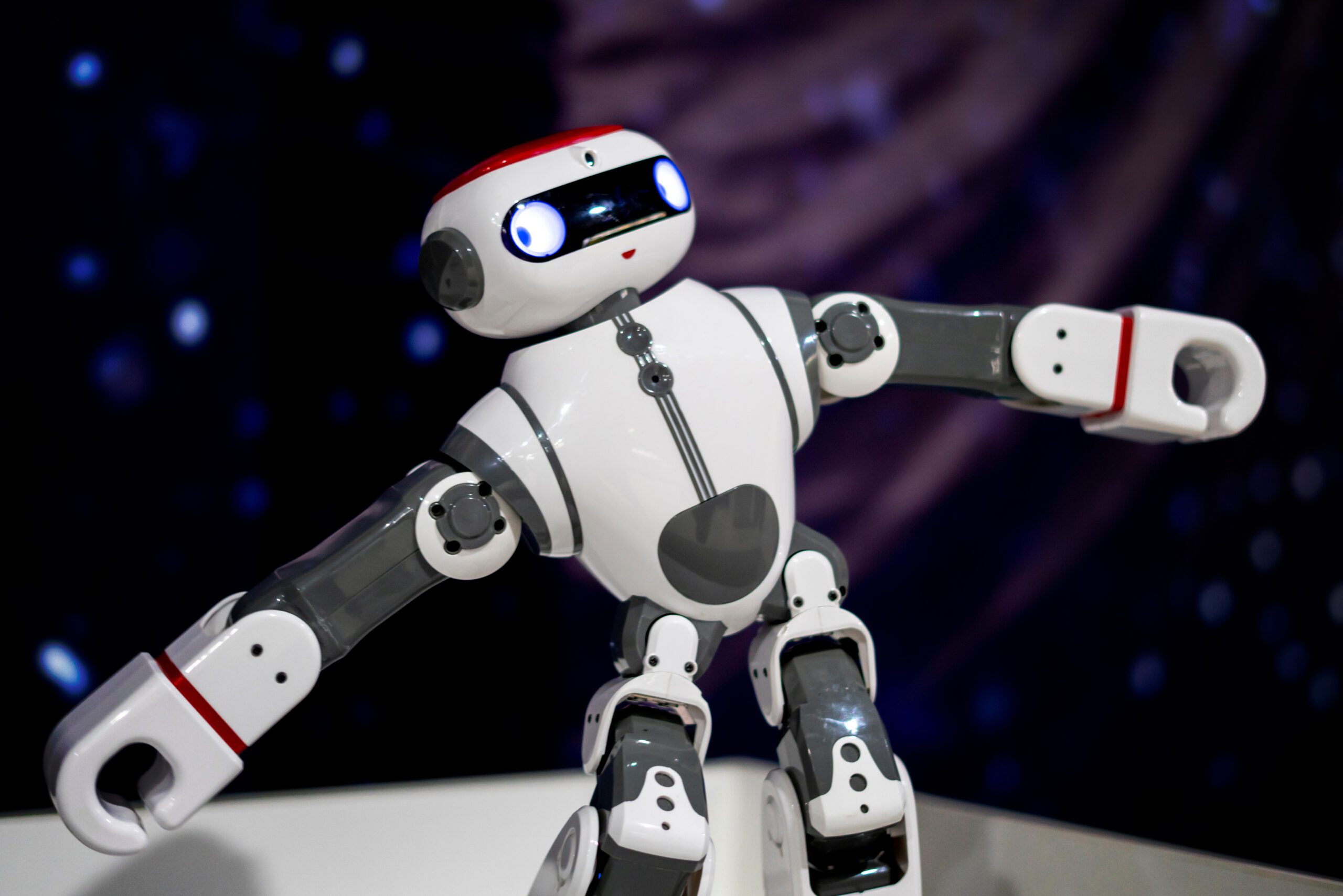
We asked a humanoid robot if there is an AI bubble. Here’s what it said
Share on LinkedinShare on WhatsApp

Chinese technology consultant Kenneth Ren is training the workers of the future.

The only thing is, they are not human.

“We are essentially teaching robots to think on their own,” Ren, an overseas solution expert with RealMan Intelligent Technology told CNBC recently at the Beijing-based Humanoid Robot Data Training Center.

Ren helps run what Chinese state media describe as a “humanoid robot school” as China looks to advance its robots beyond entertainment to employment.

Humanoid robots are part of the Chinese Communist Party’s broader industrial strategy. In the same way that Beijing targeted electric vehicles and artificial intelligence as key future technologies, policymakers have identified humanoid robots as an area China should focus on into 2030 to ensure the country dominates global markets and supply chains.

“China’s next-generation industrial policy represents a shift from targeted sectoral intervention to what can be described as an ‘industrial policy of everything,’” the U.S. Chamber of Commerce and research firm Rhodium Group wrote in a May 11 research report. 

The Beijing center, which is backed by the city government and part of a network of similar centers across China, trains robots to get ready to work in a variety of scenarios.

Fudi Luo is one of its hundred or so instructors.

A former art teacher, Luo schools her cyborg students on how to sort items on a factory line. Using cameras, controllers and motion capture, she and her fellow instructors guide their AI-enabled pupils through tasks, repeating actions multiple times.

“At first, the robot has no awareness, so I have to control it manually. But once my movement generates data, the robot learns and then can perform the task by itself,” she said.

The robots are taught skills like housekeeping, massage, organizing store shelves, and metal repair. Luo says a typical day is 8 hours of repetitive motions.

“The robot doesn’t know what being tired is, but I do!” she jokes.

On the same campus where the Chinese capital promotes robotics, startup Beijing Inspire-Robots Technology trains robotic hands with motion tracking and sensors.

Zhang Jingang | Visual China Group | Getty Images

Winston Zou, secretary with the company’s board of directors, told CNBC that on average, a hand will train 10,000 times to learn a new skill.

“Our current robotic hand can pick up an egg or even smaller objects and lift a string,” Zou said.

Tesla CEO Elon Musk told investors during the U.S. company’s fourth-quarter earnings call in January that his Optimus humanoid robots were superior to China’s due to their hand design, which he said is “by far the hardest thing” to master in a robot. But he did acknowledge China’s aggressive push in the field.

“By far, the biggest competition for humanoid robots will be from China. China is incredibly good at scaling manufacturing,” he said.

In China, the training isn’t only in school but on the job.

AI-powered robots are getting test runs serving as restaurant chefs, bartenders, waiters, traffic cops, and bodega owners.

For now, many of the robots rely on human assistance, though their proponents say it is only a matter of time before the droids do the jobs on their own.

“Our goal is to take on tasks that are dangerous to humans or repetitive work that people are unwilling or afraid to do,” Ren said at the center. “We have no intention of replacing humans in any field.”


Read the full article by Eunice Yoon / CNBC

Related Posts

The end of ERP as we know it? Five ways AI is disrupting ERP
Technology

The end of ERP as we know it? Five ways AI is disrupting ERP

Entrepreneurship: From ancient markets to modern startups
Technology

Small Retailers Need More Than Tech to Adopt Digital Payments

Tech bros say AI may become your friend. Experts explain why it can’t
Technology

Tech bros say AI may become your friend. Experts explain why it can’t

Huang pins Blackwell chip hopes on Trump approval
Technology

Nvidia says it has ‘largely conceded’ China’s AI chip market to Huawei

Trump strikes tariff deal with Merck KGaA
Technology

Trump says he should’ve asked for ‘more’ of Intel when negotiating stake with CEO

Amazon to offer $5 monthly healthcare subscription
Technology

Amazon ditches Rufus chatbot, launches Alexa shopping agent in AI strategy pivot

Trump to permit Nvidia to sell AI chips in China
Technology

Trump is taking more than a dozen U.S. executives to China.

Whirlpool says Iran war causing ‘recession-level industry decline.’
Technology

Whirlpool says Iran war causing ‘recession-level industry decline.’

Meta’s public nuisance case in New Mexico has billion-dollar consequences
Technology

Meta’s public nuisance case in New Mexico has billion-dollar consequences

AI in Family Offices
Technology

AI in Family Offices

No Result
View All Result

Recent Posts

  • Job training for robots: How China is getting machines ready to join the workforce
  • Why You Should Take Feedback Personally
  • John Sapp, the newly appointed President and CEO of NFI Group, tells CEO NA his vision for the growing organization and how NFI is shaping the future of sustainable mobility
  • Jobs report shows openings at a two-year high
  • Why Cooperative Workplaces Boost Your Sense of Freedom

Archives

Categories

  • Art & Culture
  • Business
  • CEO Interviews
  • CEO Life
  • Editor´s Choice
  • Entrepreneur
  • Environment
  • Food
  • Health
  • Highlights
  • Industry
  • Innovation
  • Issues
  • Management & Leadership
  • News
  • Opinion
  • PrimeZone
  • Printed Version
  • Technology
  • Travel
  • Uncategorized

Meta

  • Log in
  • Entries feed
  • Comments feed
  • WordPress.org

  • CONTACT
  • GENERAL ENQUIRIES
  • ADVERTISING
  • MEDIA KIT
  • DIRECTORY
  • TERMS AND CONDITIONS

Advertising –
advertising@ceo-na.com

110 Wall St.,
3rd Floor
New York, NY.
10005
USA
+1 212 432 5800

Avenida Chapultepec 480,
Floor 11
Mexico City
06700
MEXICO

  • News
  • CEO Interviews
  • Opinion
  • Technology
  • Environment
  • CEO Life

  • CONTACT
  • GENERAL ENQUIRIES
  • ADVERTISING
  • MEDIA KIT
  • DIRECTORY
  • TERMS AND CONDITIONS

Advertising –
advertising@ceo-na.com

110 Wall St.,
3rd Floor
New York, NY.
10005
USA
+1 212 432 5800

Avenida Chapultepec 480,
Floor 11
Mexico City
06700
MEXICO

CEO North America © 2024 - Sitemap

Welcome Back!

Login to your account below

Forgotten Password?

Retrieve your password

Please enter your username or email address to reset your password.

Log In
No Result
View All Result
  • Home
  • News
    • Business
    • Entrepreneur
    • Industry
    • Innovation
    • Management & Leadership
  • CEO Interviews
  • Opinion
  • Technology
  • Environment
  • CEO Life
    • Art & Culture
    • Food
    • Health
    • Travel

© 2026 JNews - Premium WordPress news & magazine theme by Jegtheme.