I thought I knew Spain’s art scene pretty well. After more than two decades of visits, I’d checked off the heavy hitters: Madrid’s grand museums (hello, Prado, Reina Sofia, and Thyssen!), Bilbao’s architectural Guggenheim icon, Barcelona’s Gaudi and Picasso-filled spaces. I figured I’d seen the country’s best canvases, sculptures, and gallery spaces.
Turns out, I was very wrong.
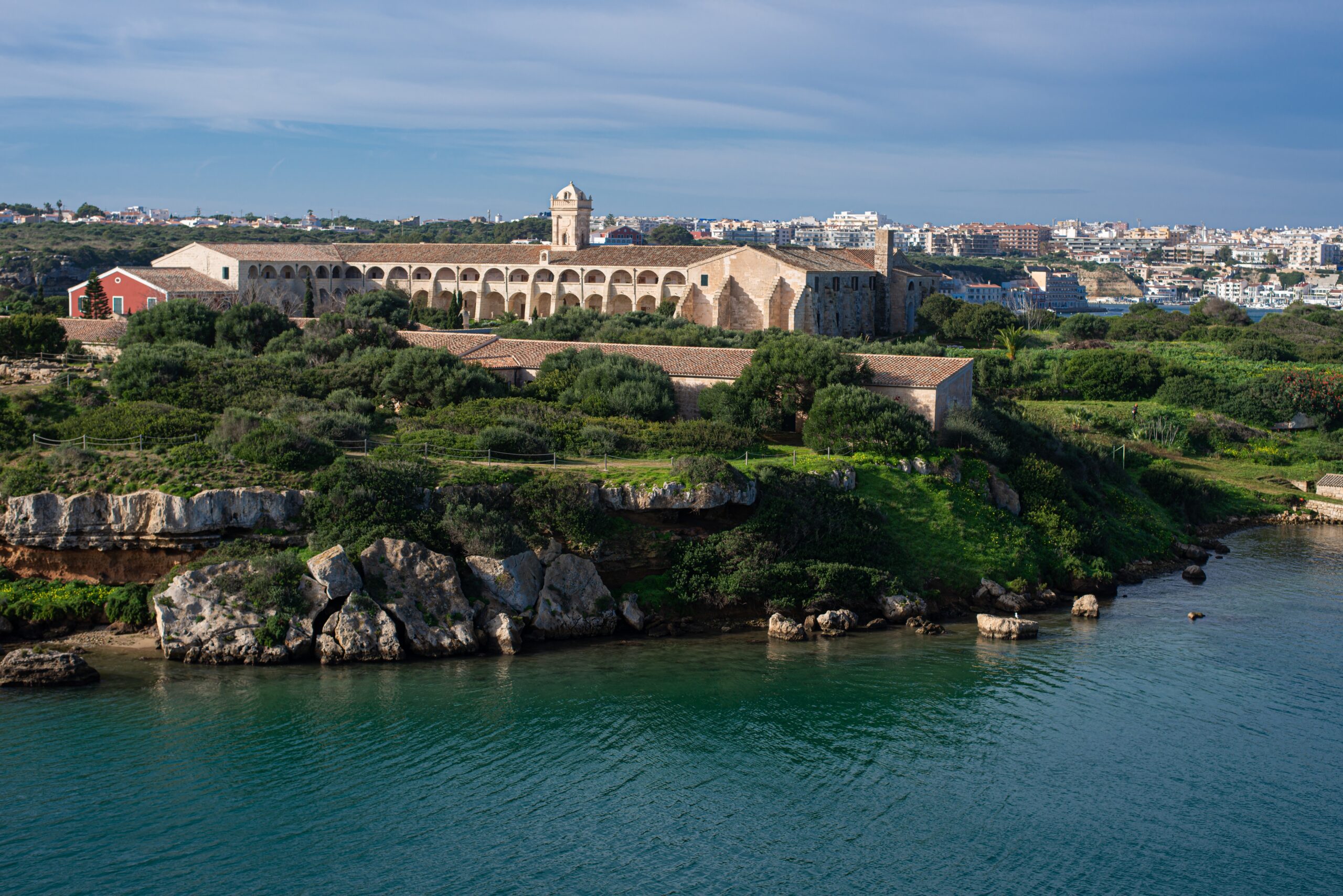
Just off the coast of Menorca is a tiny island that feels like someone combined a sculpture park, a Mediterranean garden, a historic fortress, and a dreamy seaside lunch spot into one glorious day trip. It’s hidden in plain sight and open just a few months per year. And my favorite part? You can only get there by boat.
Welcome to Illa del Rei, Spain’s secret art island.
The boat ride that starts the adventure
My introduction to Illa del Rei (which translates to King’s Island) happened on a sunny afternoon in May while I was staying in Menorca. I’d already wandered the honey-colored streets of Ciutadella, gorged myself on tapas, and was mentally committing to spending the rest of the trip horizontal on a beach.
Then someone casually mentioned there was an off-the-beaten-path art island nearby.
An art island? My beach plans suddenly felt extremely negotiable.
From my perch on the southern coast of Menorca at Villa Le Blanca, it was just a 15 minute drive to the scenic, windmilled Mahon harbor. From here, I caught a glimpse of an island across the harbor, but to reach it, I first had to board a dayglow yellow shuttle boat (truly, you can’t miss it).
Fifteen minutes later, I stepped onto the rocky, palm-shaded shoreline of Illa del Rei. I expected the cypress and olive trees and sea views that greeted me. What I didn’t expect was the Scottish bagpiper balanced on the jetty whose music filled the island.
It was a perfect introduction to the island: beautiful, quirky, and definitely unpredictable.
A tiny island with a surprisingly huge history
For such a small island, Illa del Rei has lived many lives.
The island’s history stretches back centuries, but its most striking landmark is the old military hospital built during the 18th century when Menorca was under British control. Walking through the stone corridors honestly feels a bit like stepping onto a movie set: part Outlander fortress, part naval outpost, part forgotten Mediterranean castle.
There’s even a connection to the early United States Navy, since Mahon harbor was one of the first overseas bases used by American ships in the early 1800s.
Today, much of the historical section of the island has been lovingly restored by volunteers, and you can wander through preserved rooms filled with historical artifacts, paintings, sculptures (including a fantastical larger-than-life bronze mermaid), and old medical equipment (eek!).
Fair warning: some of the antique surgical tools look (and are) genuinely terrifying. If rusty saws and mysterious metal instruments aren’t your thing (they’re definitely not mine), just keep moving toward the windows because the sea views are spectacular.
The contemporary art space worth traveling for
Just a short stroll from the historic hospital, the island suddenly shifts from centuries-old stone walls to sleek galleries.
That’s when I knew I had arrived at Hauser & Wirth Menorca, the contemporary art center that transformed Illa del Rei into one of Europe’s most unique art destinations when it opened in 2021.
The gallery is tucked into the remains of the naval hospital, so that from the outside it camouflages into the island landscape with terra cotta-toned stone walls and tiled roof. The shaded pathways lead through modern glass doors, and suddenly it’s all whitewashed walls, soaring vaulted ceilings, and exhibition spaces flooded with Mediterranean light. Even if you’re only casually interested in contemporary art, the setting alone is worth the trip.
The exhibitions rotate seasonally, mixing sculpture, painting, video installations, and immersive works. During my visit, I wandered between indoor galleries with exhibitions inspired by the island’s natural setting and massive outdoor sculptures in the garden overlooking the sea, including one of Louise Bourgeois’ showstopping spiders.
An English-speaking guide led my group of visitors through the galleries explaining the works, which I appreciated since contemporary art often relies heavily on narrative. And there was also plenty of time and space to wander and take in the art on my own, too.
While there was a good bustle in the galleries, compared to the museums in the rest of Spain, the entire experience felt like I had VIP access to a private collection. A definite perk of hidden island life.
More to see and do
In between the gallery buildings and the historic hospital are gorgeous landscaped gardens filled with olive and cypress trees, native flowering plants, and shaded paths overlooking the harbor. The whole island has been designated a biosphere reserve, so the greenery is protected (keep an eye out for the endemic Lilford’s wall lizard which only lives here).
It’s easy to happily spend time here doing absolutely nothing but enjoying the scenery. But there are plenty of special events worth planning around. My visit, as it turns out, coincided with King Charles III’s coronation celebration, hence the bagpipes and other festivities (truly an unexpected delight). That, of course, was a one-off, but some more regular seasonal highlights include concerts, writing and painting workshops, and even theatrical performances woven around the outdoor sculptures (no British royal theme required). There are also special craft and storytime sessions for children as well.