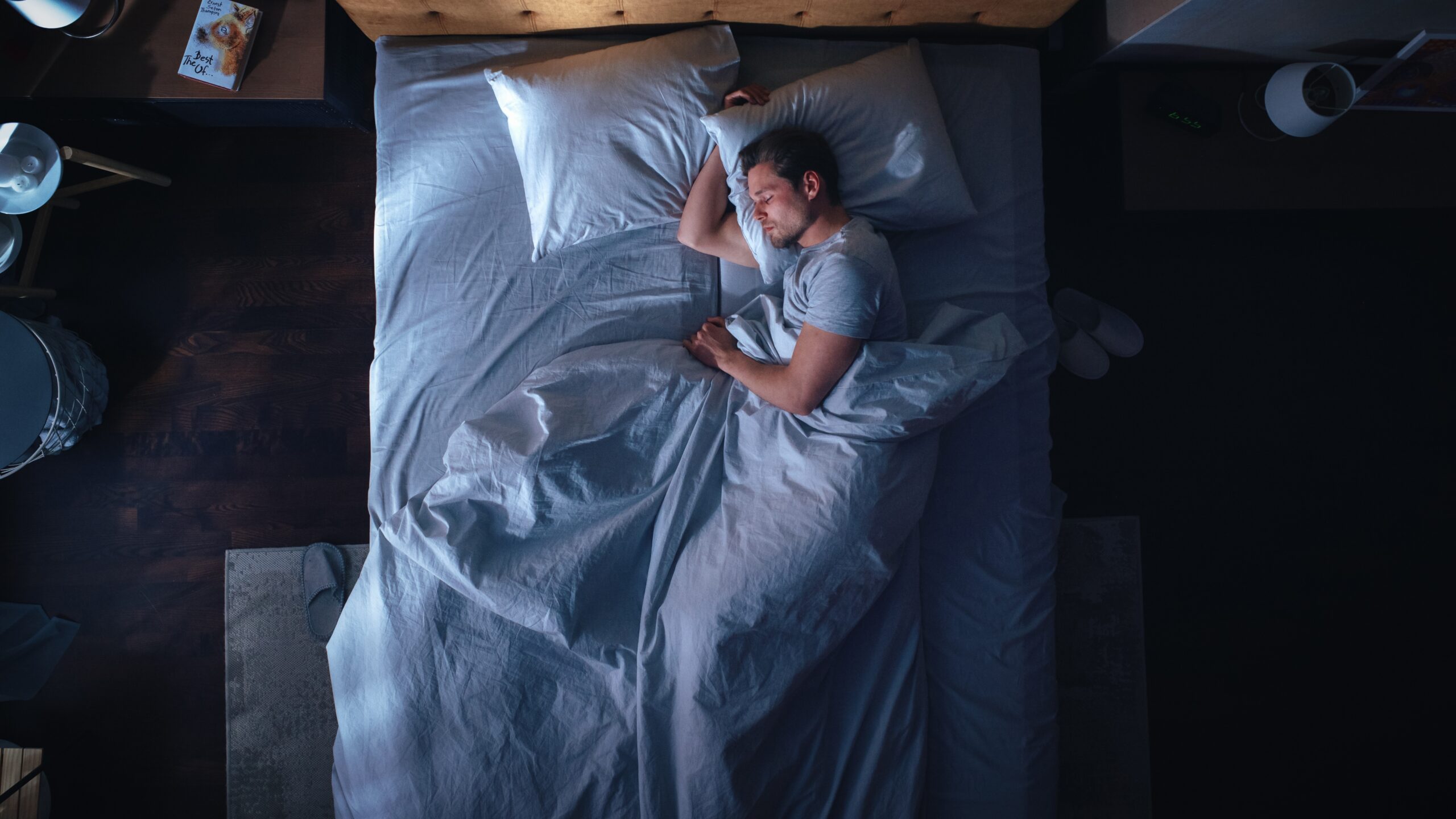
Are you spending more time trying to fall asleep rather than actually sleeping? You’re not alone.
It’s estimated that 1 in 3 people in the United States experience sleep deprivation. The number of hours recommended for sleep depends on your age. But most people need at least hours of sleep in a 24-hour period.
How can you fall asleep right away at night?
If you’ve got these all under control and you’re still having difficulty falling asleep, we have a few anecdotal methods to help you flip the switch.
10 seconds
It usually takes a magic spell to fall asleep this quickly and on cue, but practice may help you reach the 10-second sweet spot.
The military method
The military method, most recently brought back to mainstream attention by Sharon Ackman, a writer for Medium, comes from Lloyd Bud Winter’s book “Relax and Win: Championship Performance” (1981).
During World War II, Winter developed a relaxation technique that is said to have helped the U.S. Navy preflight school airmen fall asleep in 120 seconds. Stress and sleep deprivation had impacted their judgment, rationale, and decision making.
It took pilots nearly 6 weeks of practice, but there was supposedly a 96% success rate — even after drinking coffee and with guns firing around them.
It’s important to note that a lack of scientific research supports these claims. This sleeping method also takes a full 120 seconds to complete. But the last 10 seconds is all it takes to finally snooze.
The military method
- Relax your entire face, including the muscles inside your mouth.
- Drop your shoulders to release the tension, and let your hands drop to the side of your body.
- Exhale, relaxing your chest.
- Relax your legs, thighs, and calves.
- Clear your mind for 10 seconds by imagining a relaxing scene.
- If this doesn’t work, try saying “don’t think” repeatedly for 10 seconds.
- Within 10 seconds, you should fall asleep!
If this doesn’t work, you may need to work on the foundations of the military method: breathing and muscle relaxation. Some conditions, such as attention deficit hyperactivity disorder (ADHD)or anxiety, may also interfere with this method’s effectiveness.
60 seconds
One articleTrusted Source suggests that slow breathing, sleep hygiene, and relaxation methods may be more useful to help treat insomnia than some common pharmacological treatments.
The following two methods are meant to help quiet your mind by focusing on your breathing and relaxing your muscles. If you’re a beginner, these may take up to 2 minutes to work.
4-7-8 breathing method
This breathing method was developed by Dr. Andrew Weil, an integrative medicine doctor, and is based on pranayama exercises. The more you practice this meditation and visualization technique, the more effective it might be at helping you fall asleep.
If you have a respiratory condition, such as asthma or COPD, consider speaking with a doctor before beginning because this might aggravate your symptoms.
To prepare, place the tip of your tongue against the roof of your mouth, behind your two front teeth. Keep your tongue there the entire time, and purse your lips if you need to.
How to do one cycle of 4-7-8 breathing:
- Let your lips part slightly and make a whooshing sound as you exhale through your mouth.
- Close your lips and inhale silently through your nose. Count to 4 in your head.
- Hold your breath for 7 seconds. This is the most important part of the practice.
- Exhale (with a whoosh sound) for 8 seconds.
When you breathe in again, a new cycle begins.
Complete four full cycles. But let your body sleep if you feel relaxation come on earlier.
Progressive muscle relaxation (PMR)
PMR, also known as deep muscle relaxation, may help you unwind.
The premise is to tense — but not strain — your muscles, then relax to release the tension. This movement may promote tranquility throughout your body and help with insomnia.
Before starting, imagine the tension leaving your body as you exhale during the 4-7-8 method.
Relaxation script
- Raise your eyebrows as high as possible for 5 seconds. This will tighten your forehead muscles.
- Relax your muscles immediately and feel the tension drop. Wait 10 seconds.
- Smile widely to create tension in your cheeks. Hold for 5 seconds. Relax.
- Pause 10 seconds.
- Squint with your eyes shut. Hold 5 seconds. Relax.
- Pause 10 seconds.
- Tilt your head slightly back so you’re comfortable looking at the ceiling. Hold 5 seconds. Relax as your neck sinks back into the pillow.
- Pause 10 seconds.
- Keep moving down the rest of the body, from your triceps to chest, thighs to feet.
- Let yourself fall asleep, even if you don’t finish tensing and relaxing the rest of your body.
As you do this, focus on how relaxed and heavy your body feels when in this relaxed state.
120 seconds
If the previous methods don’t work for you, then consider one of the following.
Tell yourself to stay awake
For people with insomnia, trying to fall asleep might increase performance anxiety.
Research from 2021Trusted Source suggests that paradoxical intention (PI) may help reduce sleep performance anxiety and increase the perception of feeling well-rested after sleep. PI is a technique in which you intentionally stay awake in bed. This is meant to help you overcome the fear and conscious effort of falling asleep.
This method may be more effective than traditional, intentional breathing practices. However, research is limited.
Visualize a calm place
If counting is too stimulating, engaging your imagination may be a better alternative.
In a 2002 study from the University of Oxford, researchers found that people who engaged in “imagery distraction” fell asleep faster than those who had general distraction or no instructions.
Image distraction
- Instead of counting sheep, try to imagine a serene setting and all the feelings that go with it. For example, you can imagine a waterfall, the sounds of echoing rushing water, and the scent of damp moss. The key is to let this image take up space in your brain to prevent yourself from reengaging with thoughts, worries, and concerns presleep.
Acupressure for sleep
A 2019 meta-analysisTrusted Source suggests that acupressure may slightly decrease the time you fall asleep. It may also increase your sleep efficiency and duration. However, there’s limited research to determine whether acupressure is beneficial.
Three specific pressure points may be more beneficial than others to help you fall asleep faster.
1. Spirit gate
The technique
- Feel for the small, hollow space under your palm on your pinky side.
- Gently apply pressure in a circular or up-and-down movement for 2 to 3 minutes.
- Press down the left side of the point (palm facing) with gentle pressure for a few seconds, then hold the right side (back-of-hand facing).
- Repeat on the same area of your other wrist.
2. Inner frontier gate
The technique
- Count three finger-widths down from your wrist crease on one palm facing up.
- With your thumb, apply a steady downward pressure between the two tendons.
- You can massage in a circular or up-and-down motion until you feel your muscles relax.
3. Wind pool
The technique
- Interlock your fingers (fingers out and palms touching) and open up your palms to create a cup shape with your hands.
- Position your thumbs at the base of your skull, with thumbs touching where your neck and head connect.
- Apply a deep and firm pressure, using circular or up-and-down movements to massage this area.
- Breathe deeply and pay attention to how your body relaxes as you exhale.
Takeaway
If sleep is eluding you, it may be due to your sleeping habits, environment, or daytime activities. However, it may still be hard to fall asleep if you have these under control.
Some breathing, relaxation, and visualization methods may help you fall asleep faster. These might help by focusing on your breathing and muscles rather than external factors.
If you still can’t fall asleep quickly after trying these methods, speak with a doctor about any underlying factors.
Read the full article Medically reviewed by Nick Villalobos, MD — Written by Christal Yuen / Healthline