The United States has officially lost its measles elimination status, a major public health achievement that was secured 26 years ago.
The Pan American Health Organization (PAHO), the World Health Organization’s (WHO) regional office for the Americas, determined that measles has spread continuously in the U.S. for more than 12 months. On November 17, PAHO announced the end of the country’s measles elimination status, which it has held since 2000.
“Losing a measles elimination status has broader implications than losing a public health designation,” PAHO’s director, Jarbas Barbosa, MD, MPH, PhD, said in a media briefing. “It means the virus has circulated for a prolonged period of time, putting families and communities at risk of a preventable illness, hospitalization, and death.”
PAHO’s review examined measles spread starting January 20, 2025, when the first person became ill in a large West Texas outbreak, according to the Centers for Disease Control and Prevention (CDC).
CDC data show 5,412 confirmed measles cases this year as of November 12. That’s the highest annual total since 1991 and more than double the 2025 count of 2,289 cases.
Andi Shane, MD, chief of pediatric infectious diseases at Children’s Healthcare of Atlanta, called the U.S. losing measles elimination status “a public health alarm that we are not being effective and we’re not controlling measles as well.”
The measles virus is highly contagious. It spreads through the air when an infected person coughs or sneezes. People can catch it in a room up to two hours after an infected person has left.
What losing measles-free status means for the U.S.
“There’s really been very little measles in the United States over the past 25 years until January 2025,” William Moss, MD, a professor of epidemiology at the Johns Hopkins Bloomberg School of Public Health, told Healthline.
Losing the status itself doesn’t change much about daily life for most Americans, Moss said. The concern is the measles outbreaks, hospitalizations and deaths behind the loss, he said.
He called the loss “a big red flag” after “enormous efforts over the past 26 years” to keep the status.
A country loses its elimination status when there is “uninterrupted circulation of the same virus genotype and lineage for 12 months or more,” according to PAHO. Shane explained it this way: “For the past 12 months in the United States, we’ve had ongoing circulation of the measles virus and person-to-person transmission is occurring.”
Canada lost its elimination status in November 2025, and the U.K. and five European countries lost theirs earlier in 2026.
The U.S. can regain the status. “Other countries have done that,” Moss said. Brazil, which lost its status in 2019, regained it in November 2024. Venezuela, which lost its status in 2018, regained it in 2023, according to PAHO.
Why measles made a comeback
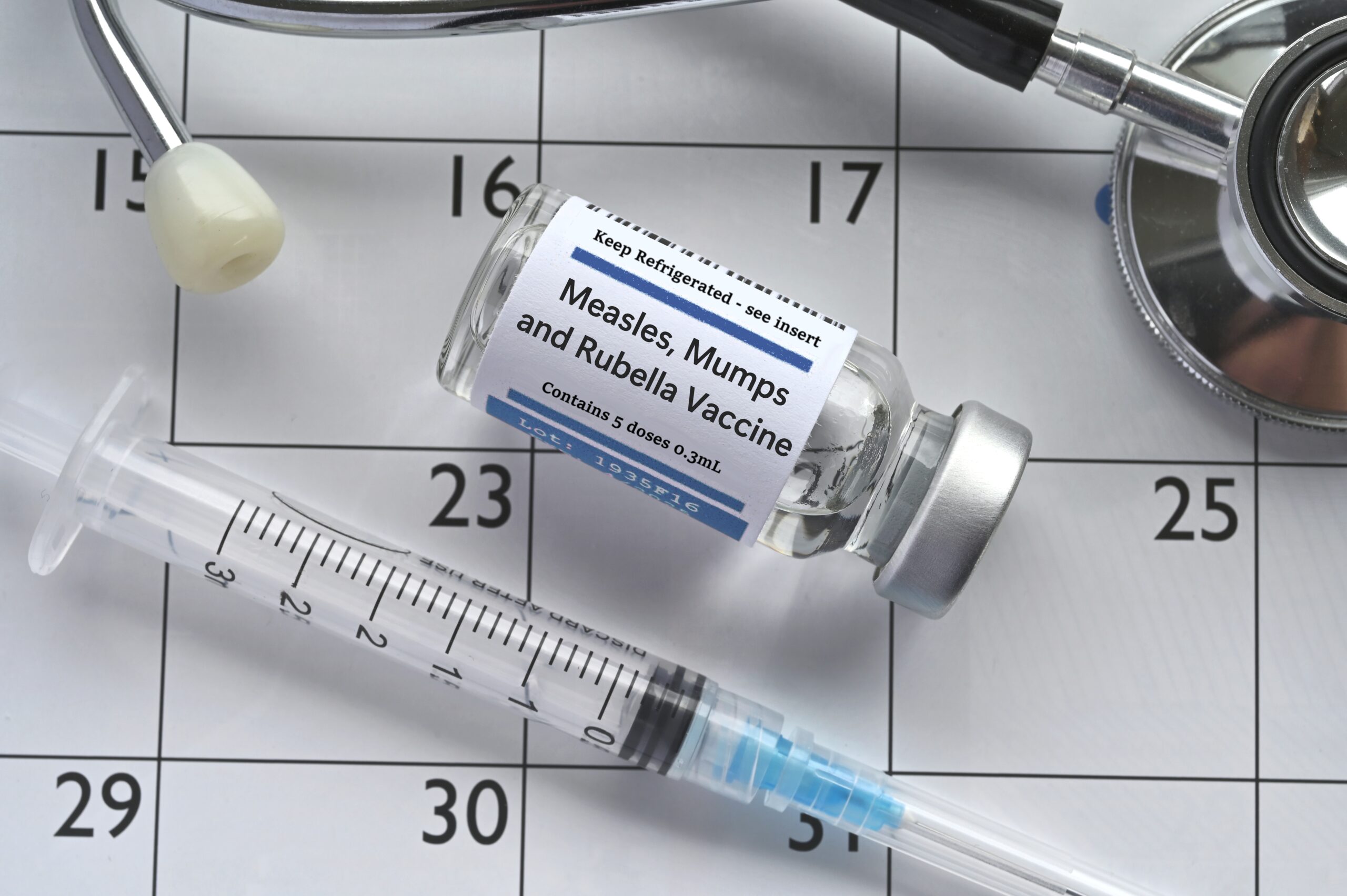
Fewer kindergartners are getting the MMR vaccine, according to the CDC.
Kindergarten MMR coverage fell from 95.2% in the 2019–2020 school year to 92.4% in 2025–2026. About 280,000 kindergartners started the 2025–2026 school year without records showing they had completed the MMR series, the CDC reported.
Shane said “95 out of 100 people need to be protected against measles” for a community to get herd protection.
“So since we’ve been below that for many, many months, that is also contributing to the loss of our elimination status,” she said.
“It takes two things to have a measles outbreak,” Moss said. A community needs low vaccine coverage, and someone with measles has to enter it and “start the chain of transmission,” he said.
About 96% of this year’s cases were among people who were unvaccinated or had unknown vaccination status, up from 93% in 2025, according to the CDC.
Moss said many of those cases are adults.
“This is particularly true in Pennsylvania, where about two-thirds of the cases are in adults,” he said. Many never got vaccinated as kids and grew up while measles was rare, so they never built natural immunity, he said.
He noted that having so many unvaccinated adults puts pregnant people and adults with chronic conditions like lung disease at risk of serious illness. The U.S. has already seen “dozens of pregnant women actually getting infected during pregnancy,” he said.
Infected parents can also spread measles to young children and grandparents, Shane said. Shane traced much of the hesitancy to the pandemic. “With COVID there’s been an overall distrust in vaccines and vaccination that initially started with COVID but has now spread to other vaccines,” she said.