Historic heat waves are putting French dairy cows that normally graze outdoors in summer under heat-related stress.
Prolonged periods of drought are scorching French pastures, leeching them of their usual lush green vitality and leaving behind parched, lifeless yellow fields.
And French farmers bound by strict cheesemaking regulations are having to buy extra feed to supplement the animals’ diets.
Some of France’s most beloved artisanal cheeses are under threat from the effects of climate change, scientists and cheesemakers warn.
“Before, we used to have a problem with the grass every 15-20 years,” says Laurent Lours, who has been a dairy farmer and cheesemaker for 35 years. “Now, it’s about every other year. And it’s getting worse.”
The result? Dairy cows are producing less milk and birthing fewer or weakened calves. Farmers who produce many of the country’s top-tier cheeses have been forced to cease production. And the distinct flavor of France’s “terroir” cheeses are at risk.
“We’ve had five heat waves so far this year. We’ve never experienced temperatures like this before,” Lours says.
Indeed, the month of July set a new record in France, bagging the title of hottest month since record-keeping began in 1900, and the third driest month on record, according to France’s national weather service.
This summer, many producers of Salers — a semi-hard, raw cow’s milk cheese — had to halt production. Hemis/Alamy Stock Photo
Strict regulations, punishing conditions
This summer, more than three-quarters of France’s 80 producers of Salers cheese – a semi-hard, raw cow’s milk cheese – were brought to a standstill following a series of heat waves and accompanying drought.
Salers is one of 47 French cheeses that carries the red and yellow AOP label, Appellation d’origine protégée (“protected designation of origin” in English), a certification guaranteeing that all stages of the final product — from milk production to aging — have taken place within a limited geographic area. Salers is produced mainly in the department of Cantal in the Auvergne-Rhône-Alpes region of southeast France, where cows graze at altitudes of between 2,630 and 4,920 feet (about 800 to 1,500 meters) above sea level on a volcanic massif, carpeted in nutrient-dense wild grasses.
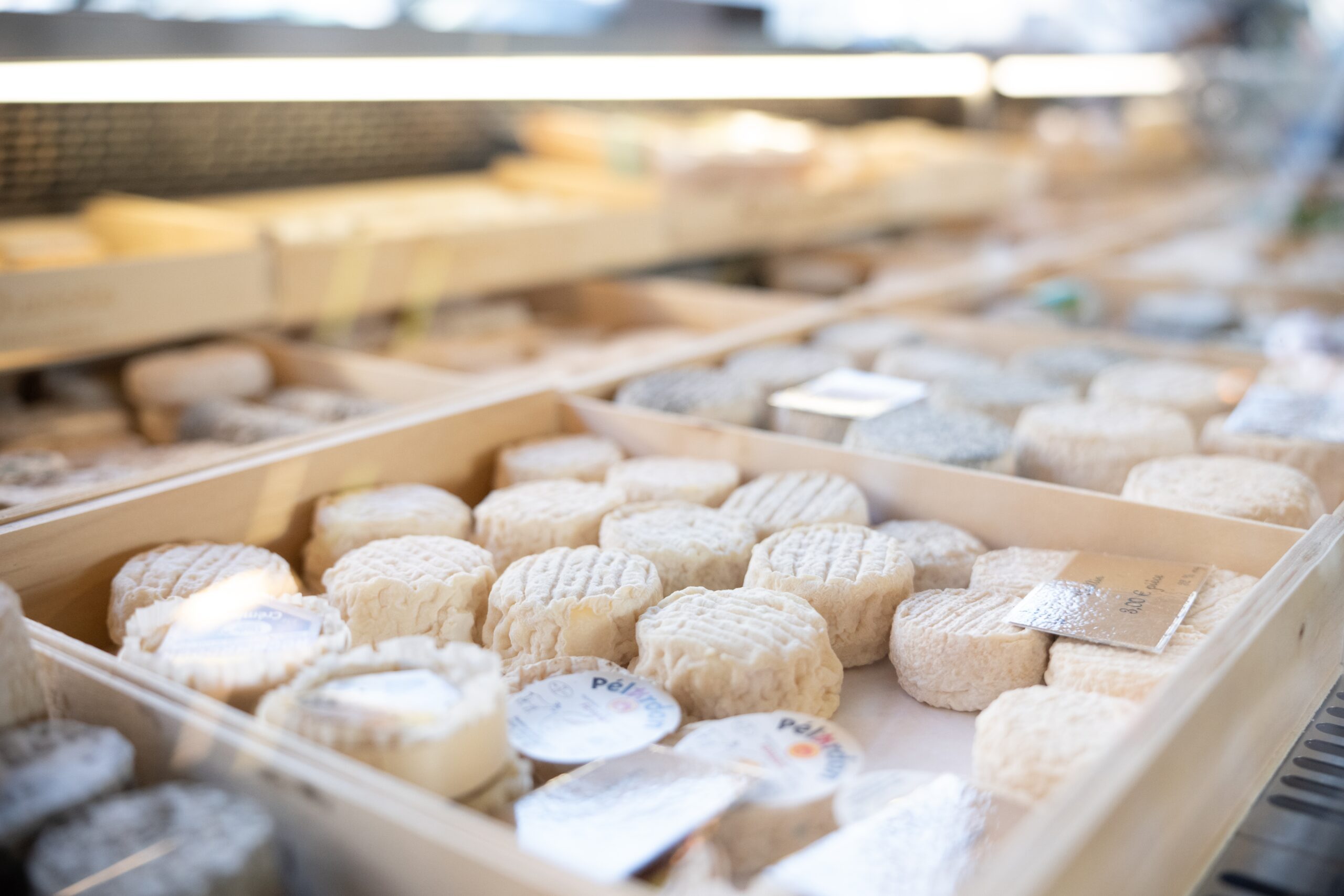
While no two Salers cheeses are alike, the local terroir — a mix of climate, soil, and topography that makes a region unique — produces a flavor profile that can range from walnuts, hazelnuts and grass, to fermented cream, peppery spice and smoked, grilled onion.
It’s also one of the cheeses hardest hit by the impacts of climate change, as its production is subject to strict regulations: Salers must be produced between April 15 and November 15 by grazing cows that are mainly grass-fed. Supplementation to their diet is limited to no more than 25% of dry matter and permitted feed ingredients include hay, wheat, barley, oats and maize from the same region.
This year’s drought forced Lours to drop production of Salers on July 8 and switch to making Cantal, a semi-hard cow’s milk cheese similar in profile but subject to laxer rules. Unlike Salers, Cantal can be produced year-round, while the grass to grain, hay and corn ratio is more generous. The main rule is that cows be able to graze 120 days of the year.
Last month, the government body responsible for overseeing the AOP label, the Institut national de l’origine et de la qualité (INAO), announced temporary modifications for a selection of cheesemakers in response to France’s “historic drought” this summer.
Some Salers makers switched to making Cantal, a semi-hard cow’s milk cheese similar in profile but subject to laxer rules. imageBROKER.com/Alamy Stock Photo
Producers of Beaufort, Comté and Abondance are among a handful of cheeses that have already been authorized to increase the share of fodder for cows to make up for the grass shortage, or source supplementary feed from outside their designated AOP zones. And the list of cheeses is expected to grow. Lours, who is also the president of the Comité interprofessionnel des fromages du Cantal and represents local cheesemakers, said their group didn’t bother requesting a temporary exemption to the rules for Salers because anything less than 50% of pasture-grown grass would not “deserve the designation” of the Salers name.
For years, producers of some AOP cheeses have been asking the INAO to permanently relax some of the regulations in response to the effects of human-made climate change, be it by adjusting the grazing period, increasing the amount of hay and supplemental feed that cows can consume, and allowing farmers to source feed from outside their AOP region. The process is long and can take years to finalize.
But does reducing the minimum grazing requirements impact the quality and flavor of the final product? According to a team of French researchers, it could mean the difference between a good cheese, and an insipid one.
In a study conducted at France’s National Research Institute for Agriculture, Food and Environment (Institut national de recherche pour l’agriculture, l’alimentation et l’environnement or INRAE) last year, researchers fed four groups of cows different diets for four months to simulate various drought conditions. After varying the ratios of grass to hay and corn, the milk was then collected to make Cantal cheese and analyzed both in labs and by a jury of consumer experts.
The findings were clear: cheese made with mostly grass-based cow milk was richer and higher in healthy omega 3 fatty acids. Moreover, the cheeses were also superior in taste, aroma, smell and texture for consumers.
“When cows feed on pastured grass the cheeses are softer, yellower and more aromatic, while when they eat little or no grass the cheeses are whiter, firmer and have less pronounced tastes,” INRAE says in a statement.
While the industry is very concerned about the possible effects of modified rules on its products, Christian Janier, a fourth-generation cheesemonger in Lyon, in the Auvergne-Rhône-Alpes region, thinks the end result is likely to be subtle and imperceptible for the average consumer.
“The quality may inevitably drop a little given that we know that feed plays a major role in the final product,” he says. “But in the end, it won’t be enough for a regular consumer to notice.”