Wednesday, March 25, 2026
  • Login
CEO North America
  • Home
  • News
    • Business
    • Entrepreneur
    • Industry
    • Innovation
    • Management & Leadership
  • CEO Interviews
  • Opinion
  • Technology
  • Environment
  • CEO Life
    • Art & Culture
    • Food
    • Health
    • Travel
No Result
View All Result
  • Home
  • News
    • Business
    • Entrepreneur
    • Industry
    • Innovation
    • Management & Leadership
  • CEO Interviews
  • Opinion
  • Technology
  • Environment
  • CEO Life
    • Art & Culture
    • Food
    • Health
    • Travel
No Result
View All Result
CEO North America
No Result
View All Result

CEO NA Magazine > Technology > The rise of smaller ‘meek models’ could democratize AI systems

The rise of smaller ‘meek models’ could democratize AI systems

in Technology
Beyond the Machine: Why Human-Made Art Matters More in the Age of AI
Share on LinkedinShare on WhatsApp

Over the past several years, leading tech firms have poured billions of dollars into a simple concept: As artificial intelligence systems are given access to more data and computing power, their performance tends to improve. 

But new research from MIT FutureTech suggests that the “bigger is better” approach to AI development may be reaching the point of diminishing returns. Previous research has shown that as AI models grow, the performance gains from additional computing power start to fade, based on neural scaling laws. In their modeling, MIT researchers Hans Gundlach, Jayson Lynch, and Neil Thompson
 found that the decrease in performance gains is significant enough that companies will eventually see little comparative advantage from scaling their models much faster than other organizations.

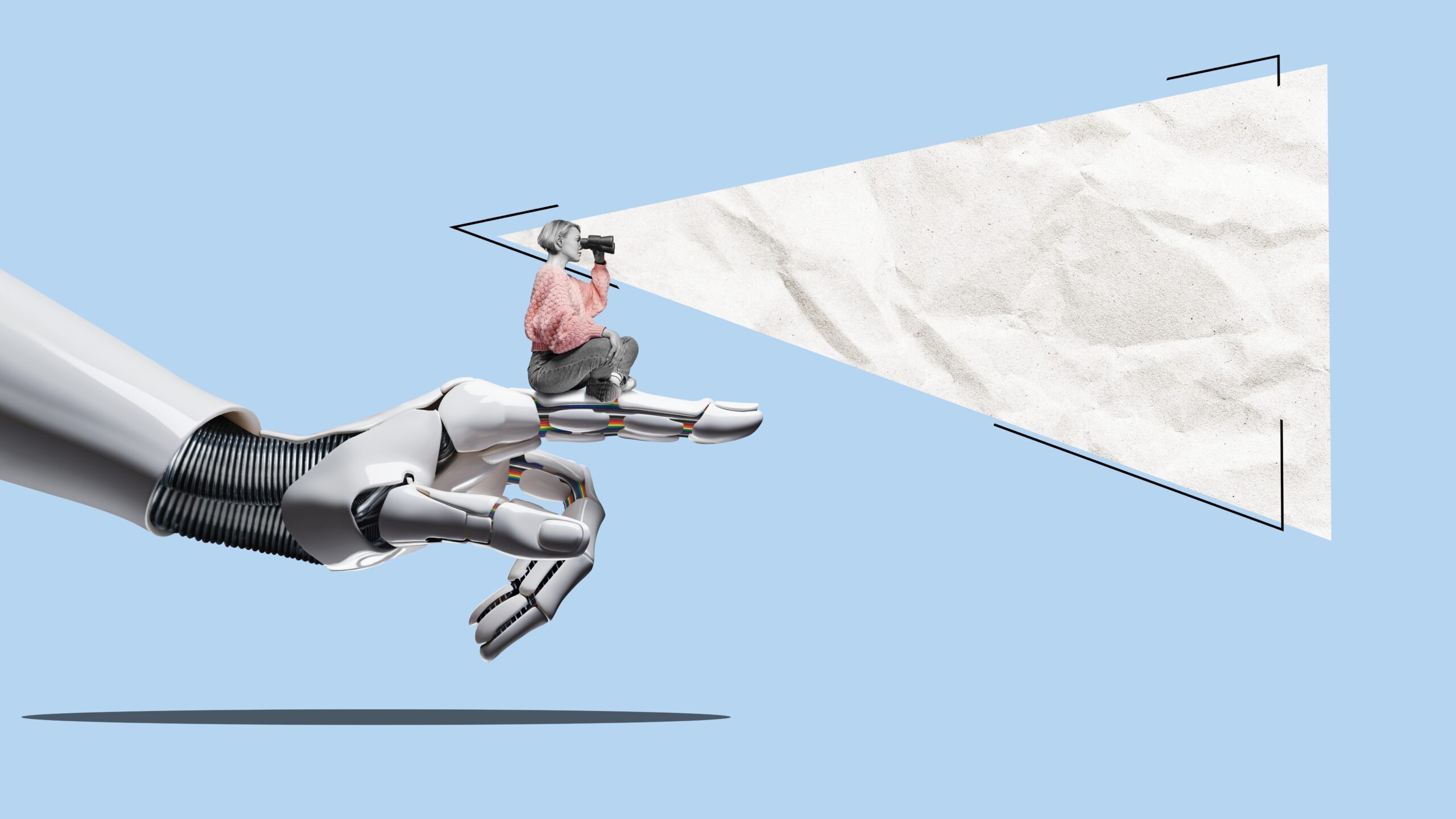
Their findings suggest a future where AI systems built or run with limited resources — what they call “meek models” — could perform on par with today’s leading models, while costing far less. And that could upend how companies compete to build and use AI, as access to advanced systems becomes less about who can afford them and more about who can make the best strategic decisions.

The limits of scale

The implications of the new research were already visible earlier this year, when Chinese startup DeepSeek’s R1 model, trained for about $6 million, matched the performance of much larger systems, drawing global attention. Competitor OpenAI reportedly spent hundreds of millions of dollars training its GPT-4 model. 

In the researchers’ simulation, a model increasing its computing budget about 3.6 times each year initially outperforms a smaller, $1,000-budget model, but the gap peaks after roughly five years and then steadily narrows. 

“If you look at the laws that predict how these models will do, they have strongly diminishing returns,” said Lynch, a research scientist at the MIT FutureTech Lab. “You have to put in more and more compute to get less advantage.”

What this means for business strategy

Lynch said that for businesses, the competitive edge from building ever-larger models will be short-lived. “You can think of scale as a short-term strategy,” they said. “The question is what you can build on top of that advantage before it fades.” 

Companies that fine-tune models for specific uses or apply their own high-quality data will be better positioned than those building ever-bigger systems, Lynch noted.

They added that as powerful AI becomes more accessible, competition will also intensify. “Lots of people will have access to really strong models,” Lynch said. “That lowers barriers for innovation, but it also makes oversight and safety much harder.”

The researchers compare the trend to the spread of personal computers, suggesting that access to advanced AI could one day be as common as computer ownership itself. 

“Given that computers are also becoming less expensive and more widely used, it seems reasonably likely that a large fraction of the world’s population could have access to powerful deep learning models,” the researchers write. 

Broader access to advanced AI could bring productivity gains as more people and organizations share in its benefits.

As access widens, oversight lags

But wider access to AI tools also raises new challenges for oversight. Current policies — such as U.S. export controls on Nvidia’s GPUs — aim to limit who can build large “frontier AI” systems, often by restricting access to computing power. Yet the researchers found that such measures may no longer be enough as more efficient models start to perform much like today’s biggest ones.

“If you’re worried about models being unsafe or harmful, this suggests that in the not-too-distant future, lots of people will have access to really strong models,” Lynch said. “You can’t expect the largest models to stay significantly more powerful for long.”

The researchers describe a brief “governance window” — a period when large organizations still have an advantage — as a chance for regulators to develop stronger safety standards before advanced AI becomes ubiquitous.

They argue that future oversight should go beyond compute limits to focus on the data, algorithms, and safeguards that shape how AI systems are built and used.


Read the full article by Seb Murray / MIT Sloan

Related Posts

Rivian CEO on how its Uber deal came together, and why the AI ‘driver’ is the future of mobility
Technology

Rivian CEO on how its Uber deal came together, and why the AI ‘driver’ is the future of mobility

Bitcoin makes a resurgence, nudging above $71,000
Technology

US securities regulator issues long-awaited crypto guidance

Gen Z’s fan edits are a staple of internet culture. Movie studios are finally buying in
Technology

Gen Z’s fan edits are a staple of internet culture. Movie studios are finally buying in

Salesforce lowers outlook during CFO transition
Technology

Software companies fight back against fears that AI will kill them

Nvidia backs AI data center startup Nscale as it hits $14.6 billion valuation
Technology

Nvidia backs AI data center startup Nscale as it hits $14.6 billion valuation

The secret sauce for getting finance employees to accept AI
Technology

The secret sauce for getting finance employees to accept AI

Trump joins top tech CEOs to announce giant AI infrastructure project
Technology

OpenAI strikes deal with Pentagon hours after Trump admin bans Anthropic

The role of the Chief AI Officer (CAIO)
Technology

AI Breaks Down in Inventory Management—is the Fix Right in Front of Us?

AI: Is It Safe?
Technology

AI: Is It Safe?

What are AI agents?
Technology

Looking ahead at AI and work in 2026

No Result
View All Result

Recent Posts

  • Gregory Hall, Head of U.S. Global Wealth Management, sits down with CEO NA to discuss the key factors behind PIMCO’s long-standing dominance and its expanding global wealth business
  • Accountability Is Leadership’s Greatest Weakness
  • Britain responds to Iran war energy shock by requiring solar panels and heat pumps in all new homes
  • Bank of Montreal launches tokenized cash platform with CME and Google
  • Gap launches AI-Powered fit and conversational checkout on Google Gemini

Archives

Categories

  • Art & Culture
  • Business
  • CEO Interviews
  • CEO Life
  • Editor´s Choice
  • Entrepreneur
  • Environment
  • Food
  • Health
  • Highlights
  • Industry
  • Innovation
  • Issues
  • Management & Leadership
  • News
  • Opinion
  • PrimeZone
  • Printed Version
  • Technology
  • Travel
  • Uncategorized

Meta

  • Log in
  • Entries feed
  • Comments feed
  • WordPress.org

  • CONTACT
  • GENERAL ENQUIRIES
  • ADVERTISING
  • MEDIA KIT
  • DIRECTORY
  • TERMS AND CONDITIONS

Advertising –
advertising@ceo-na.com

110 Wall St.,
3rd Floor
New York, NY.
10005
USA
+1 212 432 5800

Avenida Chapultepec 480,
Floor 11
Mexico City
06700
MEXICO

  • News
  • CEO Interviews
  • Opinion
  • Technology
  • Environment
  • CEO Life

  • CONTACT
  • GENERAL ENQUIRIES
  • ADVERTISING
  • MEDIA KIT
  • DIRECTORY
  • TERMS AND CONDITIONS

Advertising –
advertising@ceo-na.com

110 Wall St.,
3rd Floor
New York, NY.
10005
USA
+1 212 432 5800

Avenida Chapultepec 480,
Floor 11
Mexico City
06700
MEXICO

CEO North America © 2024 - Sitemap

Welcome Back!

Login to your account below

Forgotten Password?

Retrieve your password

Please enter your username or email address to reset your password.

Log In
No Result
View All Result
  • Home
  • News
    • Business
    • Entrepreneur
    • Industry
    • Innovation
    • Management & Leadership
  • CEO Interviews
  • Opinion
  • Technology
  • Environment
  • CEO Life
    • Art & Culture
    • Food
    • Health
    • Travel

© 2026 JNews - Premium WordPress news & magazine theme by Jegtheme.