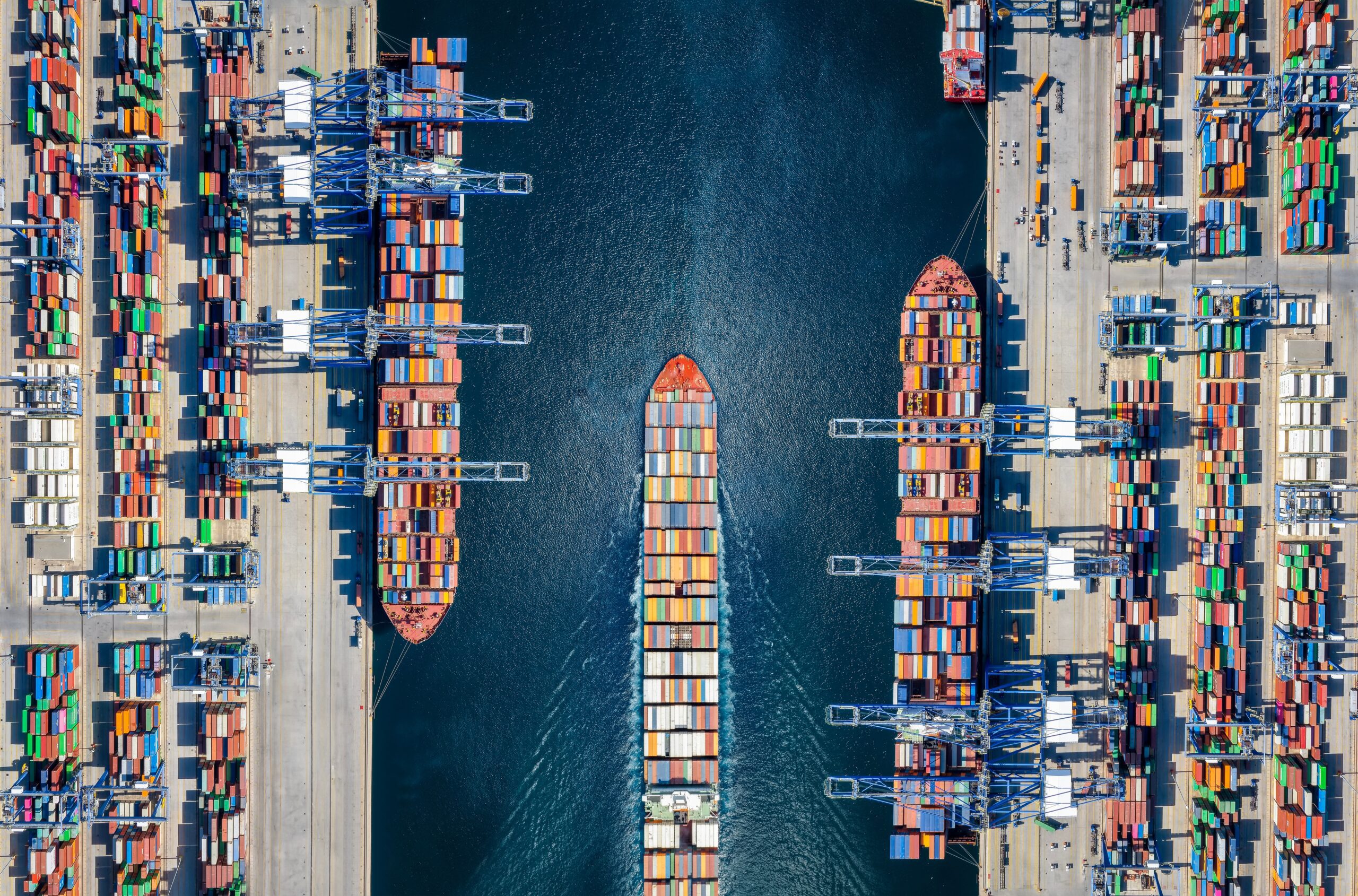
The ongoing conflict in the Middle East is again revealing how fragile global supply chains have become as the world continues to shift from a post-Cold War order of globalization to a more multipolar model. This new paradigm is defined by multiple power centers, competing policy regimes, and diverging economic priorities.
Closing the Strait of Hormuz has interrupted around 20% of oil flows, with widespread knock-on effects beyond higher energy prices. For example, Asia faces shortages in fertilizer (impacting food supply), chemicals (tech hardware production), and plastics (autos and pharmaceuticals), sparking double-digit price increases for these inputs in just a few weeks’ time. Even a rapid reopening of the Strait could leave an “air pocket” as supply chains normalize slowly.
The conflict is a harsh reminder that geopolitics and commerce are intertwined as we shift from a global economy to security networks. Where trade barriers once steadily fell away, trade policy has turned more volatile and increasingly protectionist, prioritizing security and control. Forces that formerly appeared discrete (ie. geopolitics, energy, trade policy, and technology) are interacting and reshaping the flow of production, capital, and risk through the system.
1. Geopolitical risk has become the rule, not the exception
Although it may be tempting to view geopolitical disruptions as isolated events, they are an outgrowth of what is sometimes called the ‘New Washington Consensus.’(opens in a new tab) This shift is structural, not cyclical. In a break with post-cold War norms, we now see bipartisan embrace of tariffs, industrial policy, and supply chain intervention as tools of economic strategy. Tariffs introduced under one administration have largely persisted under the next, and elements of industrial policy now enjoys support on both sides of the aisle.
But realigning the system has become harder. Post globalization, supply chains are more intricate and production is more concentrated, while geopolitics are increasing the distance between suppliers and end markets. Reconfiguring production, especially for complex goods, takes more time and capital with greater execution risk than in the past.
2. Companies need an antifragile strategy — resilience is now part of efficiency
If geopolitical disruption is structural, the corporate response cannot be reactive. It must be intentional.
For decades, cost dominated supply chain optimization. Today, cost must be balanced by resilience, control, and geopolitical alignment.
Antifragility—to borrow Nassim Nicholas Taleb’s phrase(opens in a new tab)—becomes central. As our investment banking team notes below, it shapes systems that don’t just minimize disruption. Antifragile organizations use volatility and stress to become stronger.
In practice, that means:
- Accepting uncertainty as structural
- Taking risks selectively and hedging the rest
- Diversifying supply chains creatively (partnerships, JVs, regional capacity)
- Treating volatility as information—a signal for capital reallocation
This shift is already underway. While COVID forced companies to treat supply chains as strategic capital allocation decisions, not operational details, that trend is now accelerating. Securing reliable energy inputs is a key use case. Morgan Stanley regularly works with clients to structure bespoke power solutions, including renewable power and integrating gas supply for behind-the-meter generation…turning energy from a vulnerability into a source of resilience.
3. There’s investment opportunity in the capex that’s rewiring global trade
If policy is driving the rewiring of the system, and companies are rebuilding supply chains in response, the investment implication is clear: a multi-year, global capex cycle has begun.
Reconfiguration is capital intensive, and our corporate clients are already adopting strategies to increase capacity, relocate production, and ensure redundancy in their systems. Two recent Morgan Stanley transactions illustrate this shift: Alphabet’s acquisition of Intersect expands its digital infrastructure capabilities with sustainable energy solutions. GE Vernova accelerated the growth of its electrification segment when it acquired grid equipment supplier Prolec GE. Both acquisitions reflect the convergence of energy, technology, and manufacturing in a more regional system. And because the policy drivers behind this shift are durable, the investment cycle is likely to persist.
Importantly, this is more than a U.S. reshoring story. It is about regionalization, with capital flowing into multiple geographies as companies diversify exposure. Asia, Mexico, and other markets tied to supply chain redeployment are as relevant as U.S. manufacturing in capturing this shift.
The investment opportunity therefore extends beyond the most obvious beneficiaries. It lies in owning the enablers of a more complex, distributed system. Those are the types of firms that provide the inputs, infrastructure, and coordination required to rebuild supply chains.
These include:
- Capital goods and industrial firms tied to automation and capacity buildout
- Engineering, logistics, and infrastructure providers facilitating regional diversification
- Energy and resource systems supporting more localized production
This process is not costless. Rebuilding supply chains while aligning with policy priorities introduces inefficiencies that lower aggregate returns. The flip side is more dispersion across regions, sectors, and business models, which shift the opportunity set away from passive exposure and toward more targeted, actively driven strategies(opens in a new tab).
Markets are already adjusting as investors look to capture divergence across regions and sectors. Positioning is becoming more global and more active, with higher gross exposure, increased hedging, and rising allocations to industrials and capex-linked sectors.
Takeaways
 For Investors:“The implication is straightforward: when policy distorts capital allocation, passive exposure isn’t enough. Investors benefit from actively positioning around those distortions. That’s where returns will be generated.” – Rui de Figueiredo, Global Head of Investment and Client Solutions and CIO of the Solutions and Multi Asset Group, Investment Management “Different clients need different rewiring strategies. Households need tax-aware ways to diversify concentrated positions, family offices need liquidity solutions for private assets, and institutions need more flexible structures that balance return, liquidity, and risk in a less predictable environment.” – Lisa Shalett, Chief Investment Officer, Wealth Management “The regime shift is forcing a change in mindset, from predicting the most likely outcome to preparing for a range of plausible ones. That means smaller directional bets, more optionality, and more diversification across geographies and policy regimes.” – Lindsey Coleman, Fixed Income Division
- For Companies:“In a world of continual geopolitical and energy shocks, the goal is no longer to eliminate disruption, it’s to design supply chains that emerge stronger because of it.” – Simon Smith, Global Co-Head of Investment Banking
 For Investors:“The implication is straightforward: when policy distorts capital allocation, passive exposure isn’t enough. Investors benefit from actively positioning around those distortions. That’s where returns will be generated.” – Rui de Figueiredo, Global Head of Investment and Client Solutions and CIO of the Solutions and Multi Asset Group, Investment Management “Different clients need different rewiring strategies. Households need tax-aware ways to diversify concentrated positions, family offices need liquidity solutions for private assets, and institutions need more flexible structures that balance return, liquidity, and risk in a less predictable environment.” – Lisa Shalett, Chief Investment Officer, Wealth Management “The regime shift is forcing a change in mindset, from predicting the most likely outcome to preparing for a range of plausible ones. That means smaller directional bets, more optionality, and more diversification across geographies and policy regimes.” – Lindsey Coleman, Fixed Income Division
 For Companies:“In a world of continual geopolitical and energy shocks, the goal is no longer to eliminate disruption, it’s to design supply chains that emerge stronger because of it.” – Simon Smith, Global Co-Head of Investment Banking
Read the full article by Michael Zezas, Jessica Alsford / Morgan Stanley Institute