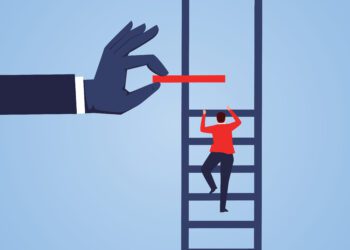
For centuries, leadership was framed as something reserved for a select few—powerful, charismatic, usually male figures who were believed to be born with innate greatness. This idea, known as the Great Man Theory of Leadership, shaped how organizations, institutions, and societies defined who was “fit” to lead.
The Great Man Theory didn’t just romanticize leadership; it reinforced exclusion. By suggesting that leadership was an inherent trait possessed by a small group of extraordinary men, it sidelined women and marginalized communities from positions of power. It subtly justified systemic barriers by implying that those not already in leadership simply weren’t “natural” leaders.
During this Women’s History Month and as we reflect on progress toward gender equity, it’s worth asking: How much of this legacy still influences our workplaces today?
In this article, we’ll explore how the Great Man Theory shaped traditional leadership expectations, examples of women who have defied the “born leader” stereotype, and how modern leadership research shows that leadership skills can be developed.
How the great man theory shaped leadership norms that sidelined women
The Great Man Theory not only influenced academic thinking, but also shaped real-world organizational culture.
Emerging in the 19th century, the theory asserted that history has been driven by extraordinary individuals (typically military, political, or industrial leaders) who possessed innate qualities that set them apart. Leadership, in this view, was not learned. It was inherited. And it was overwhelmingly male.
This framing created a powerful ripple effect. As more women joined the workforce, they entered a system already built around a narrow definition of leadership. The theory’s assumptions didn’t disappear over time, but rather became increasingly embedded in workplace culture, promotion systems, and performance standards.
Leadership standards in the workplace were modeled after men
As corporate structures formalized in the early- and mid-20th century, leadership expectations were heavily influenced by traits historically associated with male authority figures, such as decisiveness, dominance, competitiveness, and emotional restraint.
When women entered corporate environments in greater numbers, especially post-World War II and during the 1960s–1980s workforce expansion, they were evaluated against leadership norms that were never designed with them in mind.
In practice, this meant that:
- Assertiveness in men was seen as confidence.
- Assertiveness in women was often labeled aggressive.
- Collaboration and empathy (strengths many women leaders brought) were undervalued in performance evaluations.
Workplaces didn’t explicitly cite the Great Man Theory, but its blueprint was already baked into leadership criteria.
Hiring and promotion systems reinforced “natural leader” bias
As women began competing for management and executive roles, promotion systems often favored individuals who fit the traditional “born leader” mold.
Traits like charisma, confidence, and executive presence were treated as innate qualities rather than developed skills. Since leadership had historically been male-dominated, decision-makers often unconsciously selected candidates who resembled past leaders.
Over time, this meant that:
- Gender gaps persisted in executive leadership.
- Promotion timelines were slower for women.
- There were fewer stretch opportunities for emerging women leaders.
The assumption that leadership potential is something you “spot” rather than cultivate has roots in Great Man thinking.
Workplace culture created the double bind
As women moved into management roles in the late 20th and early 21st centuries, they often encountered what researchers now describe as the leadership double bind.
If women adopted traditionally masculine leadership behaviors, they risked social backlash. If they led collaboratively or relationally, they risked being perceived as lacking authority.
This tension is not accidental. It stems from a leadership model that was historically defined by male norms.
Development was deprioritized because leadership was seen as innate
Perhaps most significantly, the idea that leaders are “born” discouraged intentional leadership development.
For decades, organizations focused on identifying high-potential talent rather than systematically developing it. Women, who were often excluded from informal networks and mentorship pipelines, were less likely to be identified as “natural leaders,” which limited their access to advancement.
Only in recent decades has modern leadership research shifted toward the understanding that leadership competencies can be taught and refined. That shift has profound implications for equity. Understanding this history matters because you can’t redesign leadership for the future without first examining the myth it was built on.
Click below to learn more about how our equitable, results-oriented leadership coaching programs can help your organization overcome these barriers and biases to develop employees of all demographics and backgrounds into great leaders.