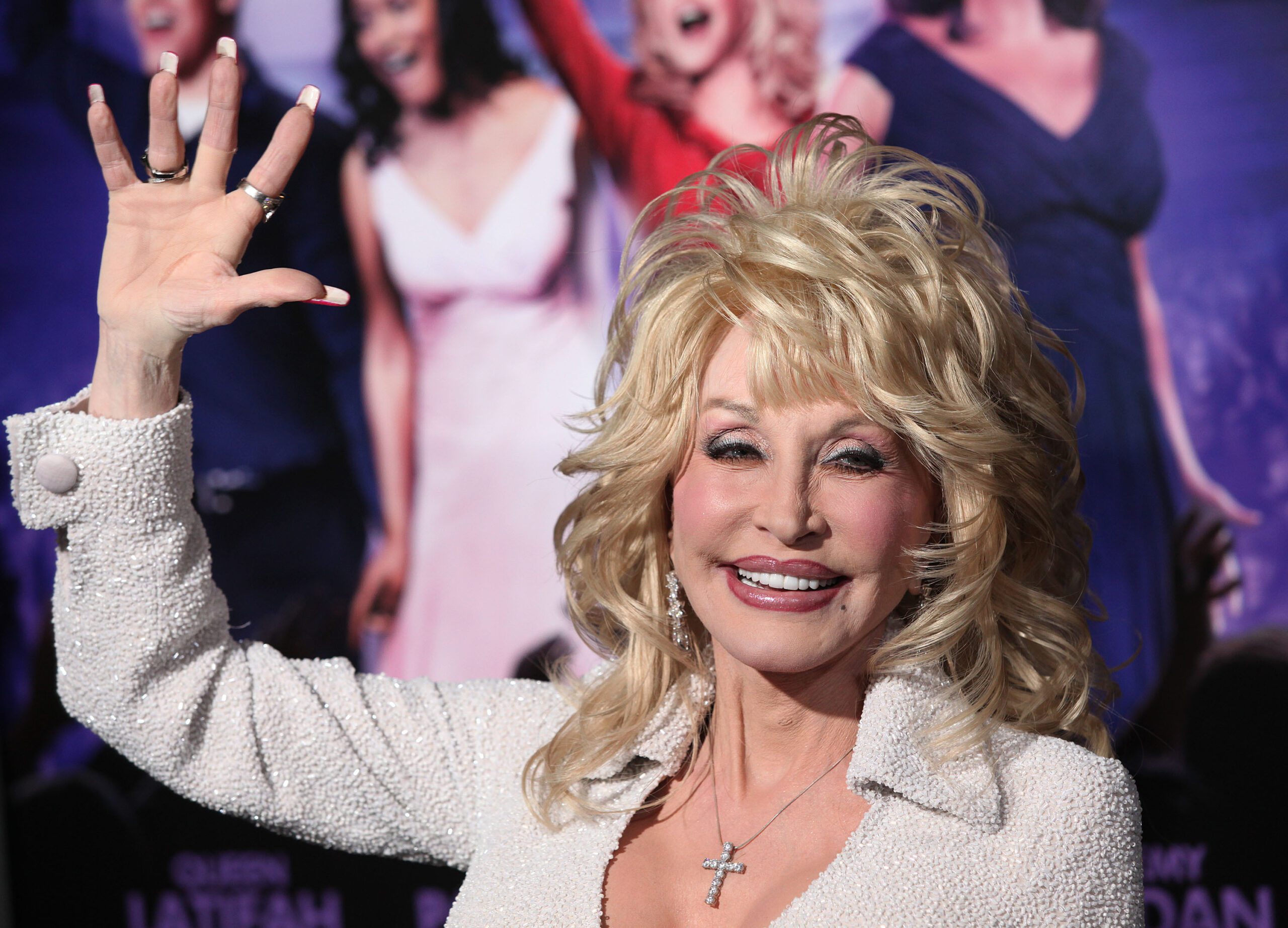
Parton was about six years old when she wrote her first song: Little Tiny Tasseltop, an ode to her favourite doll and its corn-silk hair.
For the rest of her career, she turned everyday details like those into songs of hope and heart.
Her 1971 classic Coat of Many Colors tells the profoundly moving story of Parton as a child being proud of the ragged, hand-sewn clothes her mother had made for her.
The 1974 concept album My Tennessee Mountain Home, meanwhile, is a musical autobiography that opens with Parton reciting the first letter she wrote home after moving to Nashville as a teenager.
“A couple of folks already told me that they might record a couple of my songs, so I’ll be makin’ enough money to get by,” she sang. “And I don’t want you to be worrying about me bein’ hungry or anything.”
The album cover is a photo of the two-room log cabin that was Parton’s actual childhood home in the 1940s and 50s, and the rest of the songs paint an idyllic picture of her childhood.
Even when the family didn’t have electricity and running water, she was determined to see the good in everyone and every situation.
“We might have been poor but we didn’t know it / We’d heard that word but we didn’t know what it meant.“
Inspired generations
Her diaristic approach to songwriting also gave birth to hits like Jolene – written about a red-headed love rival – and All I Can Do, a heartfelt declaration of love to her husband, Carl Dean.
Funny and authentic, she captured the trials and tribulations of life in a way that was always relatable, even when her stage outfits and her hairstyle remained larger than life.
The feminist message of 9 To 5 was preceded by When Possession Gets Too Strong and Just Because I’m A Woman, which castigated double standards in relationships: “My mistakes are no worse than yours / Just because I’m a woman.”
And in an era where women were forced into gendered stereotypes – housewife, temptress, fallen woman, mixed-up girl – she satirised and sent up those roles, playing them to the hilt while emphasising her strength.
“I’ve always been misunderstood because of how I look,” she sang on 2008’s Backwood Barbie. “Don’t judge me by the cover, cos I’m a real good book.”
Words like those inspired generations of women to be who they were, not who the world perceived them as.
And she used her music to unite people, even as much of the country music establishment entrenched itself in conservatism.
In 2002, at the House of Blues in Los Angeles, Parton even replaced the name Jolene with “drag queen” as a crowd of drag performers looked on.
Outside music, her philanthropy gave scholarships to impoverished students and supplied more than 200 million books to young readers.
Significantly, none of the country stars she inspired were ever billed as “the next Dolly Parton” because no-one did it like Dolly. She was unique. Irreplaceable. Unreproducible.
A legend in her lifetime, and now beyond.