Last week, Rivian (RIVN) and Uber (UBER) completed a $1.25 billion deal for up to 50,000 R2 robotaxis. The two dealmakers — Rivian CEO RJ Scaringe and Uber CEO Dara Khosrowshahi — have known each other for years, and the agreement was in the works for some time.
“Transportation, mobility is a small world, so I’ve known Dara for a long time,” Scaringe told Yahoo Finance in an exclusive interview. “We’ve been talking about this deal for maybe about a year, but different versions of it, and it’s hard to define a deal of scale where there’s so many unknowns.”
Some of those unknowns include metrics like vehicle revenue per mile, essentially the revenue generated while the vehicle is being used, Scaringe said, which is of utmost importance to Rivian and ultimately determined the parameters of a deal with Uber.
“We’re very, very bullish on what’s the rate of progress that we’re going to see as an industry towards Level four [self-driving], and we saw a real opportunity to do something exciting and large with Uber,” Scaringe said. “Ultimately, what came together, I think, is one of the larger deals, if not the largest deal, that they’ve done, both in terms of the investment, but also in terms of the vehicle fleet size.”
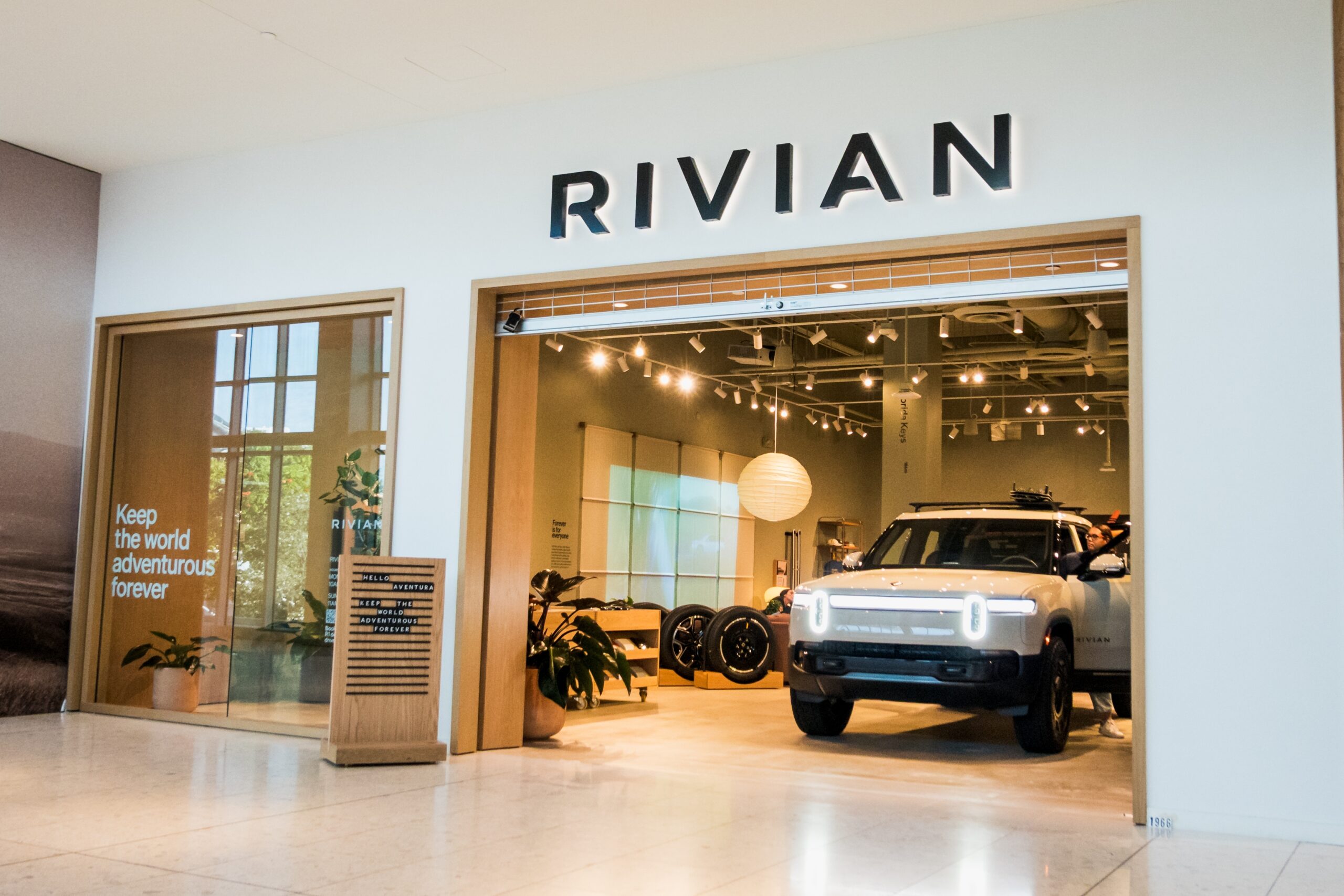
Part and parcel of that deal is Rivian’s upcoming R2 midsize EV, one that Scaringe said fit the form factor and package Uber was looking for.
Of course, Uber has other partners, including Rivian rival Lucid (LCID), but what’s different about the Rivian partnership is that there is no third tech partner or autonomous software provider.
In this case, Rivian’s in-house Autonomy Platform, which combines the company’s self-driving software with custom hardware like its Rivian-designed chips, will power the tech.
“There’s a lot of revenue for some of the digital or AI support services or enabling capabilities, and I think the biggest of those opportunities by far is the driver,” Scaringe said. “So, if you sell a vehicle and then you also sell a driver, the driver is quite valuable, right?” He noted that the “driver” in this case is powered by Rivian’s autonomous software.
And that’s not just for robotaxis. The vast majority of cars sold are for personal use, and Rivian’s Autonomy software is key to providing enhanced value — and revenue — for each car it sells.
It’s why the company is investing billions into the platform, though it will impact the company’s 2027 profitability target.
That being said, investment from partners like Uber and others will help give Rivian the runway to develop these platforms. It’s the same bet Tesla (TSLA) has been making for some time now with its FSD software and nascent robotaxi business.
But Uber’s investment — after seeing all that Rivian was doing in the autonomy space, including bits the company has not revealed yet — was validation, Scaringe said.