Saturday, September 19, 2026
  • Login
CEO North America
  • Home
  • News
    • Business
    • Entrepreneur
    • Industry
    • Innovation
    • Management & Leadership
  • CEO Interviews
  • Opinion
  • Technology
  • Environment
  • CEO Life
    • Art & Culture
    • Food
    • Health
    • Travel
No Result
View All Result
  • Home
  • News
    • Business
    • Entrepreneur
    • Industry
    • Innovation
    • Management & Leadership
  • CEO Interviews
  • Opinion
  • Technology
  • Environment
  • CEO Life
    • Art & Culture
    • Food
    • Health
    • Travel
No Result
View All Result
CEO North America
No Result
View All Result

CEO NA Magazine > Opinion > When diversity is not necessarily good

When diversity is not necessarily good

in Opinion
Share on LinkedinShare on WhatsApp

Universities are a growing bureaucracy because of a mandate, but the benefits have been far from effective.

The era of Donald Trump seems to have strengthened the diversity bureaucracy’s belief that students’ feelings must be protected.
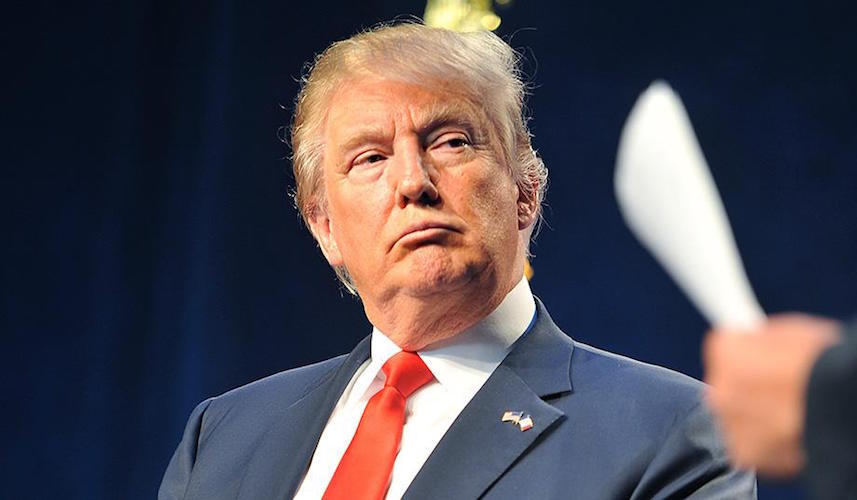
I don’t want people coming into this country with a lottery. I want people coming into this country based on merit, based on merit.” — President Trump, in remarks at the Conservative Political Action Conference, Feb. 23, 2018

The University of Michigan’s diversity budget reaches nearly $7 million per year, with nearly twenty diversity employees pulling down six-figure salaries, even as the school recently hiked tuition on its students. The highest salary on the list is Robert Sellers, listed as the Vice Provost for Equity and Inclusion & Chief Diversity Officer. Sellers makes over $396,000 per year.

American universities are boosting spending on “diversity officials”. At the University of California, Berkeley, for example, the number of diversity bureaucrats has grown to 175 or so, even as state funding to the university has been cut.

The pressure to increase the representation of females, blacks, and hispanics comes from the federal government, university administrators, and scientific societies themselves.

That pressure is changing how science is taught and how scientific qualifications are evaluated. The results will be disastrous for scientific innovation and for American competitiveness.

What explains their rise?

Recent years have seen a large growth in media coverage of claims that minorities and women are treated poorly on American campuses. Black students, says Derald Wing Sue, a psychologist at Columbia University, often complain that when they are complimented in class, “it’s almost as if the professor is surprised” that blacks can be articulately intelligent.

Some schools require transgressors to take diversity training, or mandate it for everyone.

Students at the University of Missouri must attend training to prevent even “unconscious discrimination”. A study of 669 American universities found that nearly a third require that faculty attend diversity training.

Universities say that a boom in regulations under Barack Obama’s administration increased the need to hire more bureaucrats of every kind. But one study found that for every dollar spent to comply with government rules, voluntary spending on bureaucracy totalled $2 at public universities and $3 at private ones.

Robert Martin of Centre College in Kentucky, a co-author of the study, says the real reason for the growth in spending is that administrators want to hire subordinates, thereby boosting their own authority and often pay, rather than faculty, over whom they have less power.

Bureaucrats outnumber faculty 2:1 at public universities and 2.5:1 at private colleges, double the ratio in the 1970s. Diversity is the top justification for these hires, says Richard Vedder of the Centre for College Affordability and Productivity, a think-tank. Of more than 1,000 bureaucrats at Ohio University in Athens, 400 are superfluous, he reckons. If let go, tuition fees could be cut by a fifth.

One result of all this is growing “resistance, anger, grumpiness, and eventually backlash” to the proliferation of diversity officials, says Alexandra Kalev of Tel Aviv University, one of the authors of the study on diversity training at American universities. Many white male professors, she found, now limit campus interaction with minorities and women, lest an unintentional slight get them in trouble.

High spending on diversity officials also leads to fewer classes, as well as higher tuition fees, which make it harder for minorities, who are disproportionately poor, to attend college.

Might students rebel? It looks unlikely.

Tags: Chief Diversity OfficerDiversityethnic diversity

Related Posts

AI Could Uncover the Hidden Ways People Work Together
Opinion

AI Could Uncover the Hidden Ways People Work Together

Building the AI muscle of your business leaders
Opinion

Building the AI muscle of your business leaders

A Decade of Data Shows Latino Entrepreneurs Growing and Adapting
Opinion

A Decade of Data Shows Latino Entrepreneurs Growing and Adapting

Ask for More Pay and Get Penalized, Stay Quiet and Fall Behind
Opinion

Ask for More Pay and Get Penalized, Stay Quiet and Fall Behind

Improving the Employee Experience
Opinion

Why Cooperative Workplaces Boost Your Sense of Freedom

Beyond the Machine: Why Human-Made Art Matters More in the Age of AI
Opinion

When people think AI did the creative work, task meaning and effort decline

Why Private Equity’s Performance Fees Make Economic Sense
Opinion

Why Private Equity’s Performance Fees Make Economic Sense

Opinion

4 ways to navigate entrepreneurship in the age of AI

The Way of Excellence: Lead for Sustainable Performance
Opinion

The Way of Excellence: Lead for Sustainable Performance

Compliance in business: What it is and why it matters
Opinion

Compliance in business: What it is and why it matters

No Result
View All Result

Recent Posts

  • Nestle considers options following Putin’s asset crackdown
  • How Staying Social Can Help to Prevent Dementia
  • Hyundai Motor CEO warns of insufficient guardrails amid Chinese vehicle surge
  • Poland’s Tatras: An affordable alternative to the Alps
  • Warren Buffett steps down as Berkshire Hathaway Chair

Archives

Categories

  • Art & Culture
  • Business
  • CEO Interviews
  • CEO Life
  • Editor´s Choice
  • Entrepreneur
  • Environment
  • Food
  • Health
  • Highlights
  • Industry
  • Innovation
  • Issues
  • Management & Leadership
  • News
  • Opinion
  • PrimeZone
  • Printed Version
  • Technology
  • Travel
  • Uncategorized

Meta

  • Log in
  • Entries feed
  • Comments feed
  • WordPress.org

  • CONTACT
  • GENERAL ENQUIRIES
  • ADVERTISING
  • MEDIA KIT
  • DIRECTORY
  • TERMS AND CONDITIONS

Advertising –
advertising@ceo-na.com

110 Wall St.,
3rd Floor
New York, NY.
10005
USA
+1 2125 9933 0330

Avenida Chapultepec 480,
Floor 11
Mexico City
06700
MEXICO

  • News
  • CEO Interviews
  • Opinion
  • Technology
  • Environment
  • CEO Life

  • CONTACT
  • GENERAL ENQUIRIES
  • ADVERTISING
  • MEDIA KIT
  • DIRECTORY
  • TERMS AND CONDITIONS

Advertising –
advertising@ceo-na.com

110 Wall St.,
3rd Floor
New York, NY.
10005
USA
+1 2125 9933 0330

Avenida Chapultepec 480,
Floor 11
Mexico City
06700
MEXICO

CEO North America © 2024 - Sitemap

Welcome Back!

Login to your account below

Forgotten Password?

Retrieve your password

Please enter your username or email address to reset your password.

Log In
No Result
View All Result
  • Home
  • News
    • Business
    • Entrepreneur
    • Industry
    • Innovation
    • Management & Leadership
  • CEO Interviews
  • Opinion
  • Technology
  • Environment
  • CEO Life
    • Art & Culture
    • Food
    • Health
    • Travel

© 2026 JNews - Premium WordPress news & magazine theme by Jegtheme.