On particularly bad, sleepless nights, Sofia finds herself worrying about whether the taps might run dry. “We are, at the end of the day, in a desert,” said the United Arab Emirates resident. Oil and gas may be at the heart of the economy, but water is “the basis of our survival.”
As the Iran war escalates, so do her fears. “If I were to put myself in the shoes of the enemy, for lack of a better term … this is what I would target, our most valuable resources … I never thought that I could be in danger of not having potable water,” said Sofia, who asked that her real name not be used.
She is not alone, concerns are growing across the region that one of its greatest strengths could become a target of war.
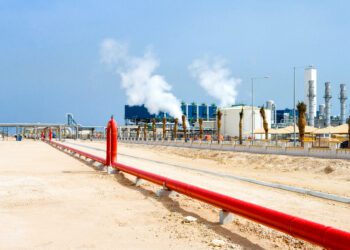
The arid countries of the Gulf, including the UAE, are exceptionally dependent on desalination, the process of converting seawater into drinking water. It’s why this acutely water scarce region is home to lush golf courses, vast water parks and ski slopes; it’s also why it faces an increasingly alarming vulnerability.
Bahraini officials said on Sunday an Iranian drone had damaged a desalination plant, although not affected water supplies. The attack followed Iran’s Foreign Minister Abbas Aragchi’s accusation that the US hit a desalination plant on Iran’s Qeshm Island affecting 30 villages, which he called a “dangerous move.” The US denied involvement.
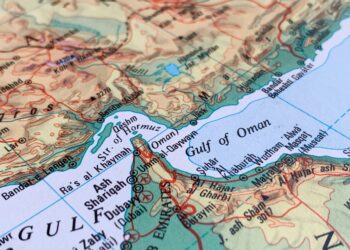
This apparent tit-for-tat highlights the potential danger posed to the hundreds of desalination plants in the Gulf that supply drinking water to roughly 100 million people. While Iran still gets most of its water from rivers and groundwater, the Gulf has few natural freshwater resources. Some countries — including Kuwait, Oman and Bahrain — rely on desalination for almost all drinking water.
A concerted attack on that infrastructure would be an almost “unthinkable escalation,” Michael Christopher Low, director of the Middle East Center at the University of Utah, told CNN.
But experts say the norms of war are shifting.
If attacks on desalination plants are “the beginning of a military policy and not just mistakes or collateral damage, this is both illegal — a war crime — and a very concerning development, as (Gulf) countries have only a few weeks of water storage,” said Laurent Lambert, an associate professor of public policy at the Doha Institute for Graduate Studies, in Qatar.
‘Saltwater kingdoms’
Oil and gas transformed the Gulf from a region characterized by sparsely populated states, to wealthy countries with gleaming, bustling cities within decades. But what many miss in this story is the impact of desalination, fueled by the same oil and gas, which has allowed populations to boom in desert countries with barely any rivers.
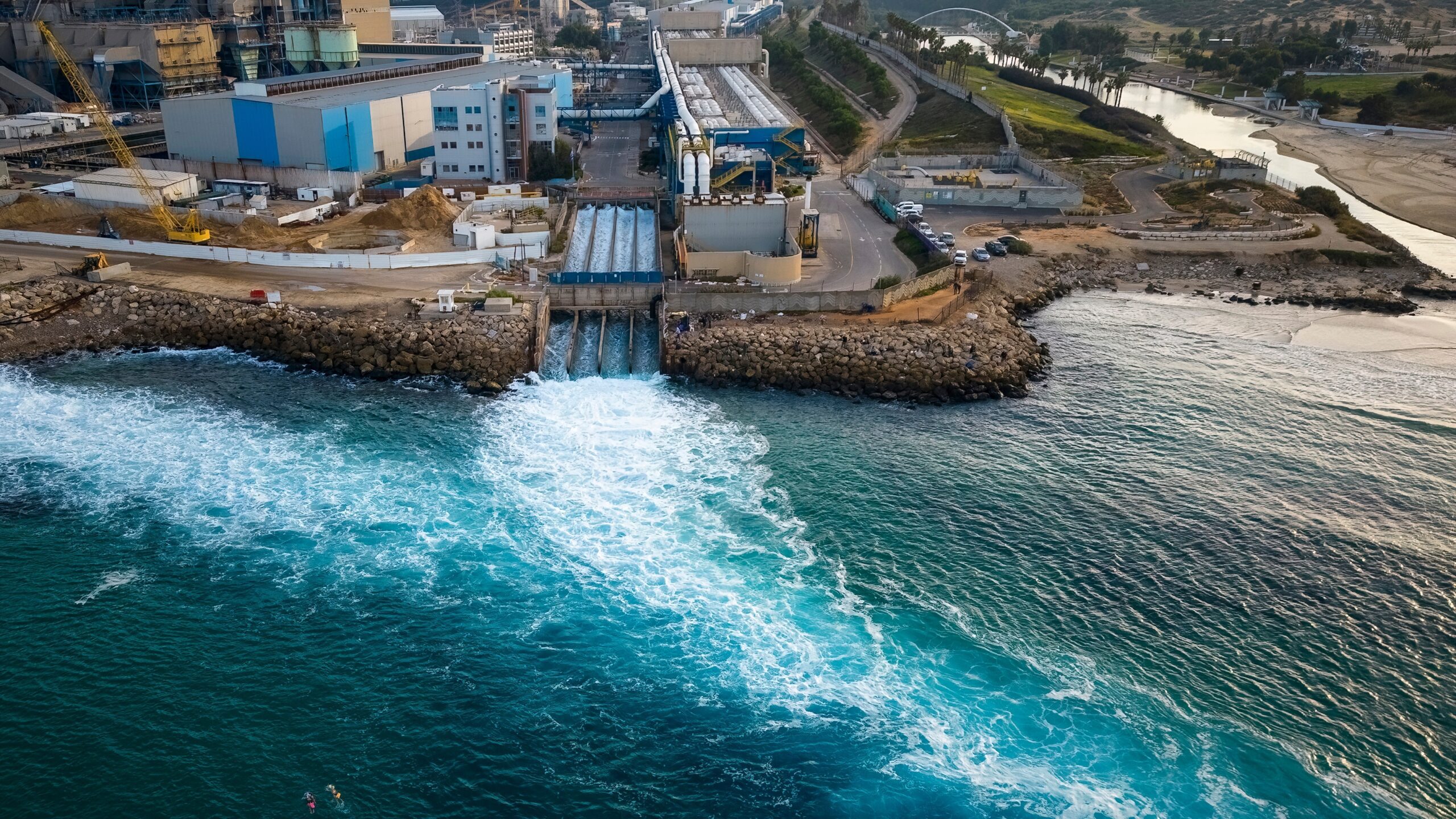
Desalination converts seawater into drinkable water by removing salt, minerals and impurities either by heating it up or pushing it through membranes at high pressure. It’s a process that is both costly and energy-intensive.
Gulf countries have become “saltwater kingdoms,” said Low, who is writing a book on the topic by the same name. “They are global superpowers in the production of manmade fossil-fueled water from the sea.”
Dependence has soared. For Kuwait and Oman it’s around 90%, for Bahrain 85% and Saudi Arabia around 70%. Major Gulf cities including Abu Dhabi, Dubai, Doha, Kuwait City and Jeddah are now almost wholly dependent on desalinated water.
Desalination is both a miracle and a vulnerability for the region. “Their economies, even the short-term survival of their population, are heavily dependent on the safety of these desalination plants,” said Nader Habibi, professor of the economics of the Middle East at Brandeis University.
Water as a target and weapon of war
Attacking vital civilian infrastructure is against international law. It would be “a provocative escalation” to launch a concerted attack on desalination plants, said David Michel, senior fellow for water security at the Center for Strategic and International Studies (CSIS).
But there is precedent. In 1991, during the Gulf War, Iraq intentionally released hundreds of millions of barrels of oil into the Persian Gulf, polluting the water used by Gulf desalination plants. Kuwait had to call on Turkey, Saudi Arabia and others to provide hundreds of water tankers and trucks to deliver bottled water.
The last decade, in particular, has seen a “significant erosion in the norms” around attacking water infrastructure, Michel said. Russia has launched more than 100 attacks on Ukraine’s water infrastructure during its invasion and Israel has destroyed water and sanitation facilities in Gaza.
It “has unfortunately become a trend,” said Marwa Daoudy, associate professor of international relations at Georgetown University. “Water has joined the long list of targets and weapons of war.”
Like reaching for a nuclear weapon
This is not the first time the question of water vulnerability has arisen for the Gulf states. The CIA produced a report in 2010 which concluded disruption of desalination in the Gulf “could have more serious consequences than the loss of any other industry or commodity.”
And while war is the current concern, Low thinks climate change is the bigger future risk. Not only is it driving increasingly frequent and severe storms and other extreme weather that could damage plants, but using planet-heating fossil fuels to create water feeds the climate crisis and exacerbates water scarcity. Desalination is “a 20th century victory that comes with 21st century potential climate questions,” he said.
The Gulf is now moving into the hottest time of the year, spring has arrived and summer is around the corner. “Water resources will only be more stressed the longer the conflict goes on, and the greater the exposure of this infrastructure,” Swanson said.
Sofia has considered stockpiling water but her husband talked her out of it. Like many Gulf residents, they are putting faith in their governments to ensure their needs are met.
What Iran decides to do remains uncertain, but experts say a concerted attack on desalination plants would be crossing a clear red line. It would be like reaching for a nuclear weapon, Low said. “It’s a really outlandish strategy,” he added, “the political and psychological scars, would be of a magnitude that I can’t quite imagine.”