Saturday, November 21, 2026
  • Login
CEO North America
  • Home
  • News
    • Business
    • Entrepreneur
    • Industry
    • Innovation
    • Management & Leadership
  • CEO Interviews
  • Opinion
  • Technology
  • Environment
  • CEO Life
    • Art & Culture
    • Food
    • Health
    • Travel
No Result
View All Result
  • Home
  • News
    • Business
    • Entrepreneur
    • Industry
    • Innovation
    • Management & Leadership
  • CEO Interviews
  • Opinion
  • Technology
  • Environment
  • CEO Life
    • Art & Culture
    • Food
    • Health
    • Travel
No Result
View All Result
CEO North America
No Result
View All Result

CEO NA Magazine > CEO Life > Environment > China is helping to cushion global oil prices below $100 — but analysts warn it won’t last

China is helping to cushion global oil prices below $100 — but analysts warn it won’t last

in Environment
China is helping to cushion global oil prices below $100 — but analysts warn it won’t last
Share on LinkedinShare on WhatsApp

A rapid reduction in Chinese crude imports has helped stop oil from trading even higher since the outbreak of the U.S.-Iran war — but analysts warn that price rises will be needed as market balance is gradually restored.

The Middle East conflict has entered its 100th day — but fears of a $200-per-barrel spike have failed to materialize, despite global crude supplies tumbling 14% since hostilities began on Feb. 28.

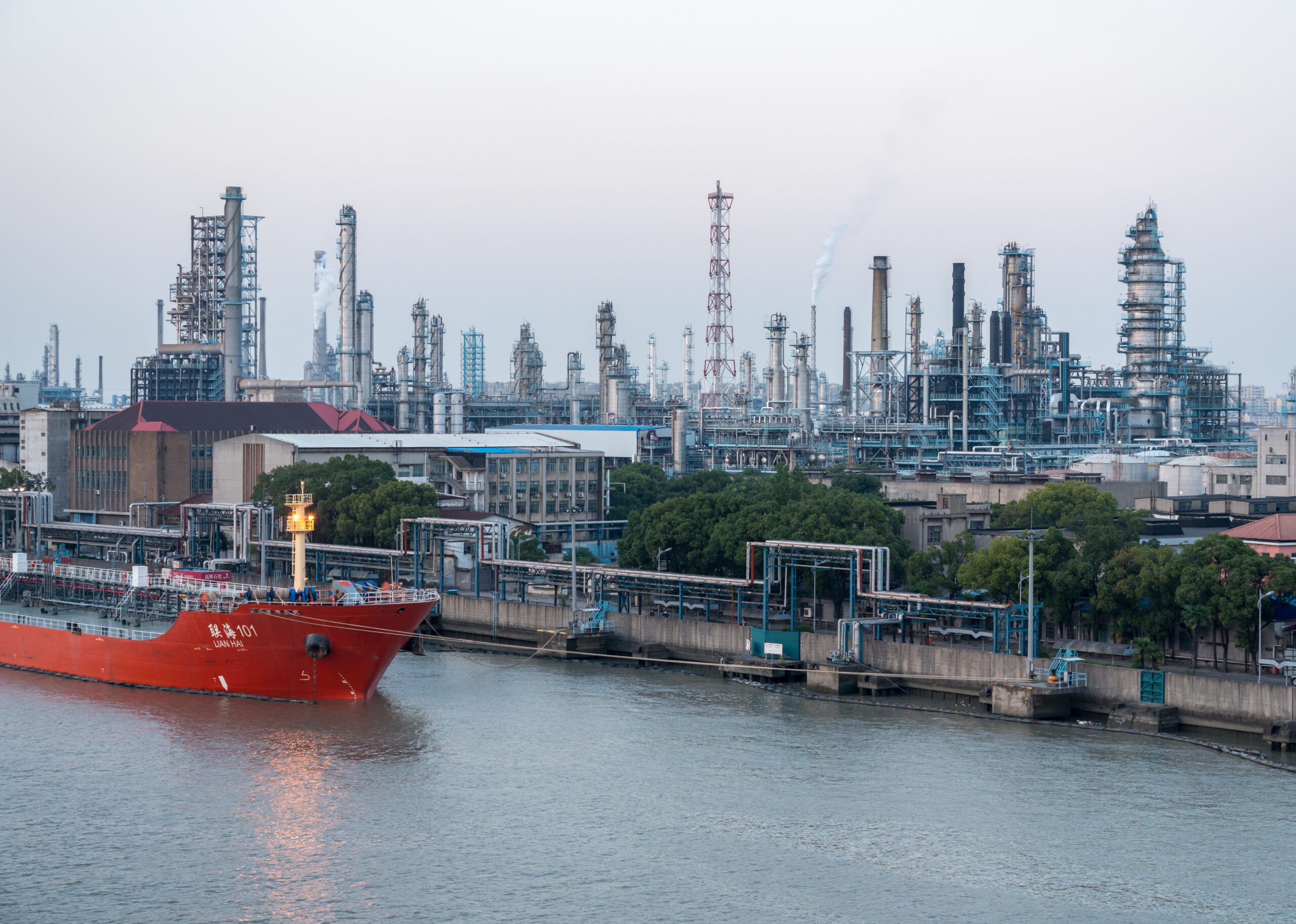
Market strategists say China is acting as a key pressure valve on energy markets, with Beijing’s move to cut crude imports from 11.7 million barrels a day in February to just under 9 million a day by late May helping to ease the Strait of Hormuz supply shock.

China’s cut represents about 74% of the decline in global crude imports, a “disproportionate” share of the adjustment, according to J.P. Morgan analysts, who said this has helped prices remain “remarkably calm” four months into the conflict.

However, Societe Generale warns that the market will ultimately require higher oil prices moving forward as global inventories are depleted and strategic reserves require rebuilding.

In a note, SocGen commodity analysts said the 14% loss in global crude supply, largely driven by the closure of the Strait of Hormuz, has pushed prices about 30% higher. In contrast, the 1973 OPEC oil embargo cut off about 7% of supply — but sent prices soaring some 134%.

SocGen analysts said multiple factors — including strategic inventory releases, reassuring signals from Washington, and increased output from countries including Brazil and Venezuela — have offset the Hormuz supply squeeze and helped avoid a repeat of the 1973 crisis.

But they pinpointed China’s “enormous” reduction of imports, at almost 3 million barrels a day, and lower refining activity, as a critical rebalancing force in markets.

“It represents one of the largest offsets to the shock, second only to Saudi rerouting flows and larger than coordinated SPR releases from the U.S., Europe, and Japan,” SocGen analysts led by Mike Haigh, head of FIC and commodity research, noted. 

Roughly one-fifth of the world’s seaborne oil supply passes through the Strait, a narrow shipping lane between Iran and Oman.

Renewed tensions

Rory Green, head of emerging markets macro and strategy at GlobalData TS Lombard, said China’s large-scale, rapid electrification of energy production and transportation since 2022 has helped shift China from an energy balance toward a “substantial surplus.” 

In a note published at the end of May, Green said crude oil prices have not exceeded $200 per barrel, “contrary to the predictions of many energy analysts at the outset of the Iran conflict”, adding that China’s “official and quasi-official” crude stockpiles have also played a role in cushioning prices.

Analysts are now split on oil’s price trajectory.

J.P. Morgan analysts said their base case scenario of a June reopening of the Strait would keep Brent crude at around $100 for the rest of 2026. They estimated that a longer-lasting closure would add about $5 in the third quarter and $15 in the fourth quarter as stocks deplete faster.

Fitch analysts, meanwhile, said a late July reopening would cause Brent prices to “fall sharply”, reaching an average of $70 per barrel from September, adding that the current spike reflects a “temporary logistical supply shock” rather than a lasting loss of production capacity. 

However, SocGen said strategic reserves will need to be rebuilt, adding that existing stockpiles will need incremental supply, and new oil production “requires stronger returns to move forward.” 

“Taken together, the longer-term equilibrium price for oil is likely higher than what the current forward curve implies,” SocGen’s commodity analysts added.


Read the full article by Hugh Leask / CNBC

Related Posts

New ‘Toxic Hall of Shame’ includes Publix, Trader Joe’s and McDonald’s
Environment

New ‘Toxic Hall of Shame’ includes Publix, Trader Joe’s and McDonald’s

Amazon CEO’s annual letter expresses excitement about AI
Environment

Amazon to invest $7 billion in renewable energy in India

Smart manufacturing is sustainable manufacturing
Environment

Smart manufacturing is sustainable manufacturing

Not enough STEM women for green jobs: IMF
Environment

Young people are reimagining climate-resilient cities

Emission taxes may undermine corporate investment and do little for the environment
Environment

Mobilizing private capital for climate-driven growth

Cities aren’t waiting to act; they are outpacing their own governments on transitioning away from fossil fuels
Environment

Cities aren’t waiting to act; they are outpacing their own governments on transitioning away from fossil fuels

The Rush for Resources
Environment

The Rush for Resources

Greenhushing: When Firms Do More Than They Say
Environment

Greenhushing: When Firms Do More Than They Say

ESG: A comprehensive guide to the main principles
Environment

ESG: A comprehensive guide to the main principles

How to build an ethical corporate culture
Environment

How to build an ethical corporate culture

No Result
View All Result

Recent Posts

  • Why are we so obsessed with the ’90s?
  • U.S. Loses Measles-Free Status After 26 Years
  • Plane clapping – joyful or deeply cringe?
  • The 4 themes shaping new manufacturing
  • Anthropic’s total raised reaches $93.5 billion after underwriters’ greenshoe overallotment

Archives

Categories

  • Art & Culture
  • Business
  • CEO Interviews
  • CEO Life
  • Editor´s Choice
  • Entrepreneur
  • Environment
  • Food
  • Health
  • Highlights
  • Industry
  • Innovation
  • Issues
  • Management & Leadership
  • News
  • Opinion
  • PrimeZone
  • Printed Version
  • Technology
  • Travel
  • Uncategorized

Meta

  • Log in
  • Entries feed
  • Comments feed
  • WordPress.org

  • CONTACT
  • GENERAL ENQUIRIES
  • ADVERTISING
  • MEDIA KIT
  • DIRECTORY
  • TERMS AND CONDITIONS

Advertising –
advertising@ceo-na.com

110 Wall St.,
3rd Floor
New York, NY.
10005
USA
+1 2125 9933 0330

UK
Collingwood Buildings,
38 Collingwood Street,
Newcastle Upon Tyne
NE1 1JF

  • News
  • CEO Interviews
  • Opinion
  • Technology
  • Environment
  • CEO Life

  • CONTACT
  • GENERAL ENQUIRIES
  • ADVERTISING
  • MEDIA KIT
  • DIRECTORY
  • TERMS AND CONDITIONS

Advertising –
advertising@ceo-na.com

110 Wall St.,
3rd Floor
New York, NY.
10005
USA
+1 2125 9933 0330

UK
Collingwood Buildings,
38 Collingwood Street,
Newcastle Upon Tyne
NE1 1JF

CEO North America © 2024 - Sitemap

Welcome Back!

Login to your account below

Forgotten Password?

Retrieve your password

Please enter your username or email address to reset your password.

Log In
No Result
View All Result
  • Home
  • News
    • Business
    • Entrepreneur
    • Industry
    • Innovation
    • Management & Leadership
  • CEO Interviews
  • Opinion
  • Technology
  • Environment
  • CEO Life
    • Art & Culture
    • Food
    • Health
    • Travel

© 2026 JNews - Premium WordPress news & magazine theme by Jegtheme.