Everyone’s talking about sustainability, but do businesses really make an effort to improve their environmental impact?
Here, we will discuss the importance of sustainability strategies and ways to implement them in your business.
Sustainability Strategy in Business
A sustainability strategy is a set of measures a business or organization takes to address environmental, social, and economic challenges. The primary goal of a sustainability strategy is to match an organization’s operations, goals, and values with sustainable practices that make the world a better place.
Sometimes, companies might seem to spend a lot of money on sustainability initiatives and get nothing in return. But that is not true. A well-developed sustainability strategy hugely benefits a business, improving its reputation, profits, and innovational potential.
You can find more benefits of growing a sustainable business below:
- Cost savings. Your investment in sustainability can pay off. Environmental sustainability strategies often focus on reducing resource consumption, energy use, and waste production.
- Better efficiency. Optimization is one of the main perks of developing a sustainability strategy. You can find ways to streamline processes, optimize supply chains, and adopt more efficient technologies, reducing the business’s harmful environmental impact.
- Innovation. Sustainability efforts also drive innovation because businesses try to find or invent better solutions. This can lead to the development of unique offerings that differentiate the company from competitors.
- Customer loyalty. As more and more people become environmentally conscious, you can attract more customers and B2B clients.
- Reputation. Positive environmental impact improves brand perception and trust. At the same time, a company risks ruining its reputation if it fails to prioritize sustainability.
- Employee satisfaction. People are more motivated to work for a company that contributes positively to society. You can improve employee retention and satisfaction just by giving your employees a sense of belonging to a greater purpose.
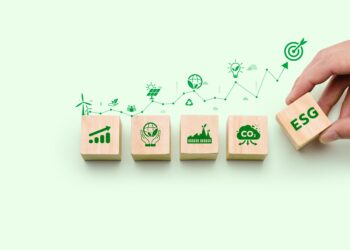
- Investments. These days, investors are very likely to consider ESG (environmental, social, and governance) factors before they make a decision about your business. Having a sustainability strategy lined up will give you access to more investors and capital sources.
- Easier with rules. Environmental regulations become stricter each year, so you need to stay up to date. You instantly reduce legal and financial risks when you make sure that your business is sustainable.
How Do Businesses Impact the Environment?
Let’s start with the not-so-great part. Only 17% of goods are sustainable, while 78% of customers would prefer to live more sustainable lives.
Many businesses play rough with the environment. Imagine a factory that spews out lots of pollution into the air. Or think about a company that uses a ton of plastic and doesn’t bother recycling. These businesses can harm the air, water, and land that we all share.
Some businesses are more conscious than others. For example, a restaurant that serves locally grown veggies and uses solar panels for power. Or a company that designs long-lasting products that you can use again and again. They can reduce waste, save energy, and be nice to nature.
The bigger the business, the more power it has to impact the environment and become a trendsetter in the corporate world. We’ve seen a lot of small eco-friendly local businesses, but are the big players really into this game?
All businesses, no matter at what scale they operate, leave carbon footprints. Eco-friendly initiatives became very popular in recent years, but you need to differentiate between driving actual change and simply creating an image.
While 90% of executives admit that sustainability is important, only 60% of the companies they work for actually have a sustainability strategy. Only 22.8% of Fortune 500 corporations work with the UN’s Sustainable Development Goals framework.
Remember, each business choice is like a move in this big game. And when they make smart moves, like using clean energy or cutting down on waste, they’re scoring points for the planet.