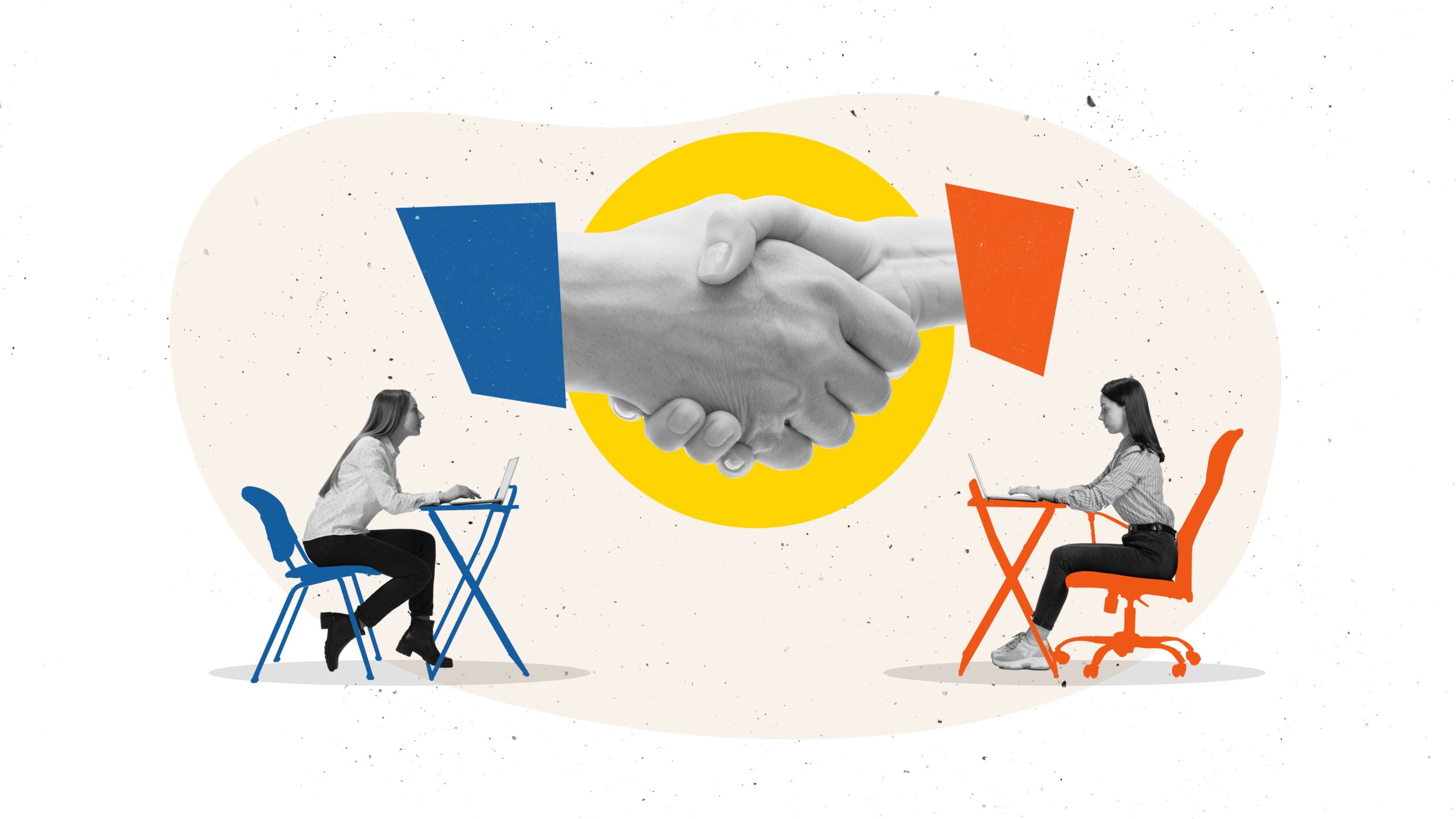
What do you need to delegate with confidence? Trust. No more, no less.
Mutual trust transforms impersonal interactions to a place where everyone feels fully invested in shared goals and strategy. And yet it’s easy to overlook the importance of cultivating trust across the organization.
The “economic value” of trust
Without trust there are some basic things that as humans we could not do – like leaving a child at school. Or eating a meal cooked by someone else in a restaurant. And in the corporate context it’s no different.
Indeed, trust generates “very real economic value,” says professor Josep Maria Rosanas. Efficiency, he argues, is built on trust. Leaders need to trust and be trusted so they can develop – and retain – talented employees; cultivate customer relationships; implement complex plans and strategies; and take risks that yield solid results. This is what other authors describe as “organizational citizenship” – a culture of trust that drives performance, efficiency and employee brand advocacy.
So who can you trust?
“The best way to find out if you can trust somebody is to trust them,” said Ernest Hemingway. Sometimes you have to make a leap of faith to find out just how trustworthy someone may, or may not be.
And this is easier for some than for others, says Rosanas. Those who have been betrayed are less likely to be trusting. Other factors that also influence your capacity to trust are uncontrollable intrinsic factors such as age and gender. Culture also comes into it. In the Chinese business market, for instance, common personal connections are highly prized.
A counter point to this is the so-called Trust Paradox. This is when trust becomes “almost incidental” – as when in the financial crisis, governments issued guarantees to customers and investor to undergird the solvency of the financial system. Banks were less vulnerable in the eyes of the customers – but they also didn’t need to do much about regaining their trust.
How do you build trust?
Trust between managers and employees is a cyclical process, based on repeated behaviors that are reinforced over time. First, leaders must earn trust through their own behavior, by assigning projects to new people, sharing information, and cultivating friendly relationships.
Here you have six keys to building trust:
- Consistency: Be consistent and be predictable in your decisions
- Ethics: Carry out actions based on ethical principles
- Communication: Keep an open flow of communication with employees
- Delegate: Share and delegate assignments
- Empathy: Show empathy and concern
- Loyalty: Demonstrate and expect loyalty
It comes down to treating people as human beings rather than instruments for obtaining results, as Rosanas concurs. And it’s an approach we share at IESE across our portfolio of programs which develop leadership competencies built on respect and ethical values.
When thinking of your employees and others with whom you interact, it’s important to assess how much they trust you. So says Prof. Sebastien Brion and co-authors in his paper “Knowing If You Are Trusted: Does Meta-Accuracy Promote Trust Development?” published in the journal Social Psychological and Personality Science.
The study found that those who misjudged how much they were trusted tended to generate less trust over time. But more specifically, those who overestimated how much they were trusted had a harder time building real trust.
Meanwhile, those who underestimated were not as harmed by their misjudgment. At the end of the day, retaining a sense of “humility” appears to pay trust dividends.
What happens when trust is lost?
Trust takes time and patience to earn, yet, it can be destroyed in minutes. Professor Mike Rosenberg points to the Volkswagen scandal to demonstrate what companies can do to avoid a serious breach of trust – or to regain it after reputation is tarnished. In the Volkswagen case, leadership put its employees in an impossible situation, Rosenberg argues, and then failed to check that their work was done with integrity. As a result, the company broke the law and lost its “social license” to operate.
When trust is lost, earning it back frequently calls for drastic measures. In the case of Volkswagen this could amount to cash compensation to drivers to repair their cars, and for the resale value their vehicles have lost, but “it’s better to pay now in order to build a better Volkswagen tomorrow,” says Rosenberg.