The recent escalation in conflict across the Middle East is creating significant implications for global supply chains. Disruptions have already affected Asia-linked trade flows and contributed to higher prices for energy and key industrial inputs sourced from the region. While the situation continues to evolve, companies are facing potential risks to input costs, lead times, cash flow, and supply continuity across multiple sectors.
Leadership teams should prioritize assessing their exposure and strengthening decision-making around the main areas of impact. This includes rapidly identifying where they are single-sourced, inventory-thin, or contractually exposed. They can then translate those risks into operational and financial triggers.
In practical terms, that means securing supply for the most critical materials, confirming alternative routings and logistics options, and reviewing supplier and site contingency plans. It also involves reassessing working-capital, insurance, and contractual exposure as lead times and risk-related costs shift.
Organizations that bring together supply chain, procurement, treasury, commercial, and risk teams early will be best positioned to make sourcing moves, customer commitments, freight decisions, and liquidity actions from a single, shared fact base.
Key areas where Middle East conflict is disrupting supply chains
The three main areas where companies are experiencing disruption in global trade flows are energy, other commodities, and transportation.
Energy — prices rise as risks grow at the Strait of Hormuz
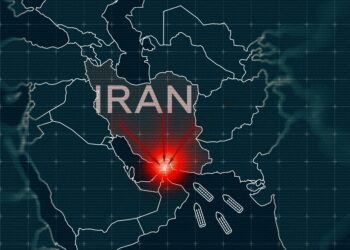
The Strait of Hormuz is a global energy choke point, as it is the transit route for about 20% of global petroleum liquids consumption, 25% of global seaborne oil trade, and 20% of global trade in liquefied natural gas (LNG). Overland pipelines through Saudi Arabia and the United Arab Emirates (UAE) provide some bypass capacity for oil, but it is not enough to maintain regular daily flows, and no such bypass capacity exists for LNG.
In particular, Hormuz is primarily an energy supply corridor for Asia: 84% of the continent’s oil and 83% of its LNG pass through the strait. However, the global nature of energy markets has also pushed up the price of Brent oil, the benchmark for Western crude, by 25%. It was $91 per barrel on March 11, up from $73 on February 27. European gas futures rose by 56%, to €50 per megawatt-hour on March 11 from €32 on February 27 , after a temporary spike above €60. Jet fuel prices increased by 58% from February 27 to March 6.
Other commodities — supplies are tightening due to disruptions
The shock extends beyond oil and gas markets. The six members of the Gulf Cooperation Council (GCC) are also a major source of industrial inputs that sit upstream in the food, manufacturing, and healthcare supply chains. Concretely, the region is a major exporter of key inputs such as fertilizers for crops, aluminium for cars, or helium for the production of semiconductors.
- Urea, used in fertilizers, faces added strain with more than 33% of global shipments passing through the Strait of Hormuz. Qatar closed its largest facility after a drone attack, and prices rose by more than 26% from February 27 to March 11.
- Methanol, a traded industrial feedstock, is produced largely in Saudi Arabia and Iran, which together produce around 20% of the global supply. Prices increased 17% from February 27 to March 11.
- Phosphate fertilizers, critical inputs for food systems, are produced in Saudi Arabia, with Ma’aden supplying 20% of the global trade. Prices have risen by 4%.
- Ammonia, a fertilizer- and chemicals-critical feedstock, is used directly in fertilizers and as an upstream input for urea, ammonium phosphates, and industrial chemicals. Saudi Arabia is the world’s second-largest exporter.
- Sulfur, a critical industrial input, is used mainly to make sulfuric acid for fertilizers and metals processing. The UAE are the biggest exporter, with a share of 23% of global exports, and prices rose by 23% from February 27 to March 11.
- Polymers, essential for packaging, automotive parts, construction materials, consumer goods, and electrical applications, are also tightening. Saudi Arabia and the UAE account for 20% of the global polyethylene trade, and prices rose 15% on March 11. The two countries also account for 18% of global trade in polypropylene, for which prices rose 16%.
- Primary aluminum, a manufacturing-critical input used in transport, construction, packaging, and electrical applications, is strained with the GCC accounting for about 8% of global supply, and Europe depending on the region for about 20% of its imports. Prices are up 9%.
- Helium, used in magnetic resonance imaging systems, semiconductors, fiber optics, and welding, as well as scientific and cryogenic applications, has seen significant disruption. Qatar provides 30% of global supply, and prices have risen by 35% since the attack and shutdown of the Ras Laffan production complex.
Transportation — Asia–Europe routes and logistics are being reshaped
The crisis is already squeezing freight availability, lengthening transit times, and pushing up transport costs in Asia–Europe corridors. Previous Red Sea disruptions — such as the Suez blockage in 2021, when the Ever Given ran aground, and the Houthi missile attacks over the sea in 2023 — had major impacts on global supply chains, as the corridor is designed for an optimized flow of goods. The recent conflict in the Middle East has had the following impact:
- Longer shipping routes. Maersk has rerouted its ships via the Cape of Good Hope and suspended all passages through the Strait of Hormuz until further notice, adding eight to 15 days to Asia–Europe container transit times.
- Insurance and booking constraints. CMA CGM introduced emergency conflict surcharges, including $2,000 on a 20-foot container, for specified Middle East cargo as of February 28. After protection and indemnity (P&I) clubs canceled war-risk cover, most shipping lines stopped accepting new bookings to and from the Middle East.
- Increased transport costs. CMA CGM also levied emergency fuel surcharges effective March 16, including $150 per 20-foot equivalent unit (TEU) for headhaul (outward-bound) dry cargo. For a 40-foot container, the charges equate to a 11% to 14% increase on baseline prices.
- Air transport disruption. Dubai, the world’s busiest airport by international passenger traffic , shut down and had only partially resumed operations as of March 7. Capacity constraints, delays, cancellations, and short-notice rate adjustments continue on air corridors between the Far East and Europe and between Asia and the Middle East. Cargo from Southeast Asia, the Indian Subcontinent, and Oceania is being rerouted via China and Hong Kong.
What businesses should do now as Middle East conflict reshapes supply chains
While the geopolitical impact remains uncertain, it has become clear that the growing Middle East conflict will likely lead to a broad — and potentially long-lasting — supply-chain shock. First, as during the 2021–22 energy shock, energy spillover could become a measurable driver of broader inflation.
Second, the disruption of other commodities will have downstream impacts. More expensive fertilizers will affect farm input costs and crop yields — and, therefore, food prices. Rising prices for inputs such as aluminum will make cars and appliances more expensive, and additional shortages and knock-on price increases are likely across industries from construction to healthcare.
Third, longer transport times and higher transport prices will directly impact companies’ margins, working capital, and cash flow, as seen during the previous disruptions in the Red Sea.
The end of active hostilities would not mean an immediate return to normal. Past crises suggest that even after a short-lived triggering event, commercial disruption typically takes several days or weeks to unwind, as insurers, carriers, traders, and industrial buyers re-open flows at their own pace.
Companies risk an extended period of uneven availability, elevated costs, and lead-time volatility. Exposure management should therefore continue beyond any ceasefire. Most global businesses should be pre-agreeing on response actions now, before disruption becomes visible in orders, shipments, margins, or quarterly cash flow.
Read the full article by Xavier Nougues, Sebastian Janssen, Thilo Grunwald, and Andre Martins / Oliver Wyman