Spiked with ridges and peaks that deliver scenery running the full four-seasons gamut — from electric green slopes to snow-capped crags — North Macedonia offers one of Southern Europe’s final chances to take the path less-traveled.
Previously known as Macedonia after declaring its independence from Yugoslavia in 1991, North Macedonia is an underexplored pocket of the Balkans whose layered history, from the Byzantine and the Ottoman to the Yugoslav eras, has combined with its omnipresent mountains to produce a set of regional cultures with a staunch commitment to tradition, and a warm, bottom-of-the-heart hospitality.
Located directly north of Greece, this landlocked nation is one of the world’s most mountainous countries, and the dramatic terrain is central to its identity.
“When I enter my car, whichever direction I want to drive, I have a mountain in front of me and a mountain behind me,” said Frosina Pandurska-Dramikjanin, who lives in the nation’s capital, Skopje, and works with rural development and community empowerment. “I think this is the best way to describe my country.”
The country of 2 million people, that’s slightly larger than Vermont, has yet to experience the throngs of tourists that choke much of Southern Europe every summer. Those involved in the travel industry are wary of courting that kind of mass tourism, which could adversely affect the quality of life for residents. But they know that the country has much to offer and the tourism sector still has room to grow.
Aleksandar Bogoevski, owner of Sustainable Adventure Travels, a travel agency that reinvests a share of its profits in the infrastructure of the communities it partners with, says that many tourists drive through the country every year on their way to nearby hotspots like Greece or Albania. He wants them to know that Macedonia is a destination all by itself.
“Approximately one million passengers are transiting Macedonia during the summertime. They don’t stop,” said Bogoevski. “I think there is so many other things that can be seen.”
Monasteries, spring-fed lakes and hiking
Much of what can be seen in North Macedonia lies along the sides of the small, winding roads that carve their way through the countryside along valley floors.
These routes are studded with immaculately preserved Byzantine monasteries, some more than 1,000 years old, replete with ornate woodworking inlaid with mother of pearl, gold-plated chandeliers and ancient frescoes. Among the best known is Bigorski Monastery, where an affordable guest house welcomes weary trekkers from nearby Mavrovo National Park. There, the brilliant ruby and topaz treetops on a meandering October drive can put any New England postcard to shame.
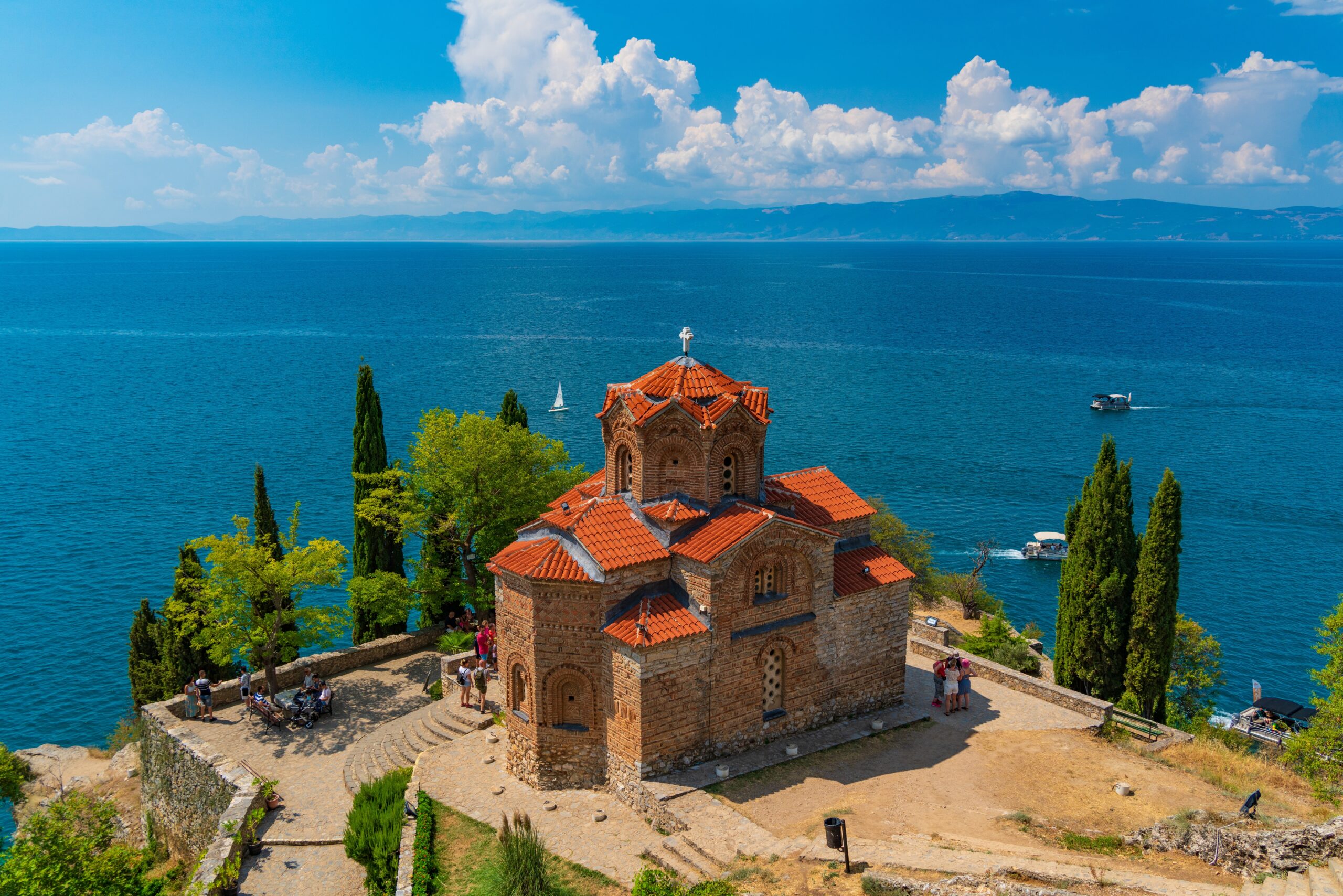
Sveti Naum, which has stood at the edge of Lake Ohrid since the year 905, is another well-known — and well worth visiting — monastery. Lake Ohrid, whose glittering waters are located south of Mavrovo on the Albanian border, is North Macedonia’s crown jewel.
A UNESCO World Heritage site ringed by mountains, the Lake Ohrid area pulls in visitors from across the Balkans every summer. Some come for ecotourism. The spring-fed lake boasts around 1,200 species of plants and animals. Others come for a more traditional tourist experience: shopping for freshwater pearls along the bazaar street in the historic town of Ohrid on the lake’s northeastern shore, or sipping on spritz cocktails at beach bars tucked along the shoreline. Another stunning national park, Galicica, hugs the eastern shore with spectacular Lake Prespa just southeast of that park.
More than a hundred miles north in the Šar Mountain range, on the country’s northwestern border with Kosovo, eager hikers and mountaineers can find an abundance of challenging routes. Some villagers in the mountains still practice an ancient shepherding practice known as transhumance by leading their sheep on seasonal migrations down to the villages in winter and up to the mountaintops in the summer.
Pandurska-Dramikjanin is grateful that the increasingly rare practice still exists in her country and thinks conscientious tourism could help sustain it. But she’s cautious about the overcommodification of a traditional way of life.
“In other countries, I have seen very, very bad examples of how mass tourism killed the local culture,” Pandurska-Dramikjanin said. “We want to keep tourists that will really appreciate our nature and our culture.”