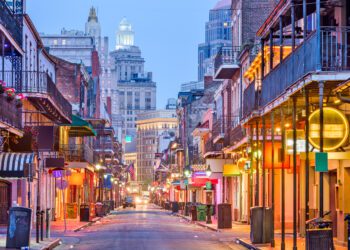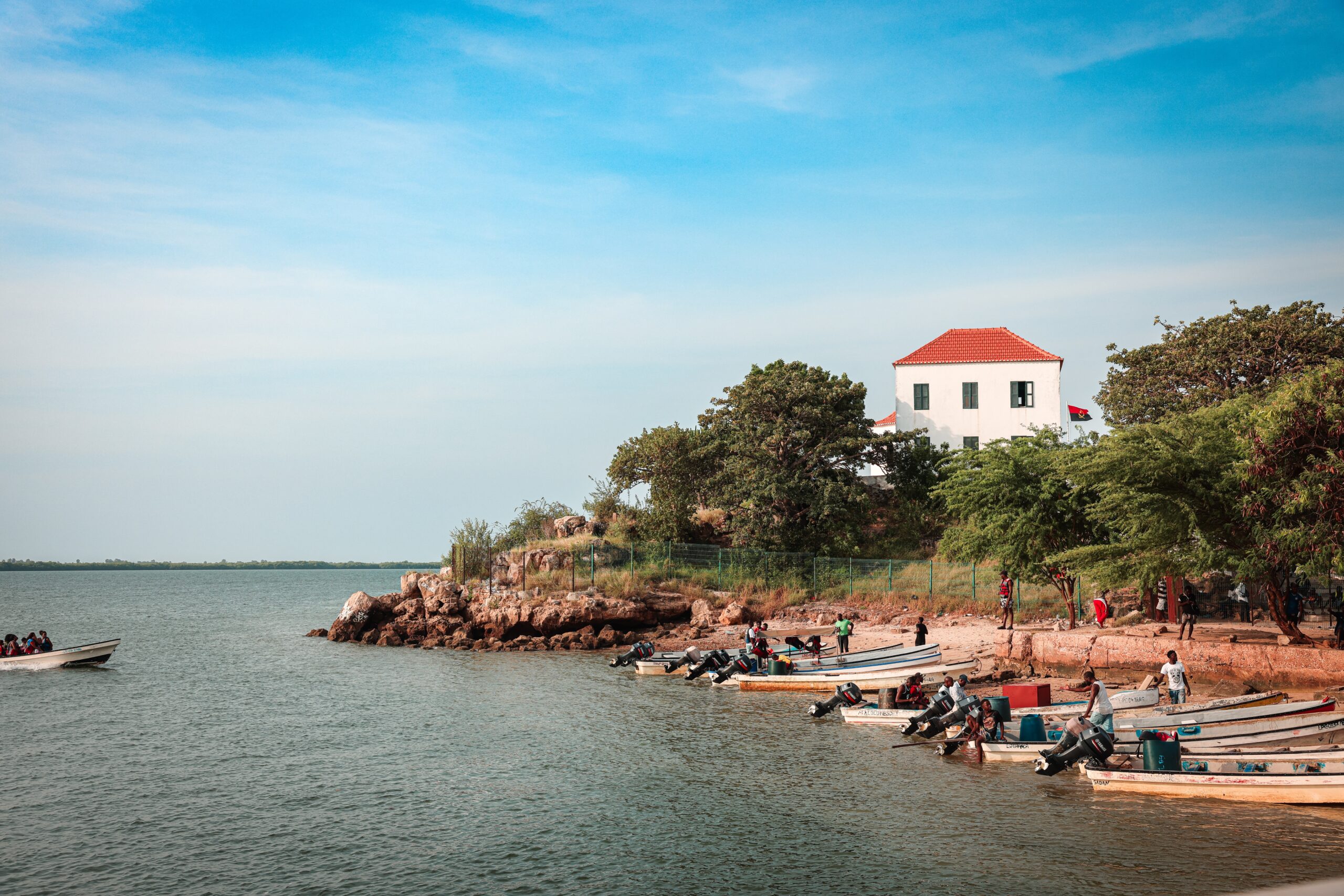
Along Luanda Bay’s Marginal promenade, the colonial-era National Bank — pink and white, formal and imposing — still dominates the view. But tucked beneath one of the shaded arches along its arcade, restaurant Teimosa da Banda buzzes with life.
A kitchen window opens directly onto the walkway. Government officials, tourists and neighbors stop for a drink and a bifana, the Portuguese sandwich of marinated pork on a roll. It’s casual, affordable and fun — qualities long absent from Luanda’s public dining life.
“You can sit with us,” said Teimosa da Banda co-founder Maria Lucena, running through the seating and socializing options at her restaurant. “Or we just talk with this group of people.”
For da Banda, the conversation is as important as the food.
“In our case, I think we brought everyone together with a glass of wine. We were like oh you’re here! Oh, the CEO, oh yes! Oh, the painter, oh, the hairdresser, oh, the makeup artist. So everyone had a little bit of a feel of a community at Teimoso.”
That sense of community reflects a broader shift in Angolan food — from how it’s grown, to how it’s cooked, to the businesses that make a food system work.
To understand why a sidewalk café matters, it helps to remember how food in Luanda once worked.
For decades, Angola’s food system barely functioned. During the civil war, landmines rendered vast areas unfarmable, cutting off both agriculture and internal transport. Anything not grown on a windowsill was imported, usually from Portugal — and unaffordable for most people.
The oil boom created a new elite and drove massive food imports, pushing prices even higher.
Now, Angolan life is settling into a different rhythm. Landmine clearance has reopened farmland for crops, ranching and even winemaking.
The trend shows up in trade data. Imports of fruit and vegetables fell by more than half from 2005 to 2024, from about $70 million to $32 million, according to the International Trade Centre. In 2005, Angola exported no vegetables and just $2,000 worth of fruit. Last year fruit and vegetable exports reached nearly $11 million.
Angola is still a net importer of food, but increasingly it feeds itself and is taking pride in local cuisine.
“Back in the day, going out was super expensive and everybody wanted to import everything,” said restaurateur and writer Claudio Silva. “There was no pride whatsoever in local produce and now it’s completely the inverse. Now, you go to these restaurants and chefs are creating exclusively Angolan tasting menus, exquisite dishes.”
At São Paulo market, one of the city’s busiest, chef Anselmo Silvestre moves stall to stall pointing out ingredients. After working at La Colombe in Cape Town, routinely ranked among the world’s top restaurants, he returned to Angola.
He picks up a small plastic packet tied with a knot, filled with a brown paste — peanuts blended with local sunflower seeds. Another combines peanuts and pumpkin seeds.
“It gives a very earthy flavor, and kind of roasted flavor,’ Silvestre said. He likes both the traditional ways of cooking with these ingredients, but also finding new innovations. One he uses in stews, the other to make a crumble to serve with ice cream. The vendors offer their own cooking tips, as well as medicinal ones.
“She was just saying that this … that the sunflower seeds can be used for treatment of prostate,” he explained. “So there’s a whole belief system behind a lot of these things.”
Read the full article By Griffin Shea / CNN