For adventurous travellers hoping to escape the masses, there’s an intriguing alternative: venturing to one of the few US national parks that are only accessible by boat or seaplane.
“Arriving by air or sea makes you acutely aware that you’re entering landscapes that operate on their own terms,” says Crystal Jones, a senior tour leader at the travel outfitter Intrepid. “The challenge of reaching these parks is part of their power. They reward travellers with something increasingly rare: a true sense of wilderness.”
From sun-soaked islands basking in the Caribbean Sea to a vast tundra landscape located above the Arctic Circle, here are five US national parks that road-trippers can’t reach.
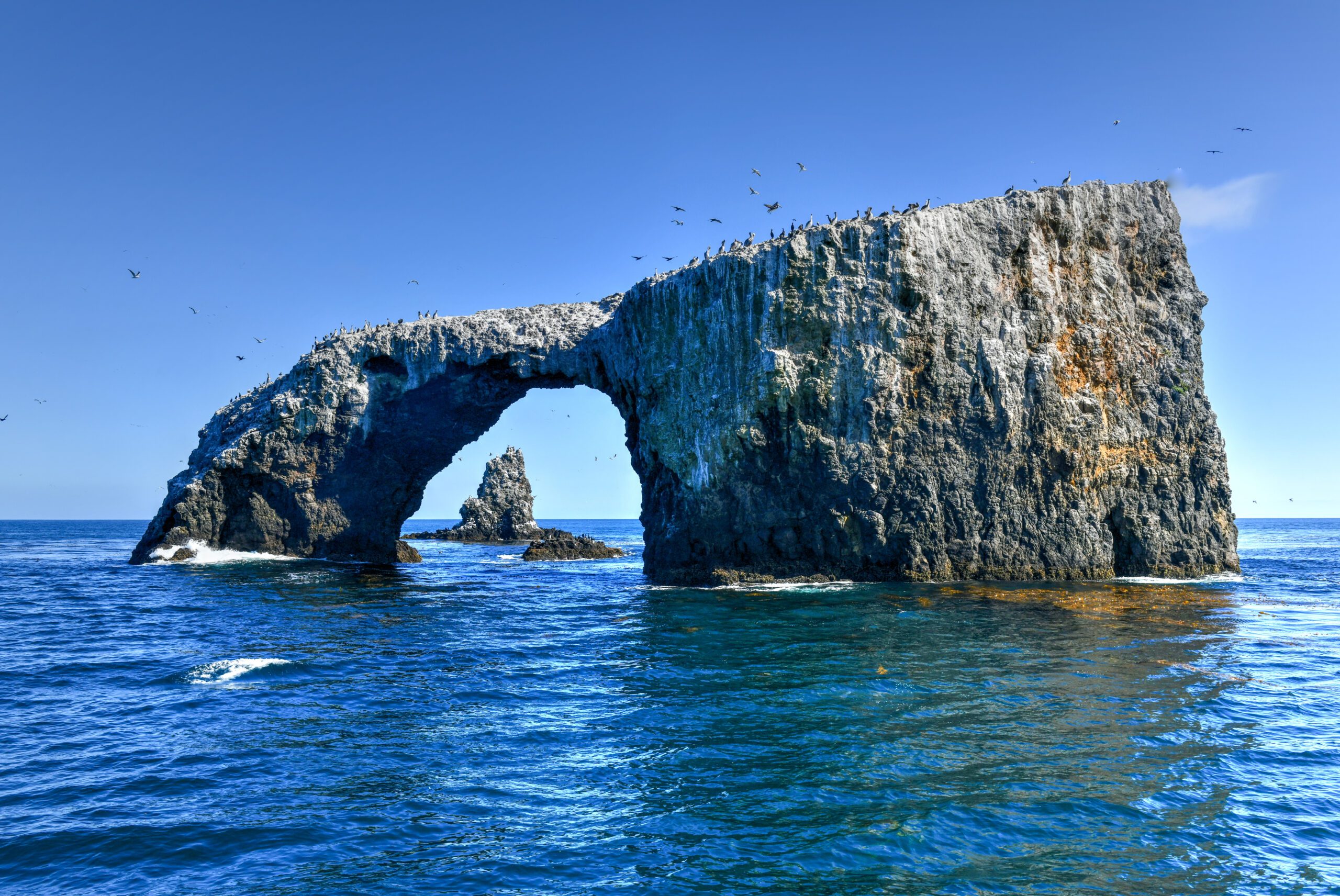
Channel Islands National Park, California
Often called “the Galapagos Islands of North America”, Channel Islands National Park is made up of five volcanic islands located 20 to 70 miles off the southern California coast and is home to dramatic peaks, coves and hiking trails – as well as 145 plant and animal species that live nowhere else. The islands are only accessible via ferry or private boat from Ventura or Oxnard Harbors.
“It can feel crowded when you get off the boat, but within five minutes you can be alone,” says Russell Galipeau, Channel Islands National Park’s former superintendent. “Many want to experience solitude, and that’s what you’ll find here.” In fact, since the islands are car-free, the only way to navigate them is on foot, by kayak or by private boat.
Gates Of The Arctic National Park & Preserve, Alaska
Located north of the Arctic Circle and 250 miles north-west of Fairbanks, Gates Of The Arctic National Park & Preserve is the US’ northernmost national park. There are no roads, trails or campsites here, and the only way to experience it is via air taxior by hiking in. The park consists of 8.4 million acres of vast, untouched tundra and boreal forest. But what it lacks in services and facilities, it makes up for in wild rivers, lakes and rugged peaks within the central Brooks Mountain Range. The National Park Service notes that all visitors should be proficient in outdoor survival skills and emergency situations.
Dry Tortugas National Park, Florida
Set 70 miles west of Key West in the Caribbean Sea, Dry Tortugas National Park covers 100 square miles of ocean – and 99% of its protected area is actually located underwater. The park is home to the third-largest barrier reef in the world, so it’s no surprise that these seven small islands are renowned for their snorkelling and diving. Above the surface, the sprawling, 19th-Century Fort Jefferson military base appears to float on the turquoise sea and once housed one of the men who conspired to kill US president Abraham Lincoln.
“It’s not every day that you get a physical remnant of a civil war, a presidential assassination link, bird watching, sea turtles [and] marine biodiversity all in one place,” says Thalia Toha, a geographer and architectural historian, who recently visited. Visitors can arrive via a private boat, charter or ferry from Key West, or they can board a seaplane from Key West International Airport.
Isle Royale National Park, Michigan
This remote archipelago of more than 450 islands in Lake Superior is only open to the public from mid-April through October. Designated as a Unesco Biosphere Reserve, this forested wilderness invites travellers to hike through forests, scuba dive to shipwrecks, fish, canoe or kayak.
Katmai National Park & Preserve, Alaska
Encompassing some four million acres, Katmai National Park & Preserve is an expansive wilderness of rivers, streams and the scarred Valley of Ten Thousand Smokes, where the largest volcanic eruption of the 20th Century occurred. While the park is larger than Connecticut and home to narrow gorges, extinct fumaroles and mountain-fringed lakes, the main draw is the roughly 2,200 brown bears that live here. In fact, the multiple viewing platforms at Brooks Camp are one of the best places to see brown bears in the wild – especially during the summer salmon run.