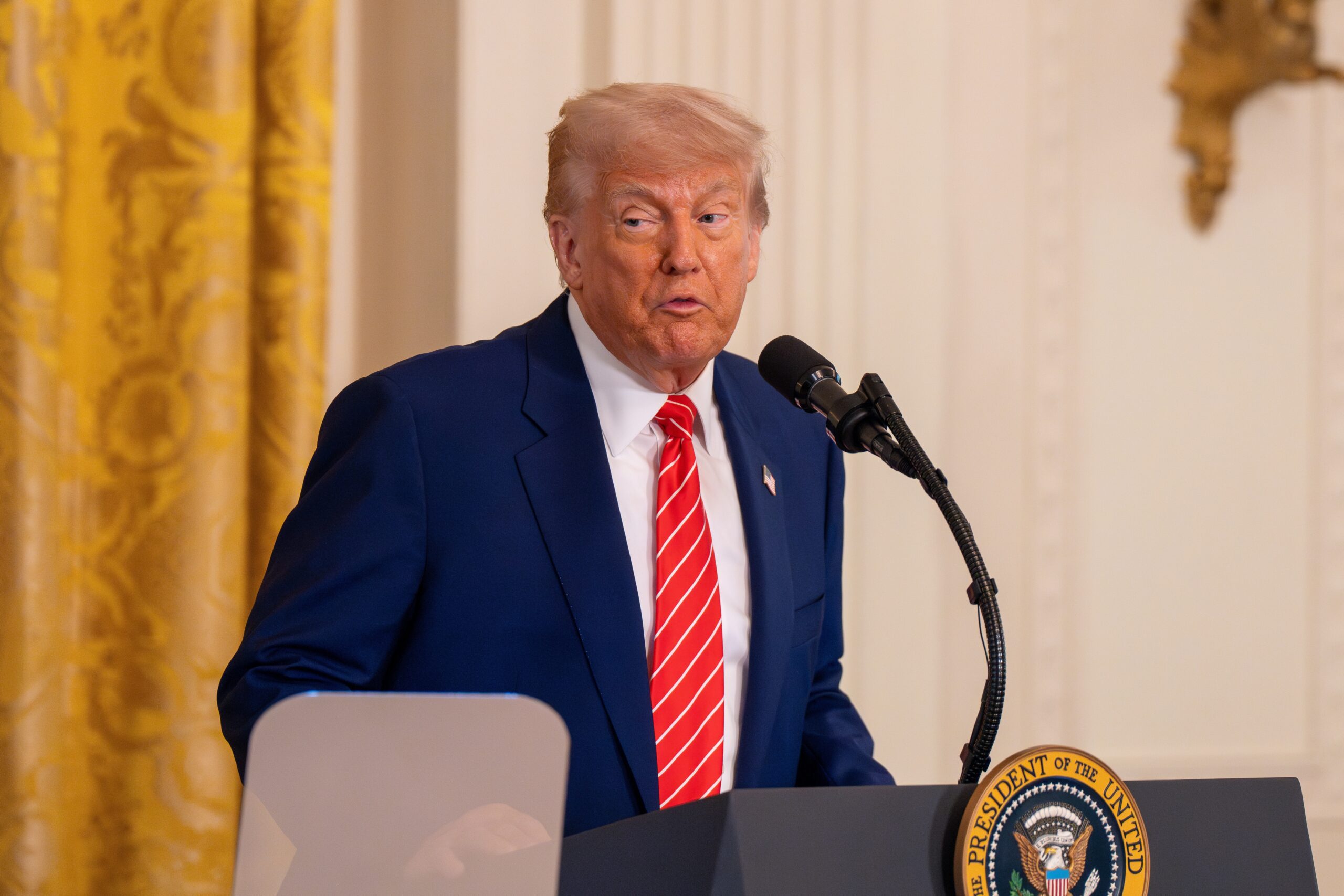
The climate crisis, Donald Trump told the UN last month, is “the greatest con job ever perpetrated on the world”. With these words the US president rejected the international scientific consensus and evidence that we can all check daily with a basic thermometer. He has also announced he is withdrawing the US from the Paris climate agreement, signed in 2015 by 195 UN countries. The US joins an axis of deniers including Yemen, Iran and Libya, countries that signed the agreement but never ratified it.
Paradoxically, Trump’s reversal provides an opportunity for others to advance the climate agenda: to sketch out the blueprint of a possible new world order without the US, even if Washington was the architect of the old one.
IIn 1995, global C02 emissions stood at 23.5bn tonnes; 30 years later, the level has reached a new record of 38bn tonnes. When Merkel tried for the first time to forge an agreement on gradually stopping the use of fossil fuels, 85% of total energy consumption came from oil, gas and coal. Today, that has only dropped to 80%. More worryingly, whereas we all accepted 10 years ago in Paris that the rise in global temperature must be kept well below 2C above preindustrial levels so as not to lose control of the “weather machine”, in Europe, according to the Copernicus observatory, we have already passed the 2.4C mark.
Clearly, we are failing. Multilateralism is in crisis and this may even be one of the reasons behind the appeal of populists such as Trump. But the rest of the world now has a (final) chance to show that “global” problems can still be solved collectively. Trump’s decision to pull the US out of a global system for addressing the climate crisis could be the window of opportunity we were waiting for. An opportunity somewhat like the one EU countries took advantage of in 2020 when they produced an unprecedented agreement on tackling the economic damage done by the pandemic. Consensus on issuing common debt was possible only because the UK, traditionally a sceptic on the matter, had removed itself from the EU.
But what exactly is to be done at the next US-free Cop? Some of the most difficult issues facing Cop30 risk getting lost in bitter negotiations: the “loss and damage” facility, for example, meant to compensate poor countries for climate-related disasters. Other discussions – such as that on the energy transition – seem paralysed by opposition from interest groups such as farmers, homeowners or European carmakers, who fear they will have to foot the bill.
The objective is still the right one, but the language, the metrics and the incentives must change. It must be made clear first and foremost that mitigating the effects of the climate crisis is an opportunity for innovation. The debate can’t permanently be about who bears the costs and who has the right to compensation. This is ultimately about an investment that will make our societies more resilient to global heating and less dependent on an energy model that is unstable and expensive.
No less important is the method we use to resolve such global challenges. The Cops, for instance, have a result/cost ratio which nobody could call “sustainable”. Do these conferences have to move to a different countryevery year? How about basing the meeting permanently in one or a small number of places, each focusing on a handful of specific challenges?
Perhaps it is time to refocus Cop’s mission: today, it involves diplomats negotiating frantically on the wording of a final communique, along with thousands of side events that have no impact on decision-making. It could instead focus on solutions to climate-related problems drawing on best practice globally, so that policymakers can identify how to scale up what works.
Two parties are key to the next Cop. Brazil, as the host country, needs a breakthrough. And the EU, which, as the part of the world most vulnerable to trade wars and no longer able to rely on the US, desperately needs new friends.
Brazil and the EU must come together around a pragmatic agenda. Alongside them should be India, Canada, the UK, Australia (the host of Cop31) and, yes, China. These seven may not be like-minded on many vital issues, but they still represent about half of the world’s emissions, population and GDP. I would argue that if they struck an agreement most of the other parties would follow.
The US under the influence of Trump and his Maga followers is missing in action and will be for the foreseeable future, despite sharing the same planetary and climatic conditions – including life-threatening wildfires and blizzards – as the rest of us. This is a grave mistake, but there is at least now an opportunity to shape a world that can function more efficiently without a hegemonic power. With the climate debate stuck at a crossroads, we must seize it.