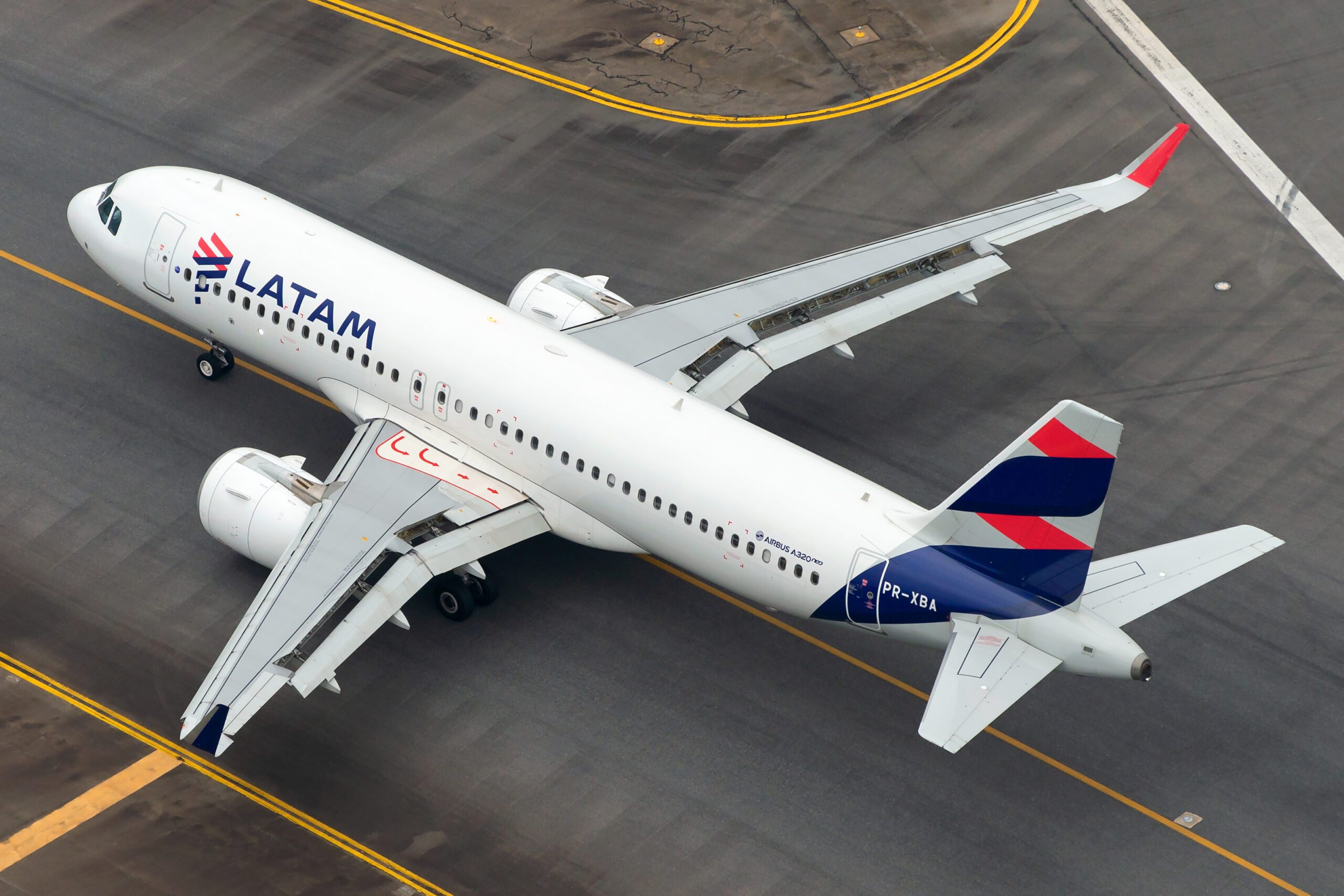
According to the International Energy Agency, aviation accounts for about 2 percent of global carbon dioxide emissions, and aviation emissions are expected to double by mid-century as demand for domestic and international air travel rises. To sharply reduce emissions in alignment with the Paris Agreement’s long-term goal to keep global warming below 1.5 degrees Celsius, the International Air Transport Association (IATA) has set a goal to achieve net-zero carbon emissions by 2050. Which raises the question: Are there technologically feasible and economically viable strategies to reach that goal within the next 25 years?
To begin to address that question, a team of researchers at the MIT Center for Sustainability Science and Strategy (CS3) and the MIT Laboratory for Aviation and the Environment has spent the past year analyzing aviation decarbonization options in Latin America, where air travel is expected to more than triple by 2050 and thereby double today’s aviation-related emissions in the region.
Chief among those options is the development and deployment of sustainable aviation fuel. Currently produced from low- and zero-carbon sources (feedstock) including municipal waste and non-food crops, and requiring practically no alteration of aircraft systems or refueling infrastructure, sustainable aviation fuel (SAF) has the potential to perform just as well as petroleum-based jet fuel with as low as 20 percent of its carbon footprint.
Focused on Brazil, Chile, Colombia, Ecuador, Mexico and Peru, the researchers assessed SAF feedstock availability, the costs of corresponding SAF pathways, and how SAF deployment would likely impact fuel use, prices, emissions, and aviation demand in each country. They also explored how efficiency improvements and market-based mechanisms could help the region to reach decarbonization targets. The team’s findings appear in a CS3 Special Report.
SAF emissions, costs, and sources
Under an ambitious emissions mitigation scenario designed to cap global warming at 1.5 C and raise the rate of SAF use in Latin America to 65 percent by 2050, the researchers projected aviation emissions to be reduced by about 60 percent in 2050 compared to a scenario in which existing climate policies are not strengthened. To achieve net-zero emissions by 2050, other measures would be required, such as improvements in operational and air traffic efficiencies, airplane fleet renewal, alternative forms of propulsion, and carbon offsets and removals.
As of 2024, jet fuel prices in Latin America are around $0.70 per liter. Based on the current availability of feedstocks, the researchers projected SAF costs within the six countries studied to range from $1.11 to $2.86 per liter. They cautioned that increased fuel prices could affect operating costs of the aviation sector and overall aviation demand unless strategies to manage price increases are implemented.
Under the 1.5 C scenario, the total cumulative capital investments required to build new SAF producing plants between 2025 and 2050 were estimated at $204 billion for the six countries (ranging from $5 billion in Ecuador to $84 billion in Brazil). The researchers identified sugarcane- and corn-based ethanol-to-jet fuel, palm oil- and soybean-based hydro-processed esters and fatty acids as the most promising feedstock sources in the near term for SAF production in Latin America.
“Our findings show that SAF offers a significant decarbonization pathway, which must be combined with an economy-wide emissions mitigation policy that uses market-based mechanisms to offset the remaining emissions,” says Sergey Paltsev, lead author of the report, MIT CS3 deputy director, and senior research scientist at the MIT Energy Initiative.
Recommendations
The researchers concluded the report with recommendations for national policymakers and aviation industry leaders in Latin America.
They stressed that government policy and regulatory mechanisms will be needed to create sufficient conditions to attract SAF investments in the region and make SAF commercially viable as the aviation industry decarbonizes operations. Without appropriate policy frameworks, SAF requirements will affect the cost of air travel. For fuel producers, stable, long-term-oriented policies and regulations will be needed to create robust supply chains, build demand for establishing economies of scale, and develop innovative pathways for producing SAF.
Finally, the research team recommended a region-wide collaboration in designing SAF policies. A unified decarbonization strategy among all countries in the region will help ensure competitiveness, economies of scale, and achievement of long-term carbon emissions-reduction goals.
“Regional feedstock availability and costs make Latin America a potential major player in SAF production,” says Angelo Gurgel, a principal research scientist at MIT CS3 and co-author of the study. “SAF requirements, combined with government support mechanisms, will ensure sustainable decarbonization while enhancing the region’s connectivity and the ability of disadvantaged communities to access air transport.”