Tuesday, April 28, 2026
  • Login
CEO North America
  • Home
  • News
    • Business
    • Entrepreneur
    • Industry
    • Innovation
    • Management & Leadership
  • CEO Interviews
  • Opinion
  • Technology
  • Environment
  • CEO Life
    • Art & Culture
    • Food
    • Health
    • Travel
No Result
View All Result
  • Home
  • News
    • Business
    • Entrepreneur
    • Industry
    • Innovation
    • Management & Leadership
  • CEO Interviews
  • Opinion
  • Technology
  • Environment
  • CEO Life
    • Art & Culture
    • Food
    • Health
    • Travel
No Result
View All Result
CEO North America
No Result
View All Result

CEO NA Magazine > CEO Life > Environment > Climate crisis on track to destroy capitalism, warns top insurer

Climate crisis on track to destroy capitalism, warns top insurer

in Environment
Underground heat may affect building integrity
Share on LinkedinShare on WhatsApp

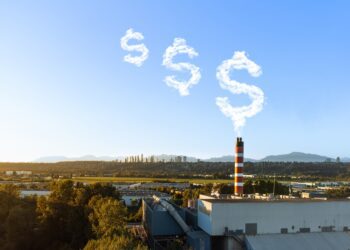
The climate crisis is on track to destroy capitalism, a top insurer has warned, with the vast cost of extreme weather impacts leaving the financial sector unable to operate.

The world is fast approaching temperature levels where insurers will no longer be able to offer cover for many climate risks, said Günther Thallinger, on the board of Allianz SE, one of the world’s biggest insurance companies. He said that without insurance, which is already being pulled in some places, many other financial services become unviable, from mortgages to investments.

Global carbon emissions are still rising and current policies will result in a rise in global temperature between 2.2C and 3.4C above pre-industrial levels. The damage at 3C will be so great that governments will be unable to provide financial bailouts and it will be impossible to adapt to many climate impacts, said Thallinger, who is also the chair of the German company’s investment board and was previously CEO of Allianz Investment Management.

The core business of the insurance industry is risk management and it has long taken the dangers of global heating very seriously. In recent reports, Aviva said extreme weather damages for the decade to 2023 hit $2tn, while GallagherRE said the figure was $400bn in 2024. Zurich said it was “essential” to hit net zero by 2050.

Thallinger said: “The good news is we already have the technologies to switch from fossil combustion to zero-emission energy. The only thing missing is speed and scale. This is about saving the conditions under which markets, finance, and civilisation itself can continue to operate.”

Nick Robins, the chair of the Just Transition Finance Lab at the London School of Economics, said: “This devastating analysis from a global insurance leader sets out not just the financial but also the civilisational threat posed by climate change. It needs to be the basis for renewed action, particularly in the countries of the global south.”

“The insurance sector is a canary in the coalmine when it comes to climate impacts,” said Janos Pasztor, former UN assistant secretary-general for climate change.

The argument set out by Thallinger in a LinkedIn post begins with the increasingly severe damage being caused by the climate crisis: “Heat and water destroy capital. Flooded homes lose value. Overheated cities become uninhabitable. Entire asset classes are degrading in real time.”

“We are fast approaching temperature levels – 1.5C, 2C, 3C – where insurers will no longer be able to offer coverage for many of these risks,” he said. “The math breaks down: the premiums required exceed what people or companies can pay. This is already happening. Entire regions are becoming uninsurable.” He cited companies ending home insurance in California due to wildfires.

Thallinger said it was a systemic risk “threatening the very foundation of the financial sector”, because a lack of insurance means other financial services become unavailable: “This is a climate-induced credit crunch.”

“This applies not only to housing, but to infrastructure, transportation, agriculture, and industry,” he said. “The economic value of entire regions – coastal, arid, wildfire-prone – will begin to vanish from financial ledgers. Markets will reprice, rapidly and brutally. This is what a climate-driven market failure looks like.”

By Damian Carrington / The Guardian

Related Posts

The stunning underwater world that’s at risk as the Iran war drags on
Environment

The stunning underwater world that’s at risk as the Iran war drags on

There are fixes for AI’s toll on the power grid. Here’s why they’re not happening
Environment

There are fixes for AI’s toll on the power grid. Here’s why they’re not happening

Biden announces offshore wind rights sale in Gulf of Mexico
Environment

France’s Engie discussing refund for US offshore wind projects with Trump administration

Chef José Andrés warns war-driven inflation will cause a larger world hunger problem
Environment

Chef José Andrés warns war-driven inflation will cause a larger world hunger problem

Jet fuel shock from Iran war worsens crisis for global airlines
Environment

Jet fuel shock from Iran war worsens crisis for global airlines

‘The thaw is real’: Indian delegation visits China to talk EVs and more
Environment

‘The thaw is real’: Indian delegation visits China to talk EVs and more

What to know about the 4 people launching to make history around the moon
Environment

What to know about the 4 people launching to make history around the moon

The shift from oil isn’t just about being ‘green’ anymore. It’s a massive power move for national security.
Environment

The shift from oil isn’t just about being ‘green’ anymore. It’s a massive power move for national security.

CEO NA opens the bonnet to understand the latest state of play at Musk’s Tesla
Environment

Tesla Says Semi Battery Is ‘Designed To Last A Million Miles’

White House to pay TotalEnergies $1 billion to kill off East Coast wind farm projects
Environment

White House to pay TotalEnergies $1 billion to kill off East Coast wind farm projects

No Result
View All Result

Recent Posts

  • Debunking the great man theory: How leadership is developed, not inherited
  • The stunning underwater world that’s at risk as the Iran war drags on
  • GM lifts 2026 guidance following $500 million tariff refund
  • Coca-Cola beats estimates and raises earnings forecast as global demand booms
  • Oil climbs above $110 as the world awaits Trump’s response on Iran

Archives

Categories

  • Art & Culture
  • Business
  • CEO Interviews
  • CEO Life
  • Editor´s Choice
  • Entrepreneur
  • Environment
  • Food
  • Health
  • Highlights
  • Industry
  • Innovation
  • Issues
  • Management & Leadership
  • News
  • Opinion
  • PrimeZone
  • Printed Version
  • Technology
  • Travel
  • Uncategorized

Meta

  • Log in
  • Entries feed
  • Comments feed
  • WordPress.org

  • CONTACT
  • GENERAL ENQUIRIES
  • ADVERTISING
  • MEDIA KIT
  • DIRECTORY
  • TERMS AND CONDITIONS

Advertising –
advertising@ceo-na.com

110 Wall St.,
3rd Floor
New York, NY.
10005
USA
+1 212 432 5800

Avenida Chapultepec 480,
Floor 11
Mexico City
06700
MEXICO

  • News
  • CEO Interviews
  • Opinion
  • Technology
  • Environment
  • CEO Life

  • CONTACT
  • GENERAL ENQUIRIES
  • ADVERTISING
  • MEDIA KIT
  • DIRECTORY
  • TERMS AND CONDITIONS

Advertising –
advertising@ceo-na.com

110 Wall St.,
3rd Floor
New York, NY.
10005
USA
+1 212 432 5800

Avenida Chapultepec 480,
Floor 11
Mexico City
06700
MEXICO

CEO North America © 2024 - Sitemap

Welcome Back!

Login to your account below

Forgotten Password?

Retrieve your password

Please enter your username or email address to reset your password.

Log In
No Result
View All Result
  • Home
  • News
    • Business
    • Entrepreneur
    • Industry
    • Innovation
    • Management & Leadership
  • CEO Interviews
  • Opinion
  • Technology
  • Environment
  • CEO Life
    • Art & Culture
    • Food
    • Health
    • Travel

© 2026 JNews - Premium WordPress news & magazine theme by Jegtheme.