Spring is ushering in a veritable spread of museum shows across New York—from major exhibitions on such art-world luminaries as Marcel Duchamp and Raphael to spotlights on photography, fashion, and architecture, all unfolding alongside the sprawling surveys of the Whitney Biennial and Greater New York. Here’s our round-up of what’s unmissable.
1. “Noguchi’s New York” at the Noguchi Museum
Through September 13
Although Isamu Noguchi’s practice bore the influences of an itinerant life—from the bark paper and bamboo constructions he encountered in Gifu, Japan, to the treatment of marble he learned in Carrara, Italy—the great sculptor was, ultimately, a New Yorker. Beginning in 1922, the city was Noguchi’s on-and-off home for nearly 70 years and, as an exhibition at the Long Island City museum he established shows, he had a great many ideas for it.
Play Mountain was one such idea: a sloped playground the size of a city block that he dreamed of erecting in the middle of Central Park. He pitched it to the Public Works of Art Project in 1934, but was laughed out of the room by none other than Robert Moses. Later installations planned for the United Nations, Riverside Park, and Bronx Zoo would also be scrapped, stories which are told through the models, archival photographs, and dogged correspondence on display at the exhibition. —Richard Whiddington
2. “Raphael: Sublime Poetry” at the Metropolitan Museum of Art
Through June 28
In the 1510s, Michelangelo began openly criticizing the hottest painter in Rome for being derivative and employing dozens of assistants to execute his litany of projects. That man was Raffaello di Giovanni Santi—aka Raphael—a precocious talent who had synthesized painterly styles in the late 1400s to become the Vatican’s darling by the age of 25.
Visitors to the Met’s once-in-a-generation show “Raphael: Sublime Poetry” may not share Michelangelo discontents, but through the more than 170 works amassed in New York, they will certainly leave with a fuller sense of the man the Renaissance chronicler Giorgio Vasaricalled a “mortal god.” The show traces Raphael’s full life, from growing up in Urbino to a middling stint in Florence to his glorious successes at the papal court. Along the way, there were lovers, rivals, oodles of money, and a tragically premature end that, if rumors are to be believed, had Pope Leo X weeping. —R.W.
3. “Gothic by Design: The Dawn of Architectural Draftsmanship” at the Metropolitan Museum of Art
Through July 19
Gothic monuments from the Notre-Dame to the Cologne Cathedraltransformed the European skyline from the 12th century, sending complex spires and towers upward in a sign of divine aspiration. Within, rib vaults and pointed arches ensured these structures were airy and light-filled. These intricate designs called on an exacting process that began at the architects’ drawing boards. Often left unseen and overlooked, these drawings and prints are getting the rare spotlight at the Met, in a show that explores Gothic architecture drawings within an art-historical context.
Here, we’ll get a glimpse of more than 90 works—from blueprints and goldsmith works to architectural elements—to highlight the impact of drawing on the development of the Gothic style from the 13th to 16th century. These graphic pieces, gathered from the museum’s collections and a dozen lenders, will be juxtaposed against objects from the era, drawing out the strategies, collaborations, and thinking behind the Gothic building practice. These are themes, said curator Femke Speelberg, that “resonate across time and culture, including identity and legacy building, artistic development and creative exploration, and ingenuity and wit in design.” —Min Chen
4. “Marcel Duchamp” at the Museum of Modern Art
Through August 22
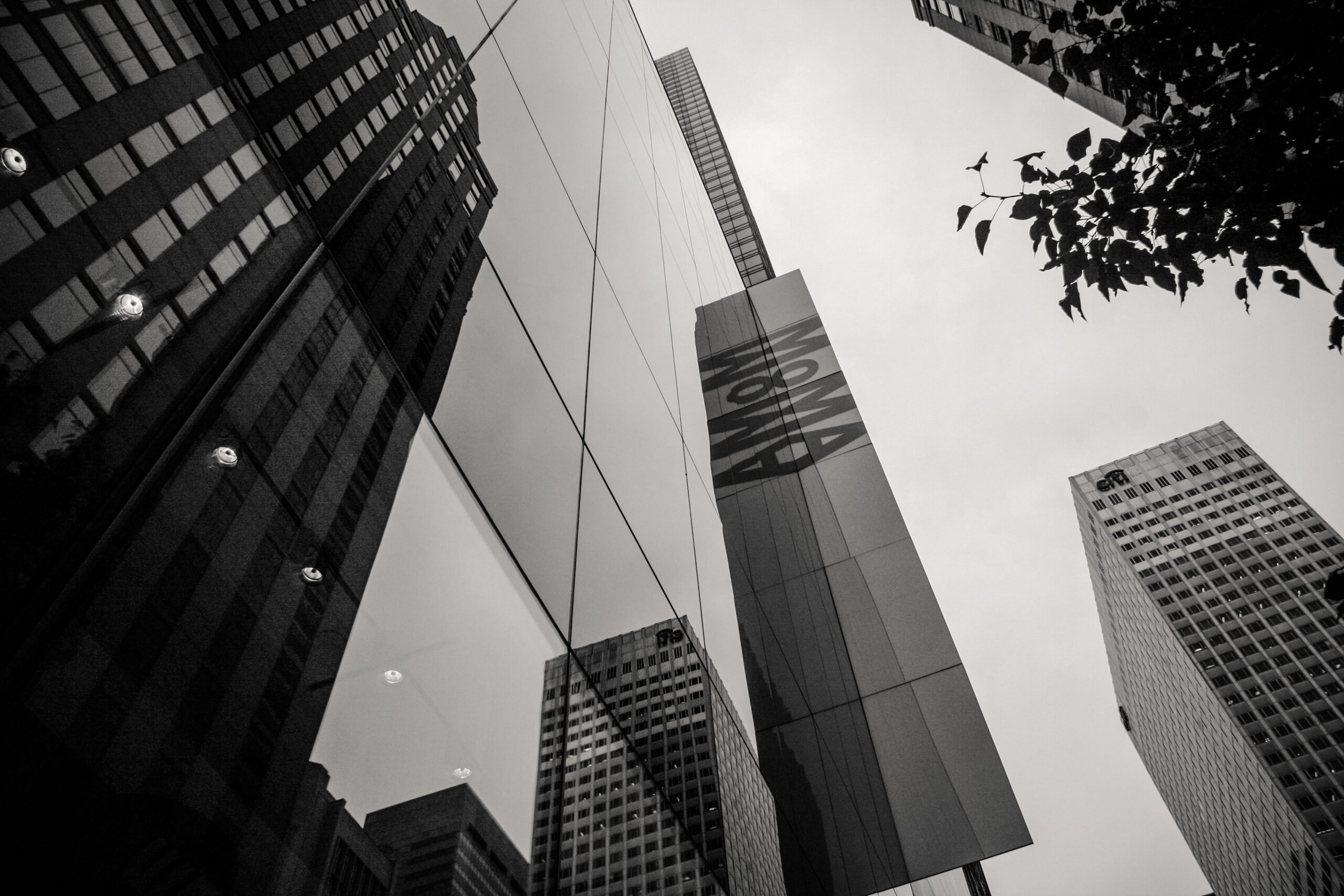
It’s astounding that Duchamp hasn’t had an American retrospective in over half a century, considering the fact that this French avant garde artist might be the most cited name of our confounding times. MoMA and the Philadelphia Museum of Art organized the last one—and they’ve joined forces on this one, too.
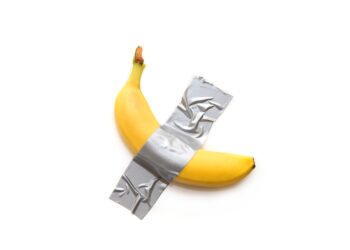
This show’s nine chronological sections span painting and sculpture (including many readymades), plus film, photography, and engrossing ephemera. Most of Duchamp’s most famous works appear, including all three versions of the scandalous Nude Descending a Staircase (1913), the notorious Fountain (1917)—which he took a decade to claim—as well as the mustachioed Mona Lisa in L.H.O.O.Q. (1919).
But, deeper cuts like Duchamp’s paintings aim to humanize the artist and prove there’s still room for revelations, even when it comes to him. Most of all, though, MoMA and the Philadelphia Museum of Art—which will host a fuller edition of the show come October—have constructed an engaging exhibition. Each space inside offers its own universe. Altogether, this just might be the very type of spectacle we can imagine Duchamp would have wanted. —Vittoria Benzine
5. “Hujar:Contact” at the Morgan Library and Museum
May 22–October 25
In 1947, at the age of 13, Peter Hujar received his first camera and for the next four decades he was rarely without one. “I can express myself only through photography,” he once said. As visitors to the Morgan Library and Museum will discover, Hujar’s stark and atmospheric black-and-white photographs have rather a lot to express.
The Morgan is the holder of more than 5,700 of Hujar’s contact sheets, which the photographer filed with haphazard organization from 1955 until his death of AIDS-related pneumonia in 1987. More than 100 are on show here, images that trace Hujar’s path from studio assistant to intrepid freelancer of the 1960s to fixture of the East Village scene of the 1970s and 1980s. Many contact sheets are marked with ideas about cropping and printing, offering insight into Hujar’s thought process, an avenue recently explored by a memoir of the photographer and his fickle relationship with the artist Paul Thek. —R.W.