Monday, July 20, 2026
  • Login
CEO North America
  • Home
  • News
    • Business
    • Entrepreneur
    • Industry
    • Innovation
    • Management & Leadership
  • CEO Interviews
  • Opinion
  • Technology
  • Environment
  • CEO Life
    • Art & Culture
    • Food
    • Health
    • Travel
No Result
View All Result
  • Home
  • News
    • Business
    • Entrepreneur
    • Industry
    • Innovation
    • Management & Leadership
  • CEO Interviews
  • Opinion
  • Technology
  • Environment
  • CEO Life
    • Art & Culture
    • Food
    • Health
    • Travel
No Result
View All Result
CEO North America
No Result
View All Result

CEO NA Magazine > Technology > Ex-Google engineer says Page, Brin and Pichai share one key trait

Ex-Google engineer says Page, Brin and Pichai share one key trait

in Technology
Ex-Google engineer says Page, Brin and Pichai share one key trait
Share on LinkedinShare on WhatsApp

When Arvind Jain, the now co-founder of Rubrik and Glean, landed a job at Google, he felt like an “imposter”. The engineer had moved to America from a small town in India and suddenly found himself surrounded by MIT and Stanford PhDs. So he made a point of quietly studying those around him.

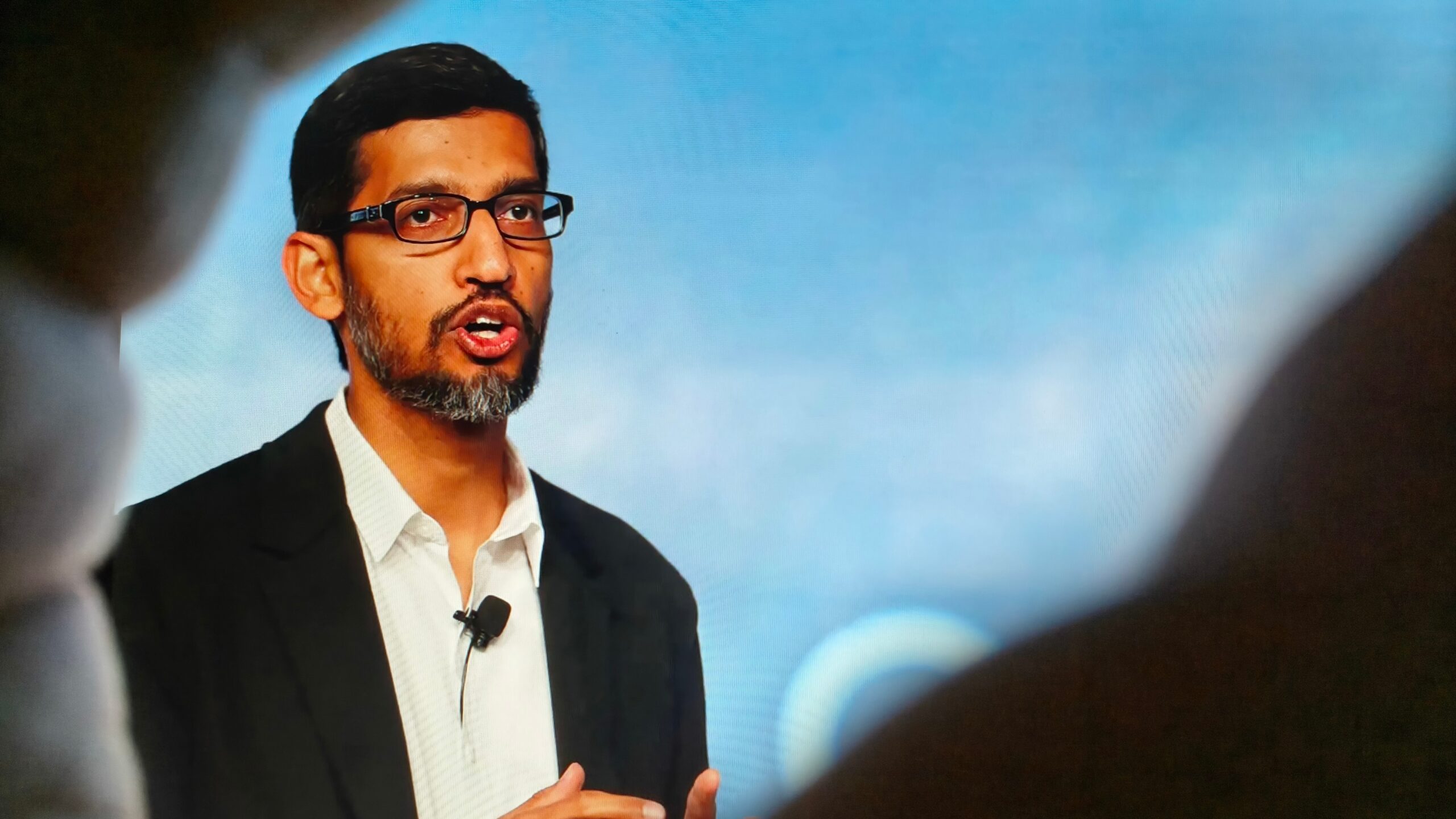
 And one of those people was a product manager who had just joined the company. His name was Sundar Pichai.

“We were together at Google for a long time. I knew him from when he joined as an individual contributor,” Jain exclusively told Fortune.

“At Google, we had people who were brilliant, they came from the best schools, they were highly accomplished, and there were some who grew and shone, and then there were others who didn’t,” he said. “I thought that I got lucky, that somehow I got placed in this group of amazing people… And that was why I was trying to learn and observe what makes one succeed?”

Of course, Pichai ended up being one of those individuals who shone. He became CEO of Google in August 2015, just over a decade after joining the company. 

“What I learned by observing him was that the same attributes kept coming up—intensity, hard work. But also the ability to think big and have confidence,” Jain revealed. “You have to think crazy.” 

Sundar Pichai’s Google Chrome success proves that ‘crazy’ beats hard work alone, the CEO says

The moment that crystallized it was watching Pichai champion Google Chrome, at a time when the idea looked foolish on paper.

Browsers were Microsoft’s territory, Netscape had already failed, and few inside Google thought it was worth the effort. Jain included. 

“I felt like that’s such a bad idea,” he admitted. “I was not thinking big enough.” 

Even Microsoft’s CEO Steve Ballmer once publicly dismissed Chrome as a “rounding error.”

But of course, Chrome went on to become the world’s most widely used browser—far bigger than Microsoft’s Internet Explorer. By 2012, it had already surpassed its rivals to become the world’s most-used browser, helping cement Pichai’s reputation inside Google and paving the way for his eventual rise to CEO. 

“You have to say: we’re going to do this thing which everybody thinks is stupid, maybe unrealistic, Jain learned from the experience. “That’s when magic happens.” 

And says it cements the idea that thinking “crazy” is an attribute as important as grinding away—and one that Google co-founders Larry Page and Sergey Brin share with Pichai.

“They had no sort of constraints in their minds on what’s possible,” Jain added. 

“So I think that those were the two main things I learned: hard work, but then the disregard for normalcy and regular constraint thinking.”

Arvind Jain built two billion-dollar start-ups after leaving Google

Jain left Google having quietly internalized everything he’d observed—and went on to apply it twice over.

He co-founded Rubrik, the cloud data management company that IPO’d on the New York Stock Exchange in 2024 at around $5.6 billion, before launching Glean, the AI startup that helps employees search and understand information across their entire company.

Glean is now valued at $7.2 billion.

And Jain’s still taking lessons from his colleagues. This time, the CEO says he takes the most notes from his young Gen Z hires.

“Actually, I feel like I learn the most from the youngest people,” he told Fortune. “They’re the ones who have not seen the things that I’ve seen. They have new points of view.”


Read the full article by Orianna Rosa Royle / Fortune

Related Posts

Alphabet, Amazon expected to introduce dividends in 2024
Technology

5 investments to close the gap between AI wealth and welfare

When Marketing to Teens, Using High-Tech Tools Brings Promise—and Peril
Technology

When Marketing to Teens, Using High-Tech Tools Brings Promise—and Peril

AI in Family Offices
Technology

Data liquidity leads to AI success

Nvidia warns of losses if US bans AI chip exports to China
Technology

Nvidia’s $1 Trillion Slide Sends Valuation to Pre-AI Boom Levels

Memory Chipmaker SK Hynix Kicks Off $28 Billion US Listing
Technology

Memory Chipmaker SK Hynix Kicks Off $28 Billion US Listing

PlayStation will end physical disc production for new games in 2028
Technology

PlayStation will end physical disc production for new games in 2028

SoftBank CEO details succession plan
Technology

Talk of a bubble is ‘blasphemy against AI’ says SoftBank’s Son

SpaceX’s 3-day slide wipes out most IPO gains
Technology

SpaceX’s 3-day slide wipes out most IPO gains

Startup Backed by Ex-Google CEO Debuts Robot, LG Partnership
Technology

Startup Backed by Ex-Google CEO Debuts Robot, LG Partnership

Qualcomm CEO says AI agents will replace apps — as chip giant works on 40 new AI-powered devices
Technology

Qualcomm CEO says AI agents will replace apps — as chip giant works on 40 new AI-powered devices

No Result
View All Result

Recent Posts

  • ATI Inc. President and CEO Kimberly A. Fields sits down with CEO North America to discuss ATI’s transformation, driven by customer partnerships, targeted innovation, and operational discipline
  • Musk announces SpaceX launch for Thursday
  • Oil climbs above $90 following U.S. casualties in Middle East tensions
  • Samsung Biologics to acquire PolyPeptide Group in $1.8 billion deal
  • The Profit Leak in Your Talent Strategy

Archives

Categories

  • Art & Culture
  • Business
  • CEO Interviews
  • CEO Life
  • Editor´s Choice
  • Entrepreneur
  • Environment
  • Food
  • Health
  • Highlights
  • Industry
  • Innovation
  • Issues
  • Management & Leadership
  • News
  • Opinion
  • PrimeZone
  • Printed Version
  • Technology
  • Travel
  • Uncategorized

Meta

  • Log in
  • Entries feed
  • Comments feed
  • WordPress.org

  • CONTACT
  • GENERAL ENQUIRIES
  • ADVERTISING
  • MEDIA KIT
  • DIRECTORY
  • TERMS AND CONDITIONS

Advertising –
advertising@ceo-na.com

110 Wall St.,
3rd Floor
New York, NY.
10005
USA
+1 212 432 5800

Avenida Chapultepec 480,
Floor 11
Mexico City
06700
MEXICO

  • News
  • CEO Interviews
  • Opinion
  • Technology
  • Environment
  • CEO Life

  • CONTACT
  • GENERAL ENQUIRIES
  • ADVERTISING
  • MEDIA KIT
  • DIRECTORY
  • TERMS AND CONDITIONS

Advertising –
advertising@ceo-na.com

110 Wall St.,
3rd Floor
New York, NY.
10005
USA
+1 212 432 5800

Avenida Chapultepec 480,
Floor 11
Mexico City
06700
MEXICO

CEO North America © 2024 - Sitemap

Welcome Back!

Login to your account below

Forgotten Password?

Retrieve your password

Please enter your username or email address to reset your password.

Log In
No Result
View All Result
  • Home
  • News
    • Business
    • Entrepreneur
    • Industry
    • Innovation
    • Management & Leadership
  • CEO Interviews
  • Opinion
  • Technology
  • Environment
  • CEO Life
    • Art & Culture
    • Food
    • Health
    • Travel

© 2026 JNews - Premium WordPress news & magazine theme by Jegtheme.