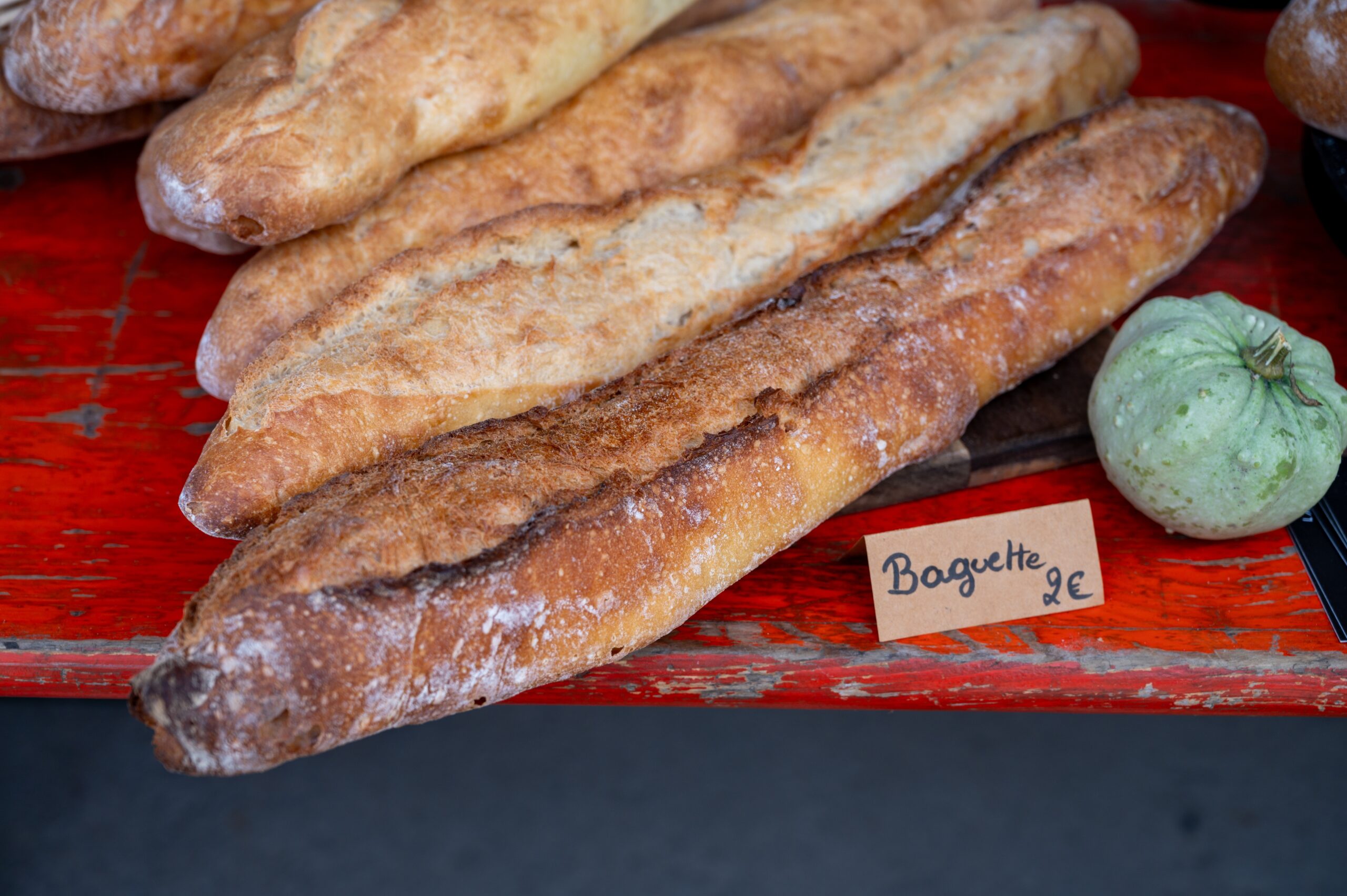
When the baguette received official UNESCO heritage status in Paris in 2022, the French delegation waved slender loaves of crusty bread triumphantly in the air, in a photo op that went viral around the world.
French president Emmanuel Macron hailed the baguette as “250 grams of magic and perfection in our daily lives” on social media,accompanied by an iconic vintage black-and-white Willy Ronis photo of a jubilant little French boy captured mid-run with a long baguette tucked under his tiny arm.
But the UNESCO victory, which saw the artisanal know-how of French breadmaking and the culture of the baguette inscribed in its intangible cultural heritage list, appears to have done little to reverse the ongoing decline of bread consumption in France, generating headlines like, “Will bread disappear from French tables?” in French food media.
Historically, the French ate an average of 25 ounces of bread per person, per day in the years following World War II. According to the Federation of Bakery Entrepreneurs, by 2015 that number plummeted to 4 ounces. Today, that figure has dropped again to 3.5 ounces, equal to a little less than half a baguette a day.
In a 2023 consumer survey released by the National Confederation of French Bakeries and Pastry Shops (CNBPF), more than a third (36%) of the 1,000 respondents also said they had reduced their bread consumption over the last five years.
Industry experts say it’s a trend driven by changing eating habits, along with a new generation of “neobakers,” some of whom are opting to take baguettes off their shelves entirely, and the growing popularity of the baguette’s American rival, processed sliced white bread.
“One of the threats is the fact that young people are losing the habit of buying a baguette every day,” says Dominique Anract, president of the CNBPF.
Daily baguette runs to the local bakery – an errand that Anract says used to be as automatic and ritualistic as brushing teeth – have become less frequent.
But this is especially true of younger generations, who are cooking less and eating out more.
“In the past, even students cooked for themselves. There was no snacking, no ‘world food,’ no burgers, kebabs or sushi. But more and more young people are turning towards fast food,” he says.“In the past, even students cooked for themselves. There was no snacking, no ‘world food,’ no burgers, kebabs or sushi. But more and more young people are turning towards fast food,” he says.