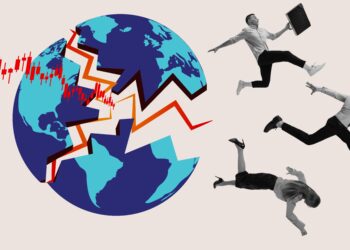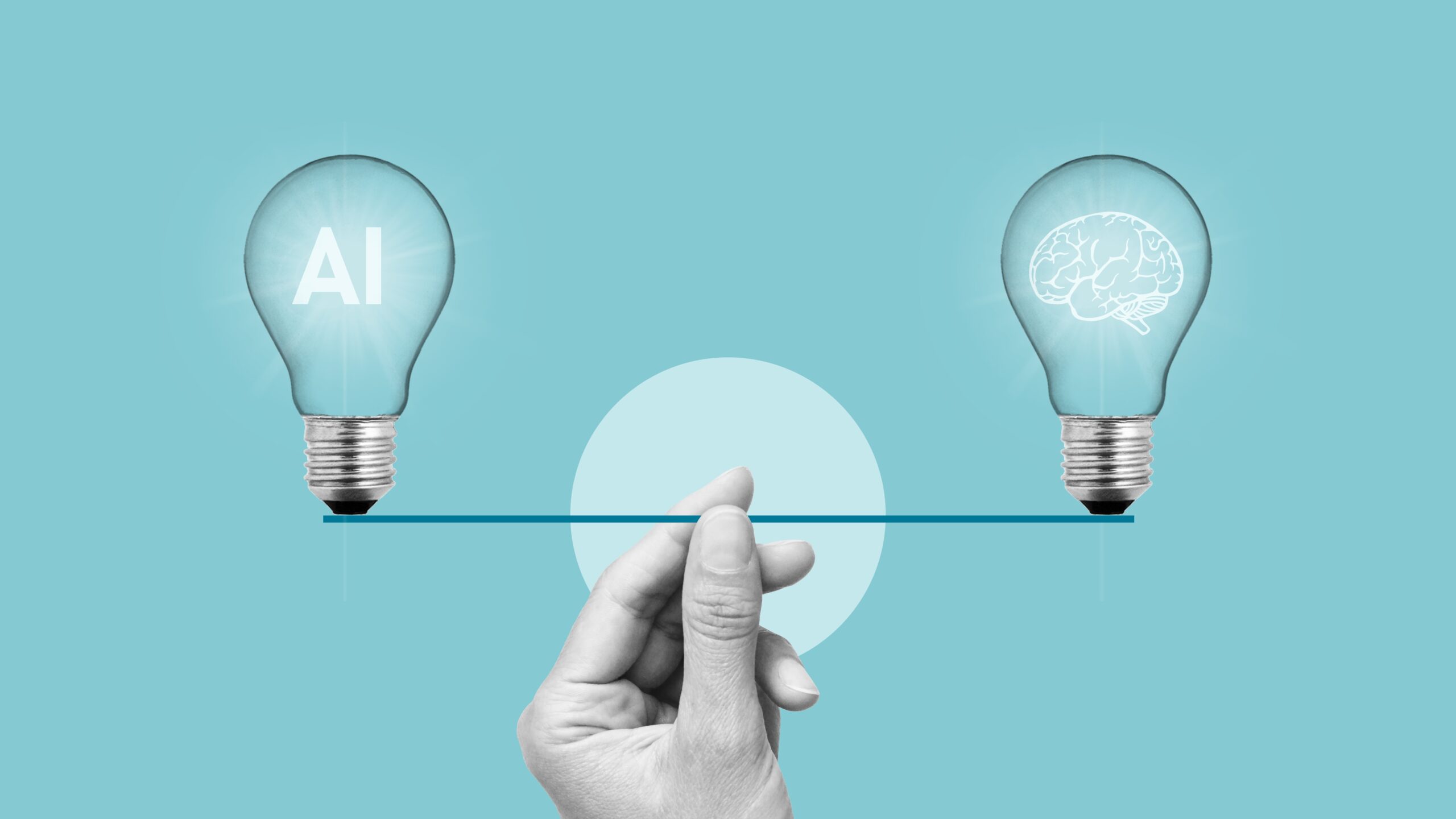
Leaders are racing to deploy new AI-based tools that promise productivity gains and efficiency. Yet for many employees, AI’s arrival feels less like progress and more like a source of unease—one that weighs heavily on their mental health.
As managers celebrate AI’s massive wins and potential, a second reality is unfolding inside organizations: rising anxiety and stress among employees.
That stress is not incidental. According to Stephan Meier, James P. Gorman Professor of Business at Columbia Business School, uncertainty is the dominant psychological force shaping how employees experience AI at work. Change itself is difficult, he explains, but what makes AI particularly stressful is not knowing what comes next, like whether jobs will change, which skills will matter, and how workers fit into an AI-enabled future.
“Change is hard,” Meier said, “but the really hard part is if you don’t know which direction things are going to change.”
His research shows that these unknowns weigh heavily on employees’ mental health. Many employees associate AI with negative emotions, including fear of job loss and concern about future skills. In fact, a substantial share report feeling more negative than positive about AI overall. Over time, that emotional burden can translate into heightened anxiety and disengagement at work.
Todd Jick, Senior Lecturer in Discipline in Business at CBS, sees a related dynamic at play. AI-driven stress, he argues, feels different from past waves of workplace change because it strikes at the core of what employees believe they are good at—and whether those capabilities will still matter. For many workers, long-developed skills now feel suddenly vulnerable.
“There’s a fear of being replaced,” Jick said, noting that even highly capable employees can feel unsettled by the pace and scope of AI-driven change. Layered onto years of organizational transformations that promised clarity but often delivered more uncertainty, AI can feel like one change too many. “It’s a lot for any employee to handle.”
Many leaders underestimate this distress. Executives often believe employees are enthusiastic and well informed about AI, Meier notes. In reality, many workers feel neither—and the gap between leadership assumptions and employee experience only deepens uncertainty. Yet neither Meier nor Jick sees employee stress as an inevitable cost of AI adoption. When leaders address uncertainty directly and invest in helping people adapt, AI’s promise becomes far more attainable.
Why AI-Related Stress Feels Different
Unlike earlier technologies that automated discrete tasks, AI appears capable of reshaping entire roles. That breadth leaves employees uncertain not just about what they do today, but about who they will be at work tomorrow.
Meier notes that the first responsibility of leaders is to recognize that anxiety already exists. His research shows that many executives overestimate how enthusiastic and informed their employees are about AI. When leaders fail to acknowledge concern—or delay communication until plans are finalized—employees are left to fill in the gaps themselves, often assuming the worst.
“That uncertainty really affects people tremendously,” he said. “We did research on the emotions of people when it comes to AI, and it turns out that a lot of people have negative emotions. In fact, about a third have more negative than positive emotions. Fear of losing their job and what skills are going to be needed for the future are really top of mind.”
Reducing uncertainty does not require perfect answers. Meier notes that being transparent about what leaders do not yet know can be more reassuring than vague optimism. Clarity, even partial clarity, helps employees feel grounded during periods of rapid change.
Meier’s research also finds that employee-centric organizations are significantly more likely to succeed in AI adoption. These organizations are also more likely to have employees who feel informed and emotionally positive about AI because employees feel supported as its adoption unfolds.
What Responsible AI Leadership Looks Like in Practice
For Jick, the leadership challenge around AI echoes lessons from decades of organizational change. Leaders often introduce ambitious goals, but those goals can quickly become sources of stress when employees are not adequately supported.
“You can’t just set an aspiration or a stretch goal and not help equip people,” he said.
Responsible AI leadership, Jick believes, rests on several core practices he calls The Four Ps. The first, preparedness, ensures employees receive meaningful training and opportunities to build new skills. The second is piloting, or creating space for experimentation and recognizing setbacks as learning opportunities rather than failures. The third is patience and empathy, acknowledging that AI adoption is uncertain and will take time. And finally, there must be a payoff: clear benefits for employees, whether in job security, confidence, or improvements in how work gets done.
Jick adds that leaders must also model the behavior they expect to see. Transparency about what leaders know—and what they do not—builds trust. So does treating AI adoption as a shared experiment rather than a top-down mandate.
AI Strategy Is Mental Health Strategy
AI has genuine potential to improve work by reducing routine tasks and enhancing productivity. But those benefits are not automatic. They depend on whether employees feel capable of adapting—or overwhelmed by uncertainty.
Managing AI-related stress is not about slowing innovation. It is about recognizing that mental health is now inseparable from technological success. Leaders may not be able to eliminate uncertainty, but they are responsible for how their teams experience it.
Organizations that understand this will not only adopt AI more effectively. They will build trust, engagement, and resilience in a workplace where continuous change is no longer the exception, but the norm.
Read the full article by Jonathan Sperling / Columbia Business School