Monday, May 25, 2026
  • Login
CEO North America
  • Home
  • News
    • Business
    • Entrepreneur
    • Industry
    • Innovation
    • Management & Leadership
  • CEO Interviews
  • Opinion
  • Technology
  • Environment
  • CEO Life
    • Art & Culture
    • Food
    • Health
    • Travel
No Result
View All Result
  • Home
  • News
    • Business
    • Entrepreneur
    • Industry
    • Innovation
    • Management & Leadership
  • CEO Interviews
  • Opinion
  • Technology
  • Environment
  • CEO Life
    • Art & Culture
    • Food
    • Health
    • Travel
No Result
View All Result
CEO North America
No Result
View All Result

CEO NA Magazine > News > Milgrom and Wilson, Nobel economics prize winners

Milgrom and Wilson, Nobel economics prize winners

in News
Share on LinkedinShare on WhatsApp

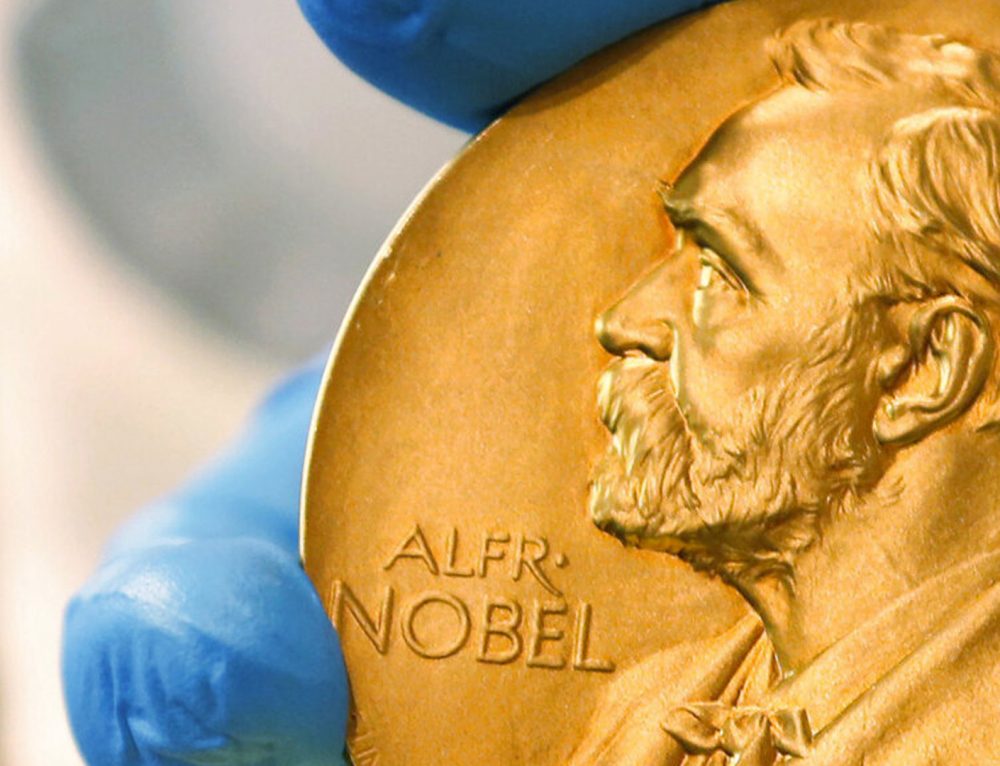
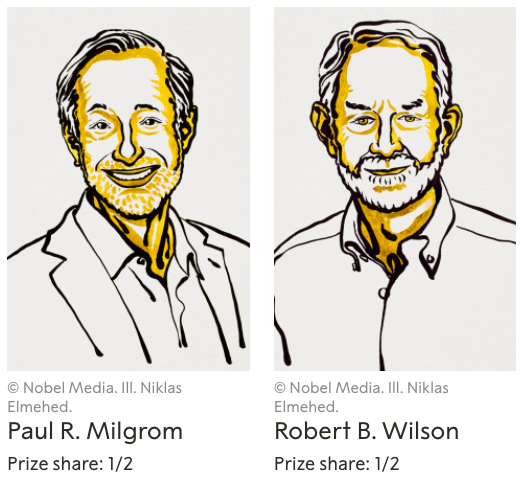
Stanford professors Paul Milgrom and Robert Wilson won the Nobel economics prize.

For their work on studying auction behavior, including why people tend to price bids below their estimate of an item’s worth, the Stanford University professors, Paul Milgrom and Robert Wilson, have been awarded the Nobel in economic science.

“They haven’t just profoundly changed the way we understand auctions — they have changed how things are auctioned,” said Alvin E. Roth, a Nobel laureate himself who was one of Mr. Wilson’s doctoral students, per The New York Times. “The two of them are some of the greatest theorists living in economics today.”

“Auctions are everywhere and affect our everyday lives. This year’s Economic Sciences Laureates, Paul Milgrom and Robert Wilson, have improved auction theory and invented new auction formats, benefiting sellers, buyers and taxpayers around the world,” read the Nobel Prize’s official website.

Auctions help to sell a variety of products, including diamonds, minerals and online advertising. They can also take on various characteristics: Objects can have a shared, common value for all bidders (such as commodities like oil) or private values that vary across bidders (like art). Bidders may know exactly what the object’s value is, or they may have imperfect information. Bids can be open, meaning everyone can see them, or closed. But in most auctions, explains The Times, bidders have both common and private values — when buying a house, for instance, shoppers think about both what they personally like about the amenities and what the market value of the home might be. Mr. Milgrom came up with a theory to deal with that mix of common and private value, and he examined how the “winner’s curse” plays out in such instances. He found that people underbid by less in so-called English auctions, in which prices start low and are raised, than in Dutch auctions, where they start high and are reduced. The pair’s “best-known contribution,” according to the committee, is their work in designing new auction formats for complex situations, including the format that governments now use to allocate radio frequencies to telecom operators. The Laureates’ ground-breaking research about auctions has thus been of great benefit, for buyers, sellers and society as a whole.

The economics prize, won by such luminaries as Paul Krugman and Milton Friedman in the past, was the final of the six awards in 2020, a year in which the Nobels have been overshadowed by the COVID-19 pandemic, reported the World Economic Forum. The traditional gala winners’ dinner in December has been cancelled and other parts of the celebrations are being held digitally to avoid the risk of spreading the infection.

Who are the winners?

Mr. Wilson was born in 1937 in Geneva, Neb., earned both his bachelor’s and graduate degrees from Harvard University, and he is now a professor emeritus at Stanford University. Mr. Milgrom was born in 1948 in Detroit. He completed his bachelor’s at the University of Michigan and his graduate education at Stanford, where he received a doctorate in 1979 and where he is now a professor.

In 1994, the professors designed the auction used by the Federal Communications Commission (FCC) to license radio frequencies to telecom companies, who then use that spectrum to push through your phone calls and mobile payments.

Tags: CEOCEO NorthamEconomic scienceNobel economics prizePaul MilgromRobert Wilson

Related Posts

Spotify stock jumps following Q3 earnings win
News

Spotify shares rise on Universal AI music deal

Workday wins on Q1 earnings from steady AI demand
News

Workday wins on Q1 earnings from steady AI demand

Walmart beats predictions in latest quarter
News

Walmart cuts forecast despite strong Q1 growth

Stellantis shares plunge after CEO reveals costly business-reset charges
News

Stellantis CEO unveils $70 billion turnaround plan

The shift from oil isn’t just about being ‘green’ anymore. It’s a massive power move for national security.
News

Oil prices jump more than 3%

Lowe’s sales increase over 10% despite slow housing market
News

Lowe’s CEO reports Q1 results as a ‘solid start to the year’

Bold Economic Decision Making Can Lift All Boats
News

U.S. Treasury yields reach highest levels since the 07 financial crisis

Target aims for non-alcoholic cocktail market ahead of the holiday season
News

Target boosts sales outlook as CEO’s turnaround gains momentum

American Eagle CEO’s startup hits unicorn status in new funding round
News

American Eagle CEO’s startup hits unicorn status in new funding round

Home Depot maintains full-year forecast and prices despite tariffs
News

Home Depot beats earnings estimates, with sales increasing by 5%

No Result
View All Result

Recent Posts

  • Is dairy disturbing your dreams? Here’s what a study on food and sleep found out
  • Workday wins on Q1 earnings from steady AI demand
  • Spotify shares rise on Universal AI music deal
  • Design plan for 250-foot “Arc de Trump” is approved
  • Alien ‘encounters’ put this strange-looking monument on the tourist map

Archives

Categories

  • Art & Culture
  • Business
  • CEO Interviews
  • CEO Life
  • Editor´s Choice
  • Entrepreneur
  • Environment
  • Food
  • Health
  • Highlights
  • Industry
  • Innovation
  • Issues
  • Management & Leadership
  • News
  • Opinion
  • PrimeZone
  • Printed Version
  • Technology
  • Travel
  • Uncategorized

Meta

  • Log in
  • Entries feed
  • Comments feed
  • WordPress.org

  • CONTACT
  • GENERAL ENQUIRIES
  • ADVERTISING
  • MEDIA KIT
  • DIRECTORY
  • TERMS AND CONDITIONS

Advertising –
advertising@ceo-na.com

110 Wall St.,
3rd Floor
New York, NY.
10005
USA
+1 212 432 5800

Avenida Chapultepec 480,
Floor 11
Mexico City
06700
MEXICO

  • News
  • CEO Interviews
  • Opinion
  • Technology
  • Environment
  • CEO Life

  • CONTACT
  • GENERAL ENQUIRIES
  • ADVERTISING
  • MEDIA KIT
  • DIRECTORY
  • TERMS AND CONDITIONS

Advertising –
advertising@ceo-na.com

110 Wall St.,
3rd Floor
New York, NY.
10005
USA
+1 212 432 5800

Avenida Chapultepec 480,
Floor 11
Mexico City
06700
MEXICO

CEO North America © 2024 - Sitemap

Welcome Back!

Login to your account below

Forgotten Password?

Retrieve your password

Please enter your username or email address to reset your password.

Log In
No Result
View All Result
  • Home
  • News
    • Business
    • Entrepreneur
    • Industry
    • Innovation
    • Management & Leadership
  • CEO Interviews
  • Opinion
  • Technology
  • Environment
  • CEO Life
    • Art & Culture
    • Food
    • Health
    • Travel

© 2026 JNews - Premium WordPress news & magazine theme by Jegtheme.