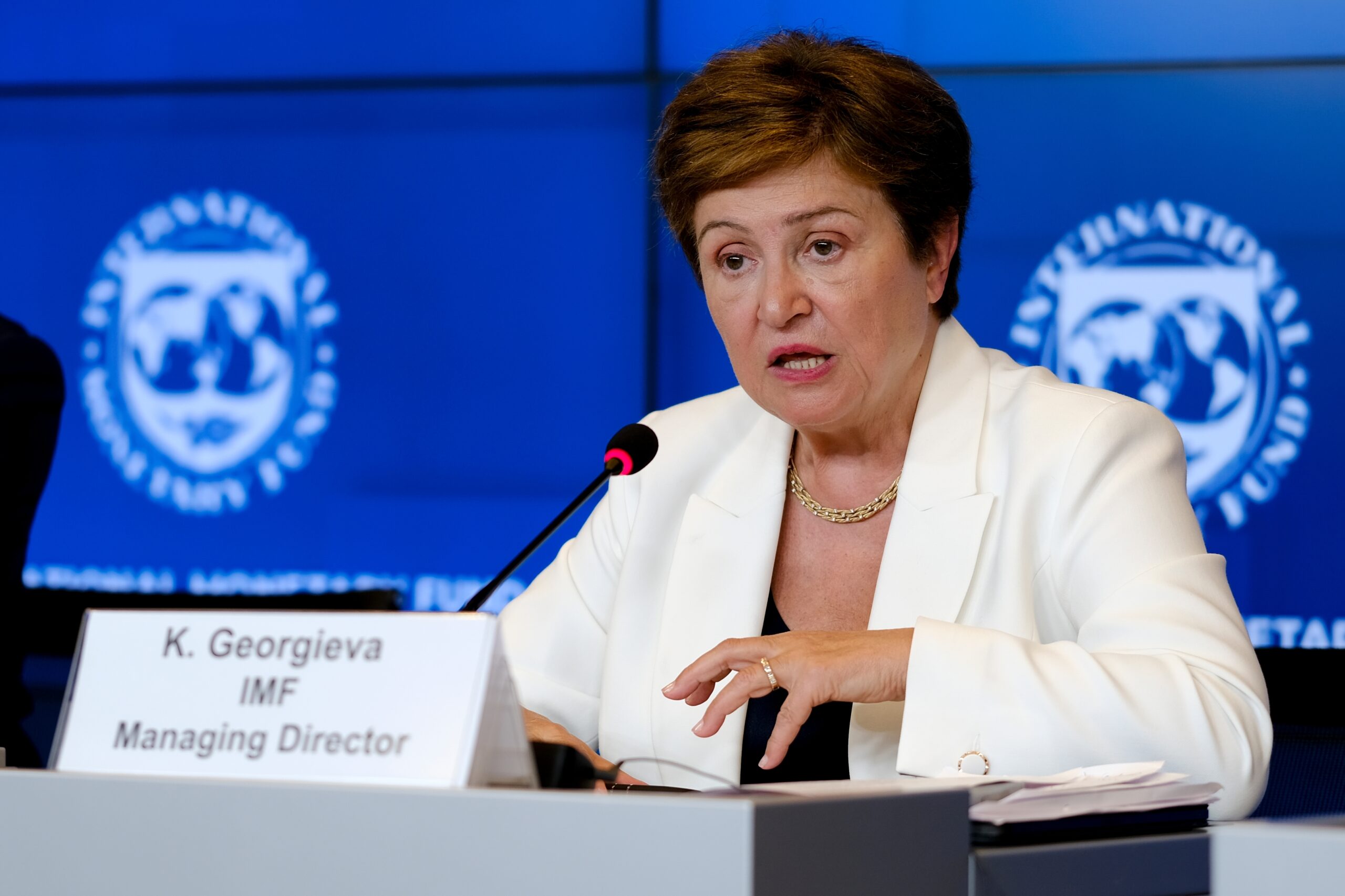
In a speech previewing the IMF and World Bank Annual Meetings next week in Bangkok, International Monetary Fund Managing Director Kristalina Georgieva warned on Wednesday that the global economy is under threat from persistently high energy prices, record public debt, and risks from the AI investment boom, urging governments to implement protective fiscal and monetary policies.
Georgieva explained that the world faces two conflicting forces: a negative supply shock driven by Middle East conflicts and a positive demand shock driven by artificial intelligence, both of which are contributing to inflation. “The combined impact of these two forces is highly uneven across the world,” she said.
Georgieva noted that advanced economies, particularly the United States, contribute most to high debt levels, with debt-to-GDP ratios exceeding those of emerging markets and low-income countries.
“And yet we don’t see decisive action in the high-debt advanced economies where the need of the hour is for credible medium-term fiscal consolidation plans, supported in some cases by upfront fiscal measures, including to take some pressure off monetary policy,” she said.
Georgieva stated that oil prices stay at $100 a barrel, with reduced refining capacity increasing “crack-spread” margins by another $100 per barrel for major products like diesel. She also noted that the winter heating season will drive up demand, despite ongoing restrictions on natural gas supplies caused by threats to LNG shipping through the Strait of Hormuz.
“Even if the war in the Gulf were to end soon, the problem of high energy prices will likely persist for some time,” Georgieva stated.
According to Georgieva, the upcoming IMF growth forecasts will highlight the largest downward revisions in economies devastated by war. These include Ukraine, which has experienced severe damage to its civilian and economic infrastructure, and Gulf countries affected by Iranian strikes and a substantial drop in energy exports.
Georgieva did not specify in her prepared remarks whether the IMF’s newest World Economic Outlook would alter the overall 2026 global growth forecast, which remains a sluggish 3.0% as projected in July.
By CEO NA Editorial Staff