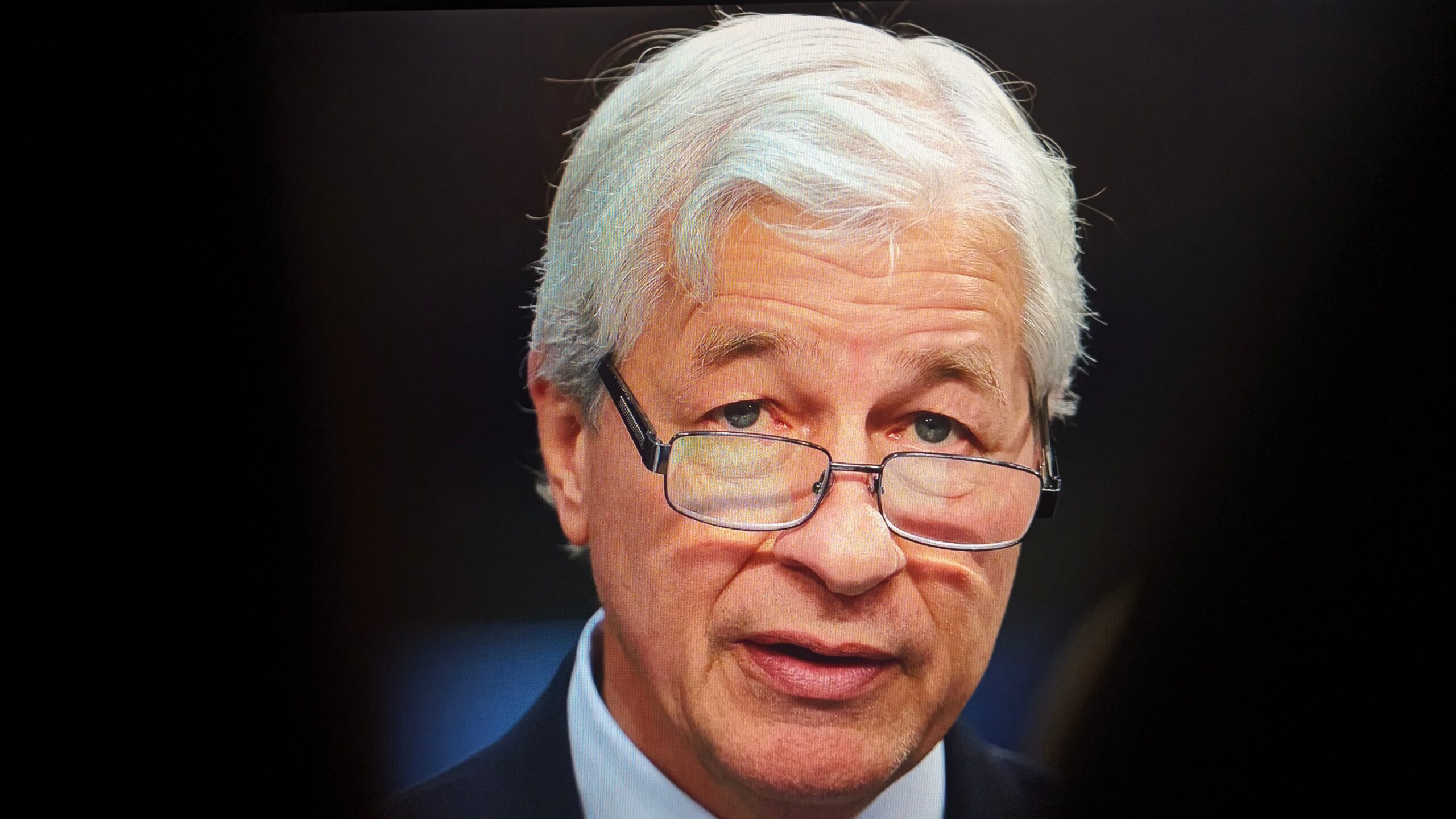
In an annual letter to shareholders, Jamie Dimon, Chairman and CEO of JPMorgan Chase, has issued a stark warning on geopolitics, AI, and private markets.
Published on Monday, the letter emphasized that the country’s 250th anniversary is “the perfect time to rededicate ourselves to the values that made this great nation — freedom, liberty, and opportunity.”
The CEO is also calling for a broad reaffirmation of American ideals as his bank manages geopolitical uncertainty, an unstable economy, and the transformative effects of artificial intelligence.
“We are champions of banking’s essential role in a community — its potential for bringing people together, for enabling companies and individuals to attain their goals, and for being a source of strength in difficult times,” Dimon wrote.
“The challenges we all face are significant. The list is long but at the top are the terrible ongoing war and violence in Ukraine, the current war in Iran and the broader hostilities in the Middle East, terrorist activity and growing geopolitical tensions, importantly with China. Our hearts go out to those whose lives are profoundly affected by these crises. We sincerely hope these global conflicts are properly resolved and that one day all of Europe and the Middle East will attain long-term stability and prosperity. Even in troubled times, we have confidence that America will do what it has always done — look to the values that have defined our singular nation and sustained our leadership of the free world.”
“Despite the unsettling landscape, the U.S. economy continues to be resilient, with consumers still earning and spending (though with some recent weakening) and businesses still healthy. It is important to note that our economy has been fueled by large amounts of government deficit spending and past stimulus and that increased expenditure on infrastructure remains a growing need. Now, because of the war in Iran, we additionally face the potential for significant ongoing oil and commodity price shocks, along with the reshaping of global supply chains, which may lead to stickier inflation and ultimately higher interest rates than markets currently expect. Continual trade negotiations exacerbate the tense geopolitical issues. And high asset prices, which certainly feel good in the short run, create additional risk if anything goes wrong. In Section III of this letter, I describe in greater detail how we are dealing with these risks.”
“In 2025, we continued to play a forceful and essential role in advancing economic growth. In total, we extended credit and raised capital amounting to $3.3 trillion for our consumer and institutional clients around the world. On a daily basis, we move nearly $12 trillion in 120+ currencies and more than 160 countries, as well as safeguard over $41 trillion in assets. Bank deregulation will make it easier for financial institutions to support our growing economy, and, I believe, if properly done, it can actually make the banking system safer.”
Dimon also addressed the recent turmoil in the private markets, as fears about loans to software companies trigger large redemption requests at private credit funds.
“By and large, private credit does not tend to have great transparency or rigorous valuation ‘marks’ of their loans — this increases the chance that people will sell if they think the environment will get worse — even if actual realized losses barely change,” Dimon said.
Dimon reiterated that the pace of AI adoption is unlike any technology that came before it. He said while its implementation will be “transformational,” it remains to be seen how the AI revolution will unfold.
“Overall, the investment in AI is not a speculative bubble; rather, it will deliver significant benefits. However, at this time, we cannot predict the ultimate winners and losers in AI- related industries,” Dimon wrote.
By CEO NA Editorial Staff