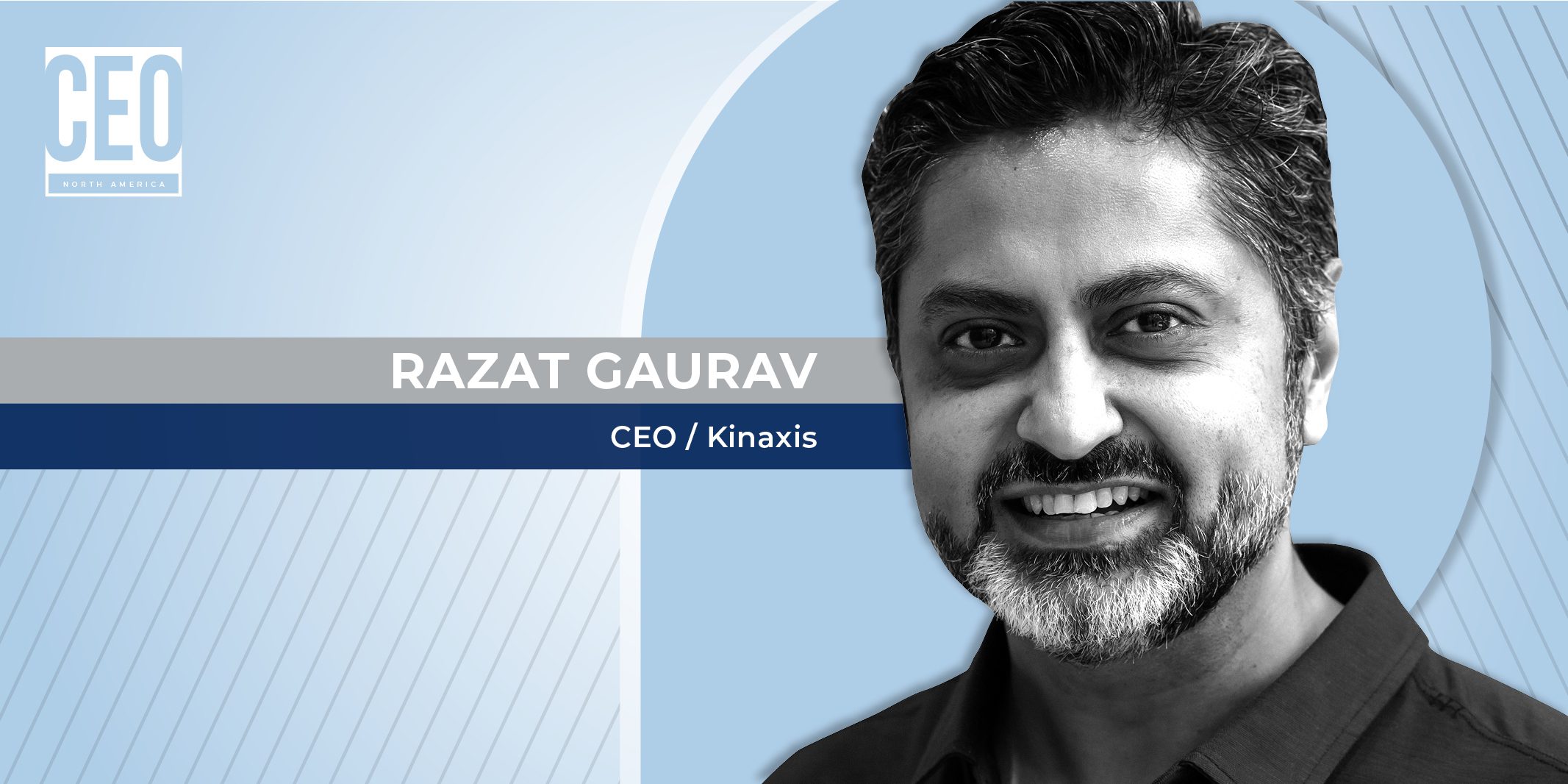
Razat Gaurav
CEO / Kinaxis
Across boardrooms in enterprise software, a single question keeps surfacing: does AI make traditional platforms obsolete, or does it make them indispensable? For Razat Gaurav, CEO of Kinaxis, the answer isn’t in doubt.
The landscape Kinaxis navigates has rarely been this volatile. Tariffs shift by the month. Geopolitical fault lines redraw supply routes overnight. Data center buildouts strain global component supply. For the company behind Maestro, the end-to-end supply chain planning and orchestration platform used by Unilever, Ford Motor Company, Qualcomm, and Merck, and other large customers, that volatility isn’t a threat. It’s the whole opportunity.
That confidence rests on a specific bet. Maestro was built from the ground up on predictive and prescriptive AI, and Kinaxis is now layering in agentic AI on top, adding capabilities designed to act on a plan, not just recommend one. The result, Gaurav argues, is a system that can absorb geopolitical shocks and market swings as fast as they arrive, then turn them into sharper, more personalized outcomes for the customers running their supply chains on it. It’s a wager that AI won’t erode Kinaxis’s advantage. It will compound it.
“That’s something that all the investors should be excited about because we’ve got a future-proof business model given both the complexity of the problems we solve, given the technology forward underpinning we have, but also the fact that we’re solving for variability, uncertainty, and complexity,” Gaurav tells CEO NA.
The executive is confident that Kinaxis will continue to stand out among competitors as a central decision layer for increasingly complex logistical challenges, by combining AI orchestration, enterprise-level support, and supply chain modernization. Gaurav expects Kinaxis to win new customers and continue to expand services to its existing ones.
“I expect that over the next three to five years, we’ll continue to have the opportunities to accelerate our innovation cycles, we’ll have continued opportunities to expand our customer base and grow within our existing customer base.”
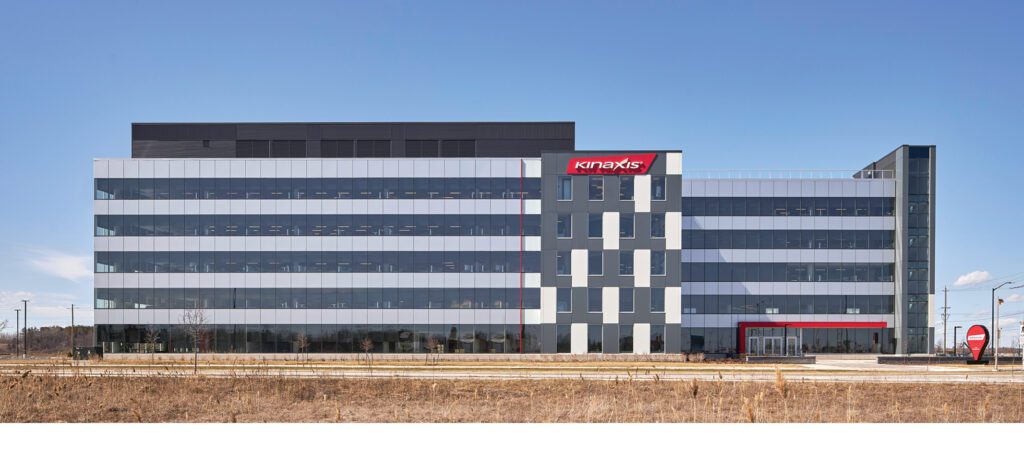
“I expect that over the next three to five years, we’ll continue to have the opportunities to accelerate our innovation cycles,” Gaurav says.
Kinaxis’s pitch to the market rests on its key innovation: the Maestro platform, which lets organizations model their entire supply chain concurrently and scenario-plan their way through disruption, rather than reacting to it after the fact.
“There’s just so much demand and supply volatility, with all the tariff changes, the geopolitical shifts, the wars happening around the world, the consumer shifts, the surge in data center buildout,” Gaurav says. “Our platform is so well suited for organizations to really be able to navigate through all those changes.”
What’s changed in the last three to four years, he says, is the layering of generative and agentic AI on top of the predictive and prescriptive AI Kinaxis has used for years. The result is twofold: a simpler, conversational interface for planners managing enormously complex decisions, and new agentic capabilities that automate work outright. “It’s creating all kinds of incremental value for our customers,” he says, pointing to the outcomes his clients care about most: cash, cost, service levels, and risk.
Growth With Discipline
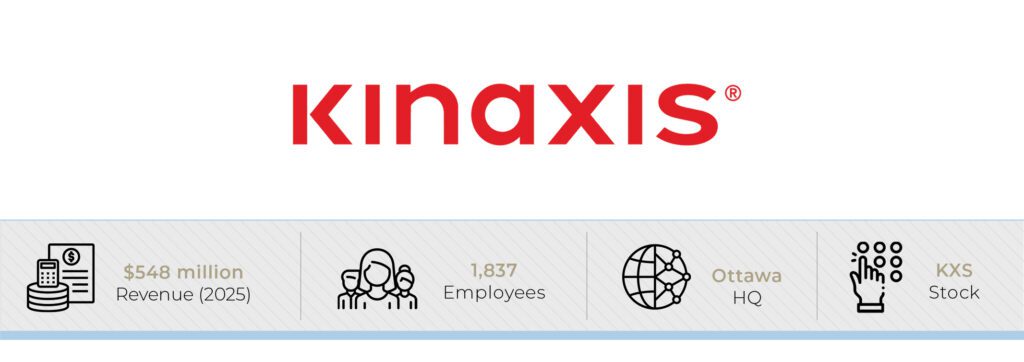
The numbers back up the momentum. Kinaxis reported record first-quarter 2026 results, with total revenue reaching $165.6 million, up 25% year-over-year, and SaaS revenue rising 21%, its strongest Q1 performance ever. Adjusted EBITDA margin expanded to 32%, up from 25% a year earlier. The company is holding its full-year guidance of $620 to $635 million in total revenue and 25% to 26% adjusted EBITDA margin, a stance management has described as prudent given macroeconomic and currency uncertainty.
“It’s a business that’s got a marquee list of customers, has built the industry-leading platform for supply chain planning and positioning, has been an early pioneer and continues to innovate with AI. And the financial makeup of the company is really strong.”
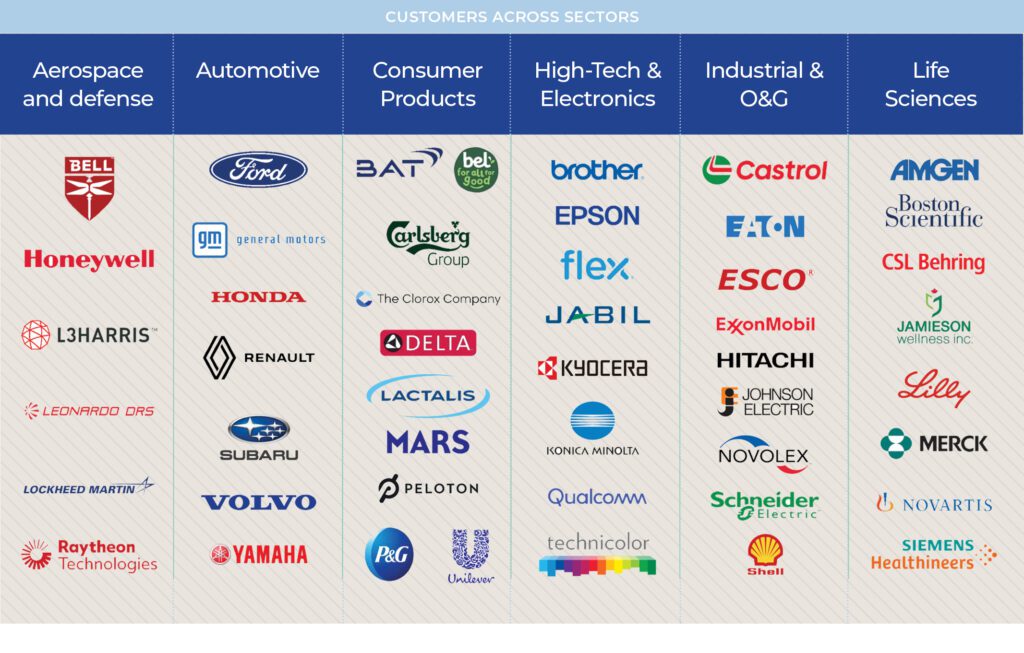

Gaurav frames the next three to five years around three growth levers: deeper innovation, with R&D investment already up 25% year-over-year; expansion within Kinaxis’s existing customer base and new customer wins, both in North America, which makes up roughly 60% of revenue, and internationally across Europe, and in some markets in Asia, as Japan, Taiwan, and India; and a look at new verticals entirely. Aerospace and defense customers working with the Department of Defense have shown particular demand, he says, prompting Kinaxis to weigh a dedicated federal and DOD offering in North America.
“Our game plan is to do that in a sensible and a profitable way,” he says, noting the company still targets north of 25% EBITDA margin as it scales.
Growth, in Gaurav’s view, is as much an internal story as an external one. Team development and talent acquisition remain a constant focus, supported by university, co-op, and internship programs. But it’s the internal use of AI that he describes as deeply transformative. Kinaxis has deployed AI coding assistants in its software engineering function, driving speed and efficiency gains of 15% to 40%, he says, and is extending AI into sales, marketing, and customer support, including new automation in how customers are serviced.
“We’re also balancing between how much we invest in AI tokens versus human talent,” Gaurav says. “That’s going to continue to be an ongoing evaluation.”
Not every signal has been unambiguously positive. Kinaxis shares have pulled back from their 52-week high above C$212, trading closer to the C$150 range through the summer, part of a broader reassessment of enterprise software valuations amid uncertainty over how AI will reshape the sector. Gaurav doesn’t shy away from naming the anxiety directly.
“There’s all this paranoia, and speculation, of what’s the future of enterprise software in the age of AI,” he says.
His counterargument rests on two pillars: Kinaxis has been “AI native” from day one, he says, rather than retrofitting the technology onto a legacy platform, and the problems it solves, demand forecasting, constrained supply planning, are complex enough to require deep technical infrastructure, not just a chatbot layered on top of internal systems.
Kinaxis has pursued joint research with Google DeepMind and Nvidia’s cuOPT optimization initiative to reinforce that foundation, he says.
“The pace of change in the world isn’t linear, it’s exponential. The amount of change we’ve experienced in the last three years will seem like nothing compared to the next three,” Gaurav says.
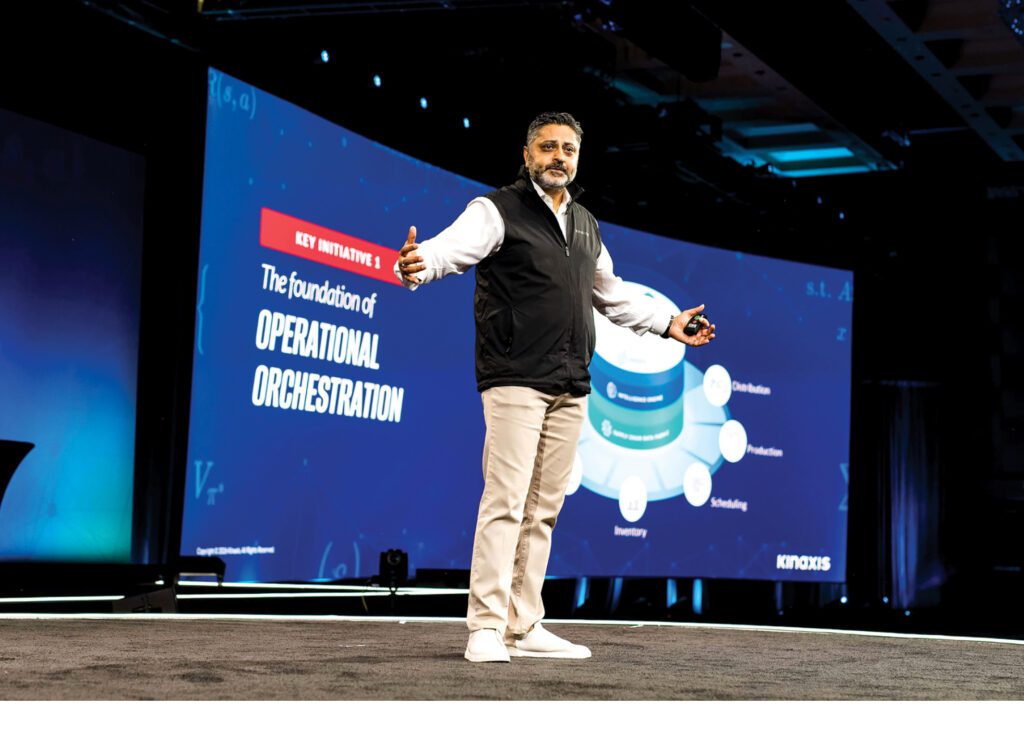
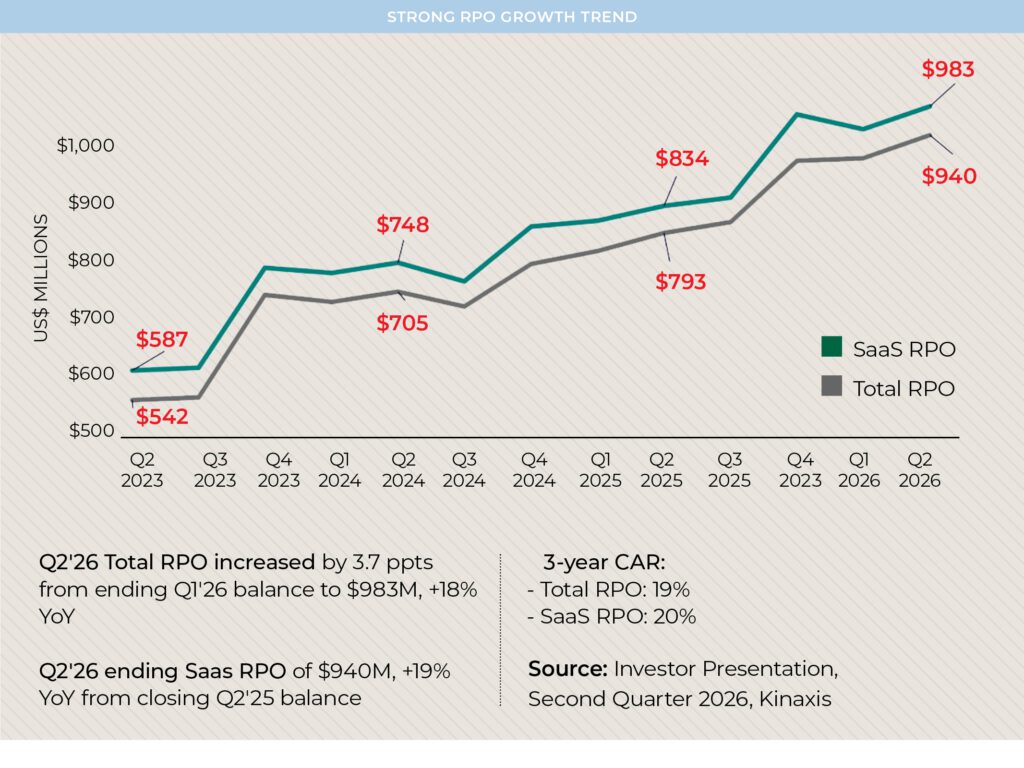
“As we’re developing scale and size, we’re able to invest for growth both on the innovation side with our platform, but also from a go-to-market perspective. And I just feel like the whole advent of agentic AI is giving us the opportunity to expand the offering we have for our customers and expand the kind of value and impact.”
A Return to His Supply Chain Roots
Gaurav joined Kinaxis as CEO in January 2026, and he’s candid that he wasn’t looking for a change. “I wasn’t looking for a new opportunity, I was kindly employed,” he says. But the more he examined Kinaxis, the harder the opportunity was to pass up.
Three things pulled him in, he says. First, a chance to return to the supply chain technology roots he’d built his career on, at a moment of what he calls “tectonic technology shifts.” Second, the company itself: a marquee customer list, an industry-leading planning platform, early AI investment, and the financial discipline of a publicly traded company on the Toronto Stock Exchange.
And there’s the people. Having grown up in the same solution space, Gaurav already knew 70 to 80 people inside the company before he arrived.
“The more I talked to them, and to the customers and the partner ecosystem, the more conviction I developed that this is a company that is very product-centric, very customer-centric, and extremely collaborative,” he says. “It’s got that Canadian collaboration as a strong foundation to it. I totally identified with that culture.”
He brings more than two decades in enterprise software and supply chain technology to the role, including CEO stints at Planview and LLamasoft and leadership positions at Blue Yonder and i2 Technologies. Six or seven months into the job, he says, the business “is continuing to perform very well.”
An Ecosystem Built to Scale
Kinaxis leans heavily on its partner network as it grows, Gaurav says, spanning cloud infrastructure partnerships with Google and Microsoft Azure, joint technology development with Nvidia and Databricks, and integrations with large language models from OpenAI, Anthropic, and Google.
On the services side, systems integrators and management consultancies including BCG, Accenture, Deloitte, and EY help customers manage the process redesign that typically accompanies a Maestro deployment. A separate solution-extension program allows partners to build directly on top of the platform.
“The ecosystem plays a very important role as we’re growing and scaling up the business,” Gaurav says.
For Gaurav, the pitch to customers, employees, and investors alike converges on a single idea: in a world where volatility is compounding rather than easing, the organizations that can plan through it, rather than merely react to it, will be the ones that hold onto cash, control cost, protect service levels, and manage risk. It’s a thesis he says dominates his conversations with fellow chief supply chain officers and chief digital officers alike.
Six months into the role, with a record quarter behind him and a widening AI roadmap ahead, Gaurav is betting that Kinaxis’s moment isn’t behind it. It’s just beginning.